Hanoi poised to lead low-altitude space economy
The low-altitude economy is not a distant vision but a reality already taking shape, bringing a rare opportunity for Hanoi to lead the next phase of urban technological transformation.
THE HANOI TIMES — With traffic congestion costing the economy billions of dollars each year, Hanoi is accelerating efforts to unlock low-altitude airspace as a new growth frontier, positioning the capital to lead the development of a low-altitude space economy alongside its surface and underground infrastructure.
Solution for dense urban development
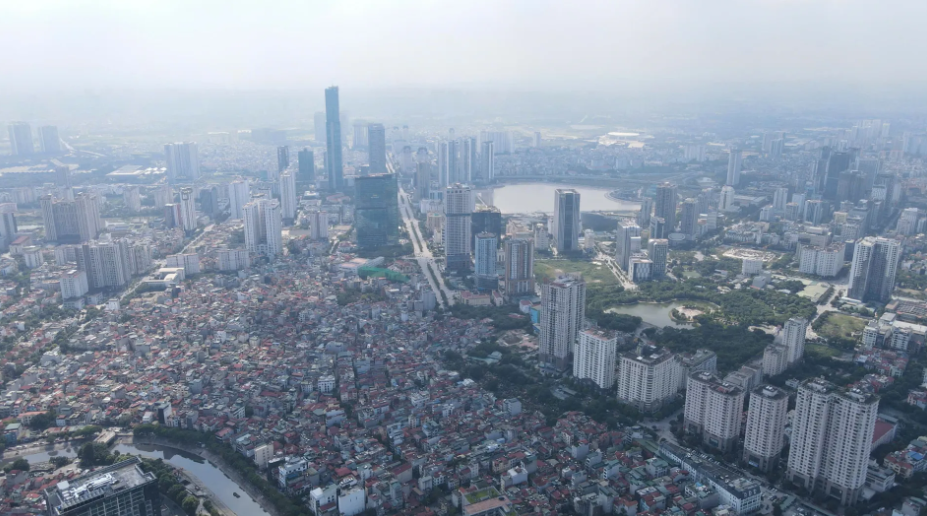
Hanoi from above. Photo: Pham Hung/The Hanoi Times
For decades, Hanoi’s development has largely been shaped within the limits of surface space, marked by the expansion of transport infrastructure, higher building density and efforts to optimize land use to meet socioeconomic needs.
However, the growing physical constraints of traditional urban space are increasingly hindering Hanoi’s ambition to become a modern city with regional and international competitiveness in the 2030–2045 period.
As of early 2026, land allocated for transport accounts for only about 13% of the city’s total area, far below the 20%–25% minimum required for a modern megacity. This shortfall, combined with an average annual growth of 4.5% in private vehicles, has placed enormous pressure on surface infrastructure.
As a result, economic losses from traffic congestion in the capital are estimated at billions of dollars each year. Against this backdrop, the search for new development spaces to complement surface and underground areas has become an urgent strategic priority.
One breakthrough approach gaining traction among global megacities is the low-altitude economy, or LAE (economic activities based on drones, urban air mobility and low-altitude airspace services). Once seen as a concept confined to science fiction, it has now emerged as a high-value industry with tangible economic impact.
According to an analysis by Morgan Stanley, the global urban air mobility market is projected to reach $1.5 trillion by 2040. In early adopters such as China, the LAE recorded rapid growth in 2025 and has become a meaningful contributor to GDP structures in major economic hubs like Shenzhen and Guangzhou.
These figures point to a new economic wave in which airspace below 1,000 meters is no longer an empty void but an untapped economic resource. For Hanoi, engaging in this field is not simply about following a technology trend. It offers practical solutions to persistent challenges in the digital economy and urban logistics.
In Hanoi, the low-altitude economy covers all economic activities using unmanned aerial vehicles, electric vertical takeoff and landing aircraft and other smart aerial platforms. In Viet Nam, logistics costs currently account for about 16.8% of GDP, significantly higher than the 10–11% average seen in developed economies.
If UAVs are deployed to handle last-mile deliveries in dense urban areas, logistics costs could be reduced by up to 30% while transport efficiency improves severalfold without expanding road networks. This would support Hanoi’s goal of having the digital economy contribute 30% of GRDP by 2025 and move toward 40% by 2030.
A major practical milestone was the successful pilot of an emergency medical UAV transport route between Duc Giang General Hospital and Gia Lam district in late 2025. During peak hours, an ambulance typically needs 35–45 minutes to cover the route. The UAV completed the same journey in just 7–9 minutes.
Cutting transport time by more than 75% for blood samples, medical specimens and critical medicines delivers not only operational efficiency but also strong humanitarian value by maximizing the golden window for emergency care.
New driving force of the digital economy
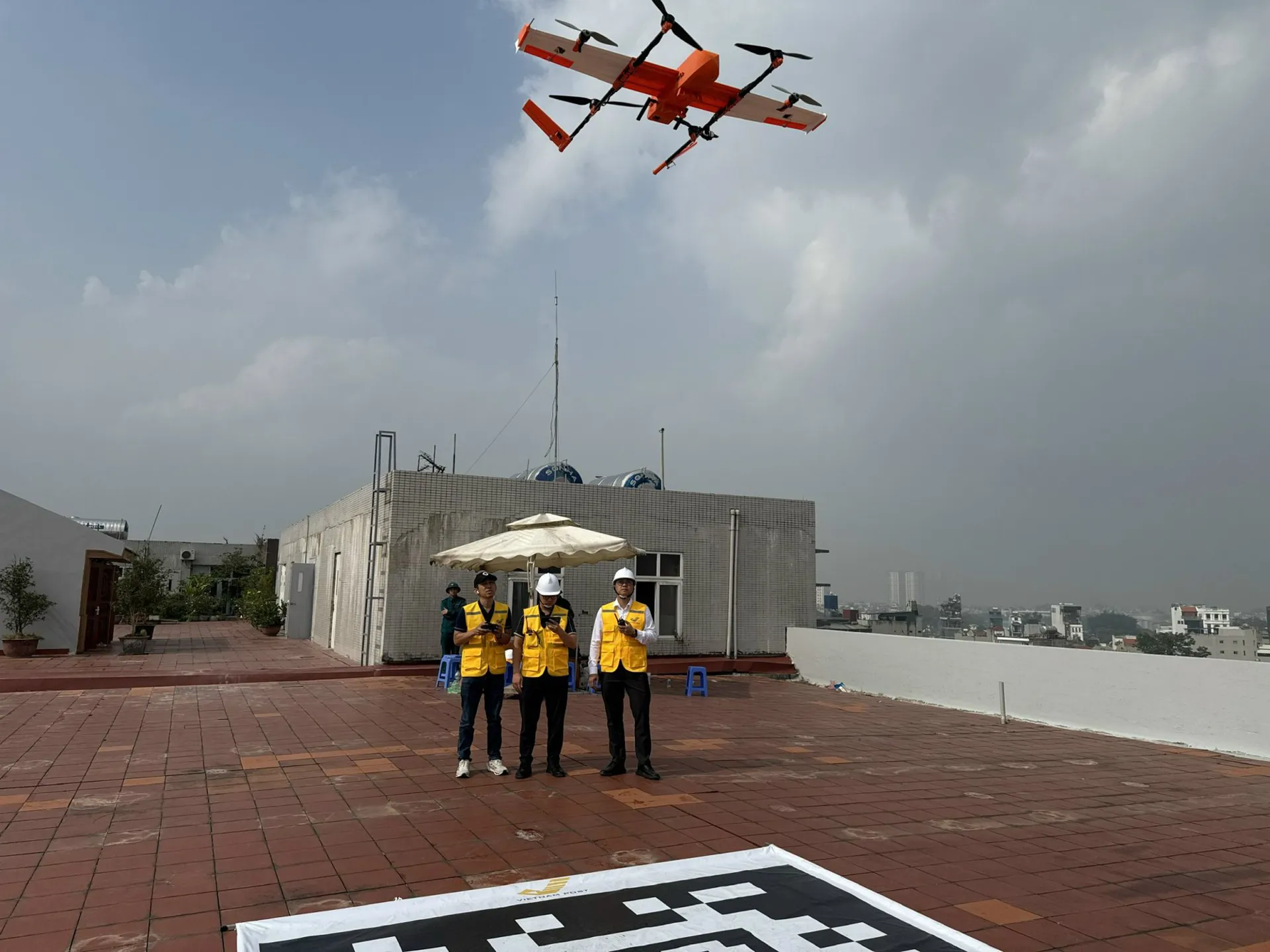
Duc Giang General Hospital becomes the first medical facility in Vietnam licensed to use drones for medical transportation. Photo: Duc Giang General Hospital
This pilot has provided a solid foundation for the city to propose special policy mechanisms and demonstrate that low-altitude aviation can be safely managed in urban environments with robust operating and monitoring systems.
Urban economic forecasts suggest that LAE could directly contribute 1%-1.5% to Hanoi’s GRDP growth in the 2026-2030 period, driven by spillover effects across multiple supporting industries.
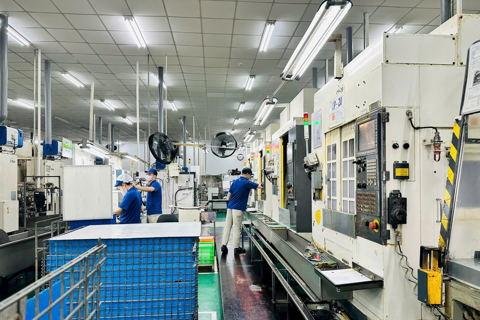
On the manufacturing side, it would boost high-tech production, composite materials and high-density battery manufacturing at Hoa Lac Hi-Tech Park. At the same time, it would create new value-added services in tourism, infrastructure monitoring and smart agriculture.
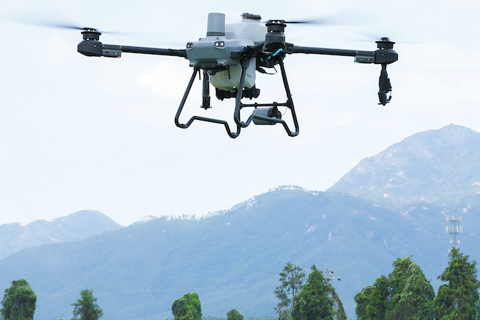
In suburban farming areas such as Dong Anh and Soc Son, UAV applications have already been shown to cut water use by up to 90% and increase labor productivity by as much as 50 times compared with traditional methods. When integrated into the overall GRDP, these gains would form a new growth driver that is both sustainable and environmentally friendly.
In tourism, Hanoi’s dense heritage assets and the distinctive Red River landscape offer strong potential for aerial experience tours. Market research in aviation shows that drone and light helicopter tourism is growing steadily at around 15% per year.
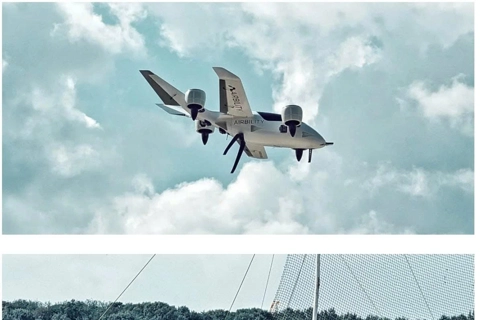
Deploying electric vertical takeoff and landing aircraft (eVTOL) sightseeing flights around West Lake or along the Red River floodplain would diversify tourism offerings. It would also help position Hanoi as a high-tech destination for high-spending visitors.
This shift would help move the capital’s service sector from extensive growth to higher value creation while strengthening its urban brand internationally.
In essence, the low-altitude economy is not a distant vision but a reality already taking shape, bringing a rare opportunity for Hanoi to lead the next phase of urban technological transformation. Opening up this space is not only a solution to infrastructure bottlenecks but also a reflection of the city’s enduring ambition to rise higher.
Building on concrete steps in medical transport and smart agriculture, Hanoi is laying the groundwork for a promising new economic sector in the skies above. LAE is projected to contribute about 1.5% of GRDP annually, equivalent to roughly $1.2 billion by 2030, while cutting inner-city transport costs by up to 30%. In healthcare, emergency transport times could be reduced from 45 minutes to under 10 minutes.
With careful preparation in digital infrastructure, physical systems and a flexible institutional framework, low-altitude airspace above the capital is set to become a powerful growth engine, enabling Hanoi to truly take off and emerge as a leading megacity in the region in a new era of national development.