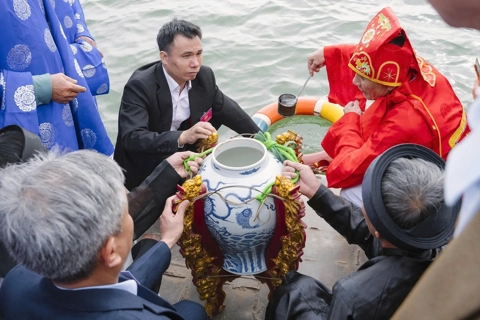
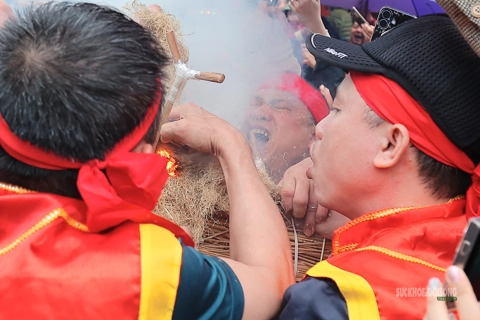
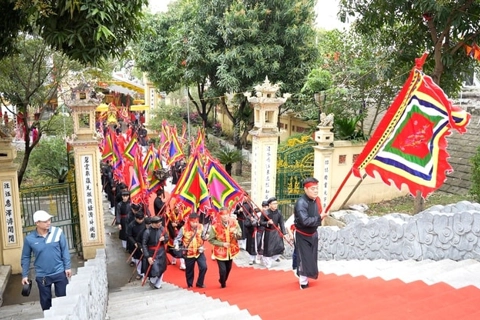
Hanoi’s 350-year-old folk singing festival still strikes a chord
The festival’s recognition as a national heritage is a profound honor for local authorities and residents, reaffirming the cultural significance of this rare folk art form rooted in the Red River region.
THE HANOI TIMES — Floating opera without water, sung by the young and passed down through centuries, Cheo Tau Folk Singing Festival in Goi Canton, now Tan Hoi Commune in Hanoi's suberban Dan Phuong District, stands as a living relic of Vietnam’s cultural soul.
Last held in 1922 before vanishing amid war and upheaval, the festival reemerged in 2015 and was recently recognized as a National Intangible Cultural Heritage .
With performances passed down orally since the 17th century and staged only once every five years, the festival’s unique blend of ritual, theater, and history makes it a living testament to Vietnam’s enduring traditions.
The lyrics orally passed down for centuries
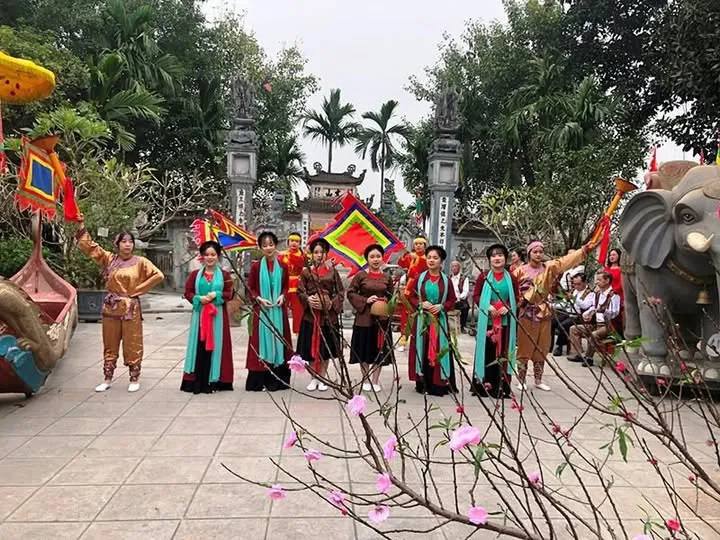
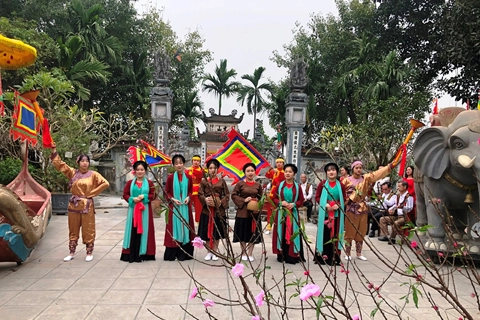
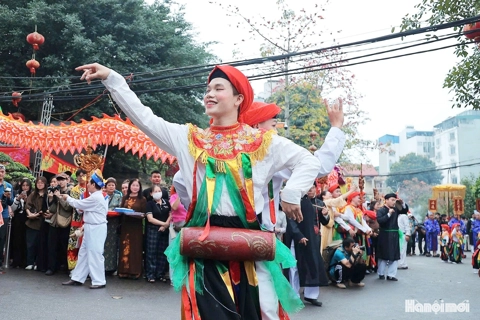
The unique Cheo Tau singing festival has been passed down through generations in the Dan Phuong District on the outskirts of Hanoi. Photo: Dan Phuong Culture and Information Department
Tong Goi or Goi Canton comprises the villages of Thuong Hoi, Thuy Hoi, Vinh Ky, and Phan Long in Tan Hoi Commune, Dan Phuong District. These villages are home to the unique folk performance art of Cheo singing on boats.
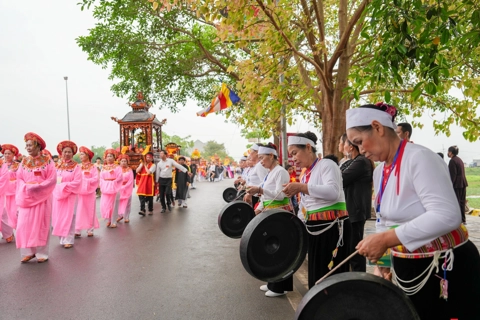
The Cheo Tau Singing Festival in Goi Canton is a unique, traditional festival held every five years from the 13th to the 15th days of the first lunar month.
Legend has it that the tradition of singing cheo on boats was started to honor Van Di, a talented general who defeated the invading Chinese Ming army from 1407 to 1427. After his death, locals from Tong Goi created Cheo tau folk performance to honor the general's merits.
As Van Di Thanh's genealogy describes him as an "all-round man," and he is revered as the village's patron deity. A temple was built to worship him. Since then, on every full moon of the first lunar month, Tan Hoi villagers have performed a solemn ceremony with cheo tau singing to commemorate the famed general's merits.
This singular folk art unfolds in three distinct movements: "prayer singing," "boat singing," and "acting singing." At its heart are 20 ancient melodies, passed down through generations, and a lyrical exchange between two symbolic characters, the Ship and the Statute, who sing in reverence of the tutelary god of Tong Goi.
What sets the Cheo Tau Singing Festival in Goi Canton apart is its remarkable “rowing on land” performance. With the help of traditional wooden boats, elephant figures, and rhythmic choreography, performers recreate the illusion of sailing across water without ever leaving solid ground.
The lyrics, preserved entirely through oral tradition, have survived centuries without distortion, a testament to the community’s deep-rooted devotion to cultural continuity.
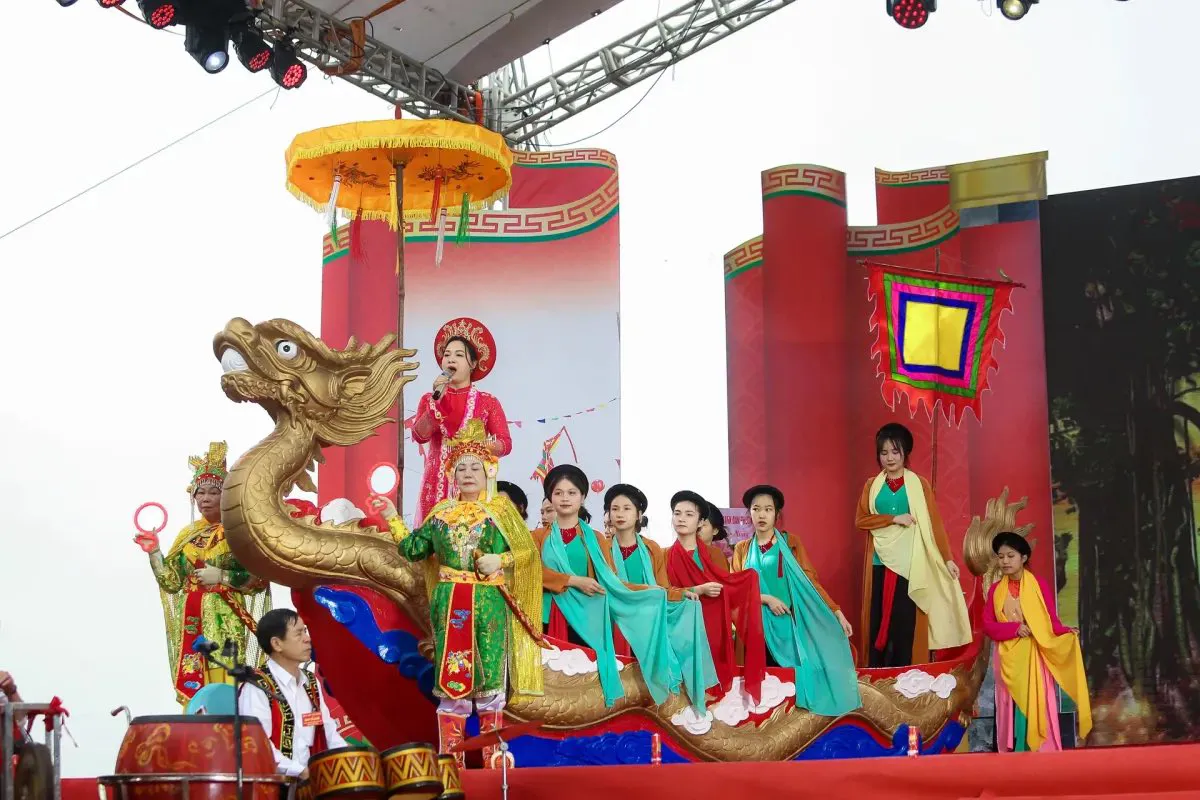
The folk festival is recreated on stage for the entertainment of locals and tourists in Hanoi.
The last time the festival was held before the 21st century was in 1922. War and social upheaval then caused the event to be suspended for nearly ten decades. The festival was not restored until 2015, at which point its frequency was reduced to once every five years.
According to Meritorious Artist Ngo Thi Thu, President of the Cheo Tau Singing Club in Tan Hoi Commune, what makes this art form special is that, except for the two positions called "Flagship" and "Chieu Quan," which can be played by married women, all other singers must be unmarried girls between the ages of 13 and 18. This strict requirement makes cheo tau artist selection and training more difficult than other art forms.
The club currently has more than 40 members, about 20 of whom are teenage girls who regularly take singing and dancing lessons. With support from the local authorities and cultural sector, the club has compiled a repertoire of ancient melodies and performed at major events such as the 70th anniversary of Capital Liberation Day in 2024.
Along with ca tru singing in Thuong Mo Commune, Ba Duong Noi Kite Festival in Hong Ha Commune, the Cheo Tau Singing Festival in Tan Hoi Commune is one of three unique folk cultural specialties of Dan Phuong District.
Keeping passion for this special heritage burning

Meritorious Artist Ngo Thi Thu, President of the Tan Hoi Cheo Tau Singing Club. Photo: Quan Doi Nhan Dan Newspaper
On May 14, 2025, the Minister of Culture, Sports, and Tourism made the decision to add the Goi Canton Cheo Tau Singing Festival to the National List of Intangible Cultural Heritage.
This was a joyous occasion for the people and authorities of Tan Hoi Commune. "We hope to continue receiving attention from the city and district, as well as the new administrative unit of O Dien Commune, in order to expand the performance space and preserve and spread the value of this heritage," said Tan Hoi People's Committee Vice Chairman Ngo Van Manh.
Manh said the mass performance clubs in the commune maintain frequent activities that contribute to the nurturing of heritage. The Cheo Tau Singing Festival is organized to preserve and promote the local cultural identity and tradition of gratitude, evoke national pride, and meet the locals' desire to enjoy spiritual and cultural values.
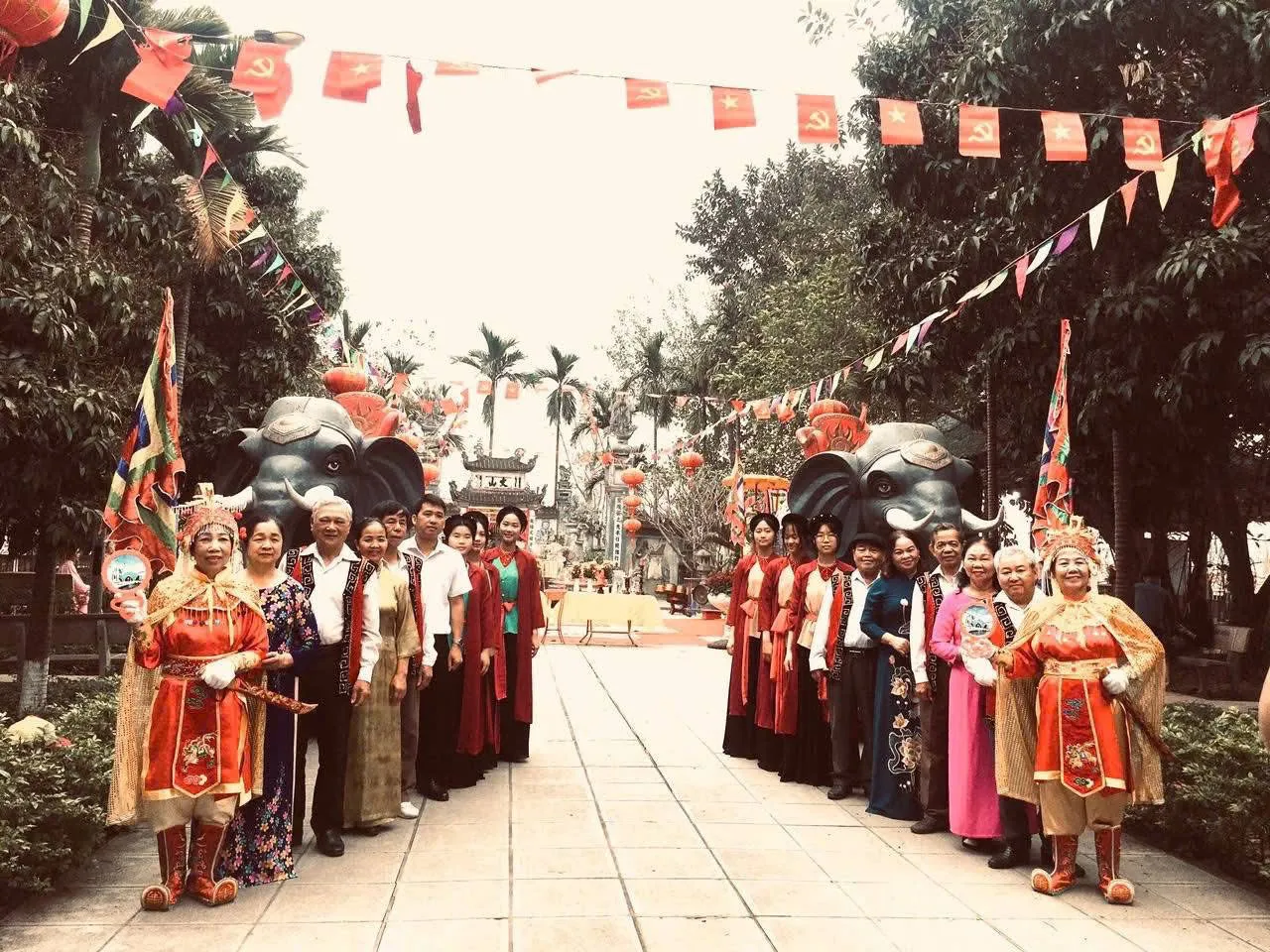
In recent years, Tan Hoi has been one of the leading areas in developing new-style rural communities. The local cultural and economic lives are improving every day.
To preserve the traditional heritage, authorities should organize folk classes and clubs in schools and cultural centers, inviting senior artisans to pass down the lyrics, dances, and rituals of the Chèo Tàu Singing Festival to younger generations.
Cultural researchers have also recommended integrating festival-related content into local history and culture curricula, encouraging student participation in performances to deepen their connection to heritage.
In addition, promoting the Cheo Tau Singing Festival more widely through digital platforms like YouTube, Facebook, TikTok, and tourism websites would help raise awareness of its cultural value and reach younger audiences.