Hanoi’s agriculture adapts to urbanization, climate shocks
For years, Hanoi has pushed for agricultural restructuring, focusing on green, efficient, and sustainable practices to adapt to urbanization and climate change.
THE HANOI TIMES — Hanoi's transition to green, ecological agriculture amid rapid urbanization and climate stress is backed by a new resolution approved on July 9 by the Hanoi People's Council.
The policy permits the regulated use of riparian land for farming, tourism and education.
According to Article 32 of the 2024 Capital Law, riparian developments must align with flood control plans and ensure environmental and landscape protection.
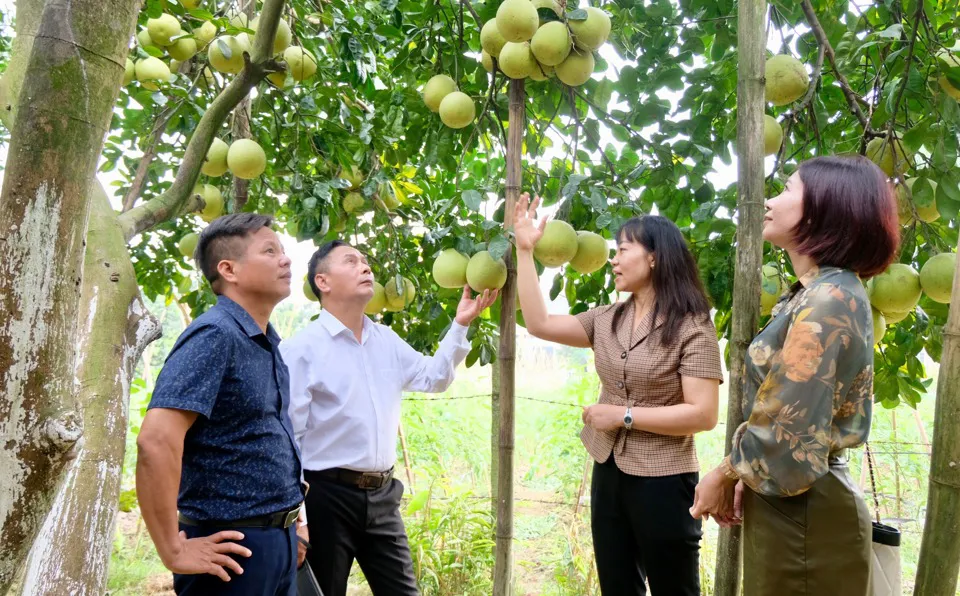
The Tam Van grapefruit cultivation model generates significant income for growers in Hanoi's Phuc Tho Commune. Photo: Tung Nguyen/The Hanoi Times
The Hanoi Department of Agriculture and Environment expects this new policy, combined with the city’s push for green, smart agricultural models, can maximize land-use efficiency, create urban green spaces, and increase farmers’ incomes through integrated tourism services.
Director of the department Nguyen Xuan Dai said that restructuring agriculture to better respond to climate change. "It's about protecting natural resources while preserving ecological balance," he told The Hanoi Times.
In recent years, Hanoi’s agricultural sector has faced mounting pressure from urbanization and climate change. The 2024-2025 season saw increasingly extreme weather, including prolonged heat waves, irregular heavy rainfall, and rising crop pest outbreaks. Key farming areas such as Me Linh, Hong Van, Thanh Oai, Tam Hung, and Thu Lam have struggled with declining productivity and increasing uncertainty.
“Nonetheless, many farming households are embracing the shift to modern, sustainable practices, including ecological and circular farming models, with farmers expanding production scales and forming stronger linkages along value chains,” the director said.
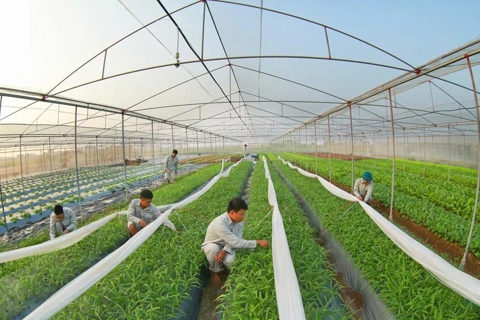
The department reported that the city now has more than 900 hectares of high-tech agriculture, including net houses, drip irrigation, and automated sensors, which help increase productivity by 15% - 20% and reduce production costs by up to 30%, while improving biological quality control.
Over 95% of the city’s large-scale farms now use biological waste treatment technologies, paving the way for circular agriculture models that reduce rural pollution and enhance sustainability.
In addition, there are over 100 closed production chains in Hanoi, with more than 1,000 cooperatives engaged in high-tech or value-added agricultural activities, such as combining eco-tourism and experiential education, while preserving and promoting local culture.

A safe vegetable farm in Hanoi's Thuong Tin Commune. Photo: Ngoc Anh/The Hanoi Times
Regarding this, agricultural expert Le Thu Hang, in a sharing with Hanoimoi Newspaper, said that the coordinated "five-party model" involving farmers, authorities, businesses, scientists, and banks, is the foundation for sustainable agricultural development amid urban growth.
From a planning perspective, Dao Ngoc Nghiem, Vice Chairman of the Vietnam Urban Planning and Development Association, stressed the need to embed agriculture into the urban ecosystem.
“Agriculture should not be treated as separate from the city’s development, but rather as a key component of its ecological framework,” he told Hanoimoi.
Hanoi’s agricultural sector must closely follow the 2024 Capital Law and the Capital Planning for 2021–2030, with a vision to 2050.
Nghiem stressed the need to define specialized production zones; develop concentrated and value-chain-based production areas; and support high-tech and digital transformation in agriculture, together with integrating tourism and enhancing product quality monitoring and promoting One Commune One Product (OCOP) and organic goods.
The adjusted Hanoi Capital Master Plan supports ecological and hi-tech agriculture, circular farming, waste recycling, and the relocation of polluting production facilities from residential areas and craft villages.
The city’s commitment to rural development is reinforced by Resolution No. 04-CTr/TU of the Hanoi Party Committee.
The city's Party Congress goals for 2021-2025 also aim to accelerate the implementation of the national program for new rural development linked with agricultural restructuring and rural economic growth through high-quality and marketable agricultural products.
|
The Resolution No. 04-CTr/TU allows riverside and islet farmland to be used for multiple purposes, with a focus on ecosystems and biodiversity preservation for temporary use of land and no storage of hazardous chemicals. Projects combining agriculture with tourism or educational experiences must cover at least 10,000 square meters, excluding livestock and perennial crop zones, and require official approval of construction designs. All construction must be located outside flood control and irrigation protection areas, and away from riverbank erosion zones. Specifically, on the Day River system, structures must lie outside designated flood discharge corridors; for the Red and Thai Binh rivers, they must be in officially designated development zones. Buildings are limited to one story, no more than six meters high, without basements, and must use eco-friendly, easy-to-dismantle materials. Land users will not receive compensation upon project expiration or land reclamation, and must restore the land to its original state. Communal authorities will handle permits and inspections. |