Hanoi sets ambitious 2026 plan to modernize cooperatives and high-tech agriculture
Hanoi is stepping up efforts to modernize its collective economy in 2026, with a strong focus on high-tech agriculture, sustainable value chains and attracting young talent to cooperatives.
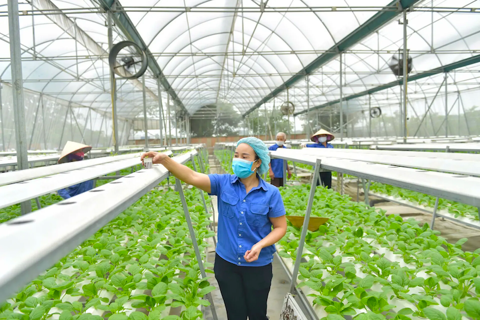
THE HANOI TIMES — Hanoi has set a target to develop 50 high-tech agricultural cooperative models linked to sustainable value chains and help 20 cooperatives attract young workers in 2026, according to a newly issued city plan on collective economic development.
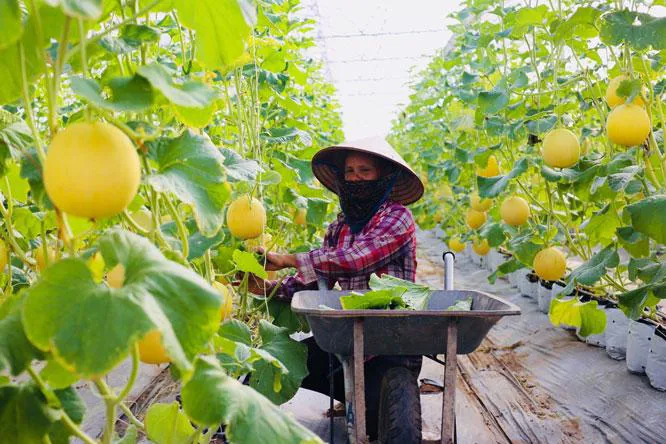
Growing cantaloupe at Chuc Son Clean Vegetable Cooperative in Chuong My Ward. Photo: Ngoc Anh/The Hanoi Times
Under the plan, Hanoi will assist 10 cooperatives with funding for product display spaces and operating facilities, while targeting an average annual revenue of VND3.2 billion (US$121,500) per cooperative.
The city expects the average annual income of cooperative workers to reach VND70 million (US$2,660), with average profits of about VND240 million (US$9,100) per cooperative in 2026.
Hanoi also plans to establish 150 new cooperatives and three cooperative unions, strengthen at least 240 existing cooperatives, dissolve more than 100 inactive or non-compliant units and develop and replicate 10 effective new-style cooperative models.
At least 70% of cooperatives and cooperative unions are expected to achieve good or fairly good performance ratings, while around 250 cooperatives will receive support for trade promotion and market expansion. Some 3,490 cooperative managers and professionals will participate in training and capacity-building programs.
To meet these targets, the city will step up implementation of the 2023 Law on Cooperatives and related guidance.
Hanoi will promote green, digital and circular cooperative models, strengthen links with businesses in digital transformation and refine policies to improve the quality and effectiveness of the collective economic sector.
Sustainable development and a stronger role for the collective economy remain central to Hanoi’s overall economic structure.
The city will prioritize cooperatives connected to production value chains, green growth, the circular economy and experiential tourism, while accelerating the application of high technology in both production and consumption.
Hanoi also encourages the creation of new, high-quality cooperatives across diverse sectors and scales, while supporting successful models to serve as benchmarks for wider replication.
A key pillar of the plan focuses on digital transformation, with the gradual formation of “digital cooperatives”.
This effort aims to strengthen governance, improve financial transparency and expand access to value chains and credit for cooperative members.
Source: Plan No. 381/KH-UBND dated December 30, 2025