Hanoi taps Ao Dai heritage in new push for cultural tourism
With rising global interest in experiential travel, Hanoi is betting on the elegance and craftsmanship of the ao dai to tell its cultural story and draw visitors deeper into the city’s heritage
THE HANOI TIMES — On a breezy evening at the Hanoi Museum, a ripple of silk moves through the crowd. Ao dai hems catch the light as visitors explore booths of silk, embroidery and shimmering threads.
The collection was featured at the Hanoi Tourism Ao Dai Festival 2025 to let Vietnam's most iconic garment speak louder than ever.

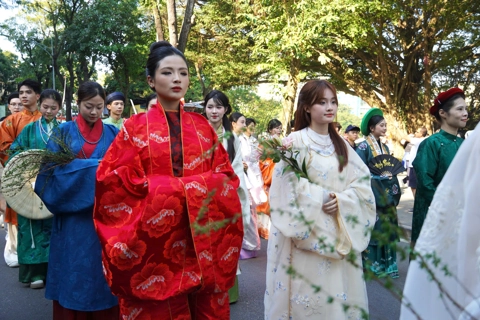
The ao dai from the Trach Xa Ao Dai Craft Village featured in the "Bach Hoa Bo Hanh" parade on Hoan Kiem Lake’s walking street in late November. Photos: Huy Pham/The Hanoi Times
In recent years, as cultural and experiential tourism have reshaped global travel trends, Hanoi has embraced the ao dai not only as clothing but also as a living vessel of heritage. The city is turning the tunic into a cultural symbol that tells the capital’s story in its own elegant language.
The festival reflects this shift. Designer collections transform the museum grounds into an open-air gallery, where visitors can try their hand at embroidery, receive quick fittings and consult with fabric experts. What might have been a fashion show becomes a layered cultural experience.
According to Dang Tran Quang, Deputy Director of the Hanoi Department of Tourism, this is precisely the city’s goal.
“Ao dai carries history, technique and emotion. When visitors see how it’s made, meet artisans and understand the symbolism behind each design, they don’t just take photos but take home a piece of Vietnamese identity. That’s the kind of tourism Hanoi wants to build,” he said.

Traditional ao dai designed by Pham Gia Tailor featured at the Bach Hoa Bo Hanh program.
Designers and artisans deepen this vision by revealing the craft and symbolism behind each ao dai, allowing the garment to shift from attire to cultural artifact as visitors learn its precise lines and meaningful motifs.
Craft villages - where heritage breathes
Beyond Hanoi’s central districts, the ao dai’s pulse lies in its craft villages, where heritage is lived rather than displayed.
In Trach Xa, home to generations of ao dai tailors, the steady rhythm of cutting, stitching and pressing shapes daily life, and rising tourist interest is drawing more visitors to the craft’s roots.
Ao dai artisan Nghiem Van Dat, who has worked in his small workshop for more than 40 years, said this renewed attention has given the village a fresh sense of purpose.

Golden Imprint, an ao dai collection by artisan Nghiem Van Dat from Trach Xa Ao Dai Craft Village, showcased at the Hanoi Tourism Ao Dai Festival 2025.
“When I was young, we made ao dai mainly for local families and ceremonies. Now visitors come from everywhere asking how long a collar takes, why seams must be hidden, why certain patterns belong to certain generations. I’m proud to explain that the ao dai carries our family stories. When a tourist wears something I made, it feels like our village is traveling with them,” he said.
These villages are now part of curated tours where visitors choose fabrics, observe tailoring, try basic embroidery or speak with artisans. The experiences are intimate and anchor the city’s tourism development in community tradition.
Meanwhile, ao dai rentals and themed tours such as “Strolling with Ao Dai” are growing quickly in the Old Quarter and around Hoan Kiem Lake. Studio owners and travel companies report rising demand for photography sessions, custom tailoring and ao dai-inspired souvenirs.
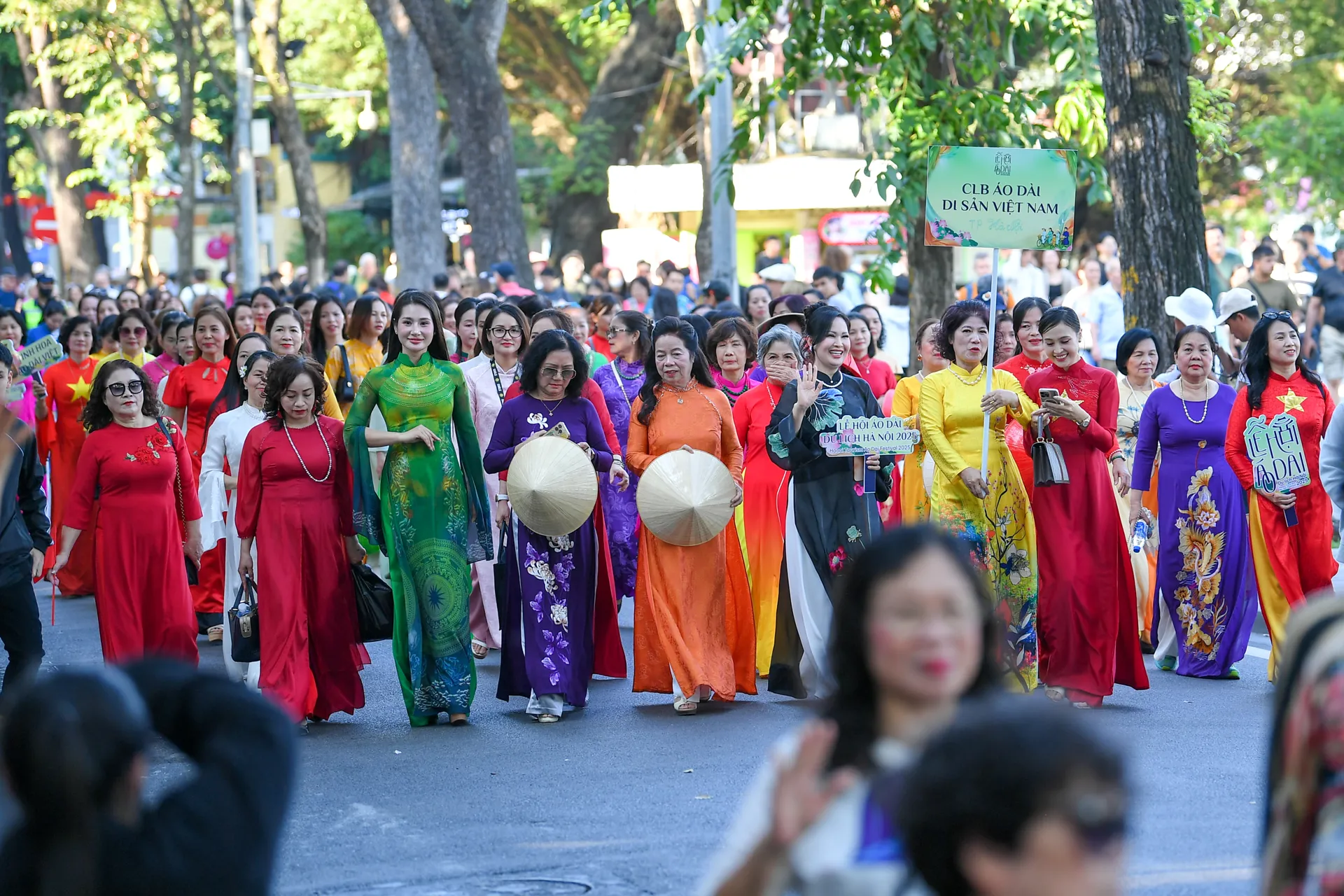
For generations, the ao dai has been a beloved outfit for Vietnamese women of all ages.
During the recent Hanoi Ao Dai Tourism Festival, the image of thousands of women and students wearing ao dai around Hoan Kiem Lake has quickly become a symbol of Hanoi’s elegance and cultural pride. Yet behind the charm, challenges still persist.
Ao dai tourism products remain uneven, and coordination among craft villages, designers and travel operators needs tightening. Fully developed tours for international visitors are still rare and experts warn that excessive commercialization could dilute authenticity.
Deputy Director Quang said Hanoi wants ao dai tourism to grow without losing its essence, stressing that the craftsmanship, quiet labor and inherited traditions must remain central as the city develops this sector slowly, carefully and with respect.

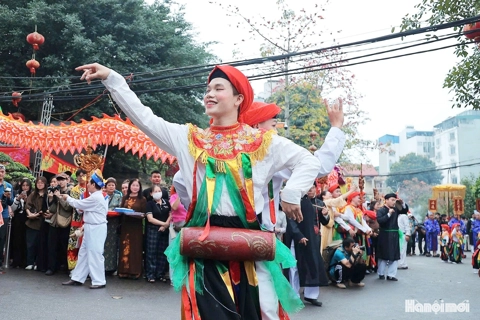
Showcasing modernized ao dai in a parade at the 2025 Hanoi Ao Dai Tourism Festival
The city is considering a thematic route titled “Ao Dai, Heritage and Experiences”, linking the Hanoi Museum, the Old Quarter, Hoan Kiem Lake and major craft villages. Standardizing activities such as sewing sessions, embroidery workshops, mini fashion shows and heritage photo shoots would help make the product more coherent and internationally appealing. Training guides and artisans to better narrate ao dai culture is also a priority.
As ao dai moves through Hanoi’s historic spaces, it becomes more than a garment and turns into a storyteller. In its silk folds lie Hanoi’s hopes that tradition and tourism can coexist and that one elegant dress can become a cultural bridge for travelers from around the world.