Hanoi to ban motorbikes in 12 metropolitan districts by 2030
Plans to ban motorcycles from urban areas have been floated several times over the years, and experts and residents have raised concerns about its feasibility.
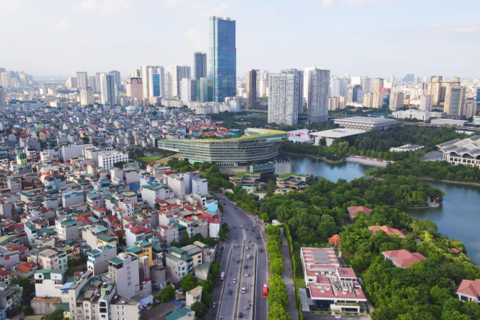
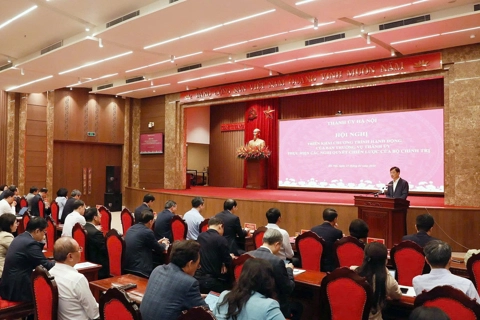
The Hanoi People's Committee has recently approved an economic development program for the 2025-2030 period, in which motorcycle restrictions will be imposed in the metropolitan districts by 2030.
The project aims to restrict the use of motorcycles in this area in line with the infrastructure and service capacity of the public passenger transport system, with a view to a total ban on motorcycles in 12 metropolitan districts of Hanoi by 2030.
Specifically, these districts include Hoang Mai, Long Bien, Thanh Xuan, Bac Tu Liem, Ba Dinh, Cau Giay, Dong Da, Hai Ba Trung, Hoan Kiem, Ha Dong, Tay Ho, and Nam Tu Liem.
The municipal Department of Transportation, in coordination with relevant agencies, has been tasked with formulating a plan to designate inner-city areas with sufficient public transportation infrastructure as motorcycle-free by 2030.
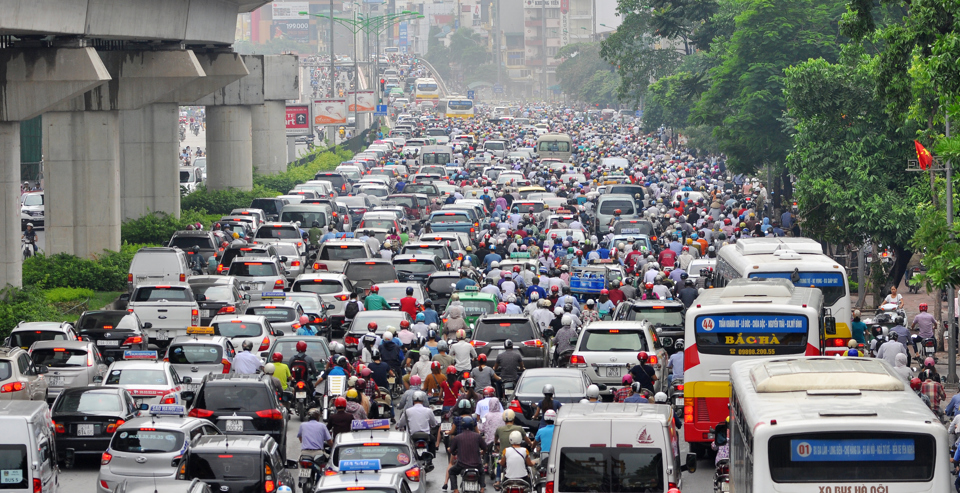
Traffic jam at rush hour on Nguyen Trai Street in Hanoi's Thanh Xuan District. Photo: Pham Hung/ The Hanoi Times |
The Hanoi People's Committee has also asked the Department of Transport to develop a plan to charge motor vehicles entering certain areas of the city. This measure is expected to ease traffic congestion and reduce pollution.
Hanoi currently has around eight million vehicles, of this number, over six million motorcycles. More than one million vehicles from other provinces and cities frequently travel to the capital city.
Plans to ban motorbikes from inner-city areas have been floated several times over the years, and experts and residents have expressed concerns about their feasibility.
According to the city's Department of Transport, Hanoi residents make 14 million trips per day, but only 10% of them use the city's public transportation system, and about 70% currently rely on motorcycles for mobility.
Earlier, the Vietnamese Government asked Hanoi and four other major cities, including Ho Chi Minh City, Haiphong, Danang and Cantho, to plan to ban motorcycles after 2030 to reduce traffic congestion and emissions.
The request was made in a governmental resolution issued on April 6 to ensure traffic safety and prevent traffic congestion in 2022-2025.
The resolution requires the five major cities to focus their resources on congestion management to reduce traffic jams to less than 30 minutes.
Together with Hanoi, these cities must either ban or restrict motorcycles in certain districts after 2030 and develop a system to charge congestion fees in some areas prone to traffic jams and pollution.
The cities’ specialized agencies must work with municipal legislative bodies to develop policies to prioritize public transport to achieve the target of 30-35% of passenger traffic being carried by public transport.
The Transport Development and Strategy Institute under the Ministry of Transport said that due to the different capabilities of public transport systems in different cities, the ministry will initially restrict motorcycles in selected areas and move toward a complete ban on motorcycles in the five major cities by 2030.