Hanoi: Spring festival season is vibrant again
A series of celebrations occur across Hanoi, marking the return of the vibrant atmosphere of spring festivals in the Red River Delta region after years of Covid-19 impacts.
Few countries can boast of having as many traditional festivals as Vietnam. With the tendency to seek traditional spiritual values, many villages revive festivals and games of the past.
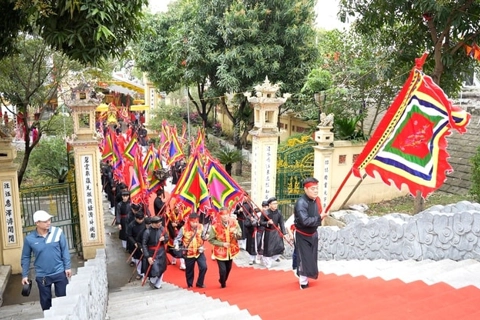
| The opening ceremony of the Giong Festival at Soc Temple in Gia Lam District, Hanoi. Photo: Trong Tung |
Apart from the 12 major annual national festivals, some 7,000 village and regional revelries are held throughout the year.
The most colorful and vivid celebrations usually take place in spring, especially in Hanoi and the Red River Delta region, where hundreds of festivals are held in the first months of the year.
Traditional festivals meaning
Being an agricultural country where the majority of the population are farmers, Spring is a time to indulge after a hard year of work and to remember the ancestors. In the months following the Tet holiday, the country is enveloped in the sound of drums, singing, and traditional music.
As the ancients believed, the locals relax and hope for a bountiful harvest, a good catch, or a successful hunt. Therefore, this month of February is considered a time of celebration and festivals are an important element of Vietnamese national culture.
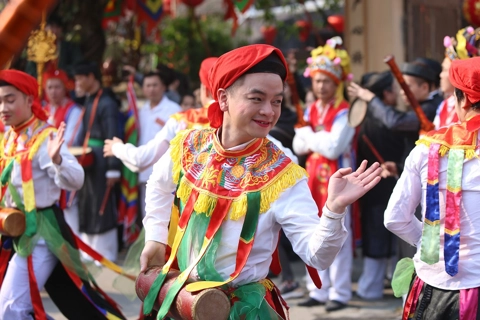
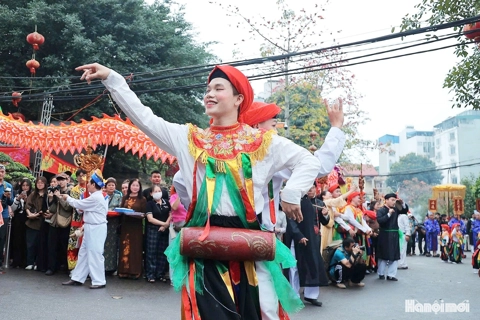
Boys pretend to be girls in the dance called “girls playing drums” at Trieu Khuc Village’s Festival. Photo: Ngoc Tu |
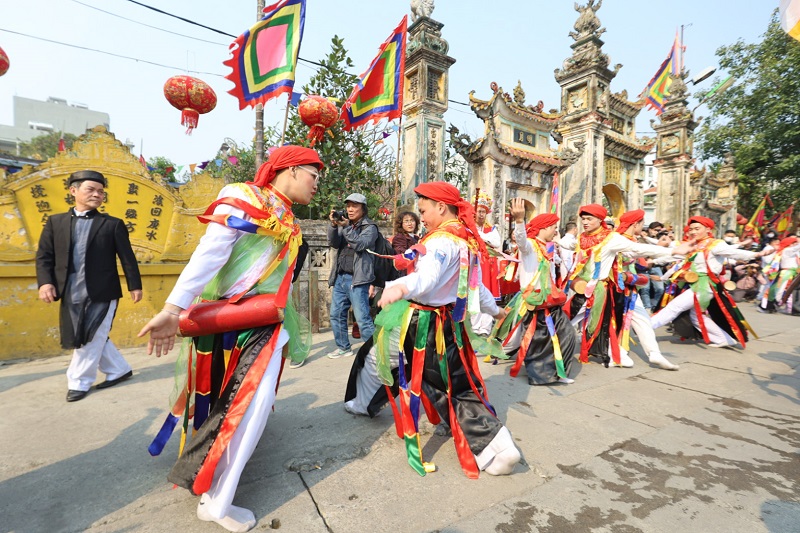
According to Vietnamese culture researcher Nguyen Hung Vi, although they differ from place to place, all Vietnamese festivals have two essential elements: a procession or ceremonial rites, and celebrations or entertainment activities.
“The procession often includes a ceremony to worship legendary saints or historical figures who made important contributions to the country or the local area,” he said.
Meanwhile, “the celebrations can be divided into four types: those that came prior to the development of modern agriculture, when Gods were petitioned to bless people with good fishing and hunting; those that mark agricultural cycles, to encourage the sun to shine or the rice to grow; river rituals, with boat races to encourage rainfall or kite flying to end a wet spell; and finally, those based on real or imagined historical events,” he added.
Vietnamese as well as foreign tourists attend festivals not only to have fun but also to learn about the history of a particular village or region, the local culture, and spiritual life and customs.
Colorful festivals in Hanoi
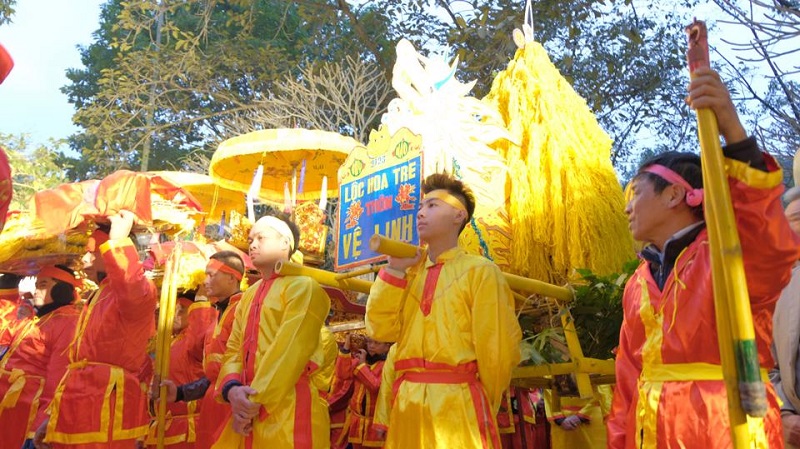
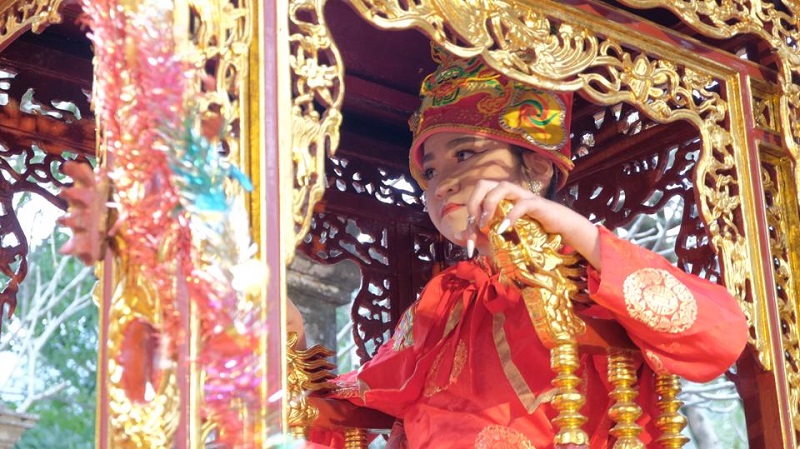
The procession of the “young female general” in the Giong Festival. Photo: Trong Tung |
The first spring festival in the year of the Cat is the Dong Da Hillock Festival, which was held on the 5th day of the first lunar month, or January 21.
The vivid festival was held in Dong Da Hillock, Dong Da District, Hanoi, in honor of Emperor Quang Trung (1753-1792), one of the most prominent heroes of Vietnamese history.
Subsequently, the Co Loa Temple Festival is organized from January 6 to 16 of the first lunar month (January 27 to February 6) by the 12 villages of the Co Loa Commune in Dong Anh District, Hanoi.
This annual event is held to pay tribute to King An Duong Vuong, founder of the ancient Vietnamese kingdom of Au Lac, who led the struggle against foreign enemies and ruled the country for 50 years in the 3rd century BC.
The Giong Festival, which runs from the 6th to the 8th of the first lunar month (27 to 29 January) in Soc Temple in Gia Lam District, Hanoi and usually attracts about 20,000 visitors. 2023 is the year that registers the highest number of visitors to the festival in recent years.
Being officially recognized as an intangible cultural heritage by UNESCO in 2010 and one of the largest festivals in the Red River Delta, the Glong Festival commemorates Saint Giong, who defeated the Chinese Shang invaders under the 6th Hung Dynasty (approximately 1712 BC).
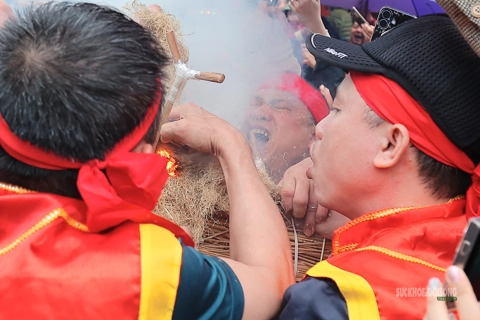
A ritual ceremony begins the festival, with a procession of trays of vegetarian food, including rice and salted eggplant, to recreate the tale of the villagers who gave food to Saint Giong.
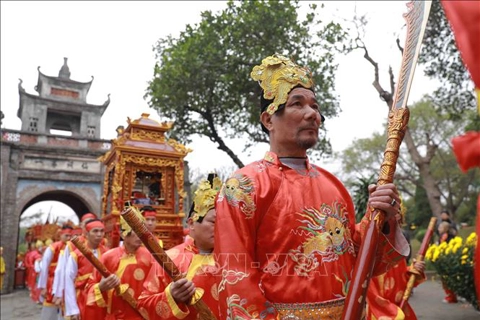
| The procession ceremony at the Va Temple Festival. Photo: Quy Nguyen |
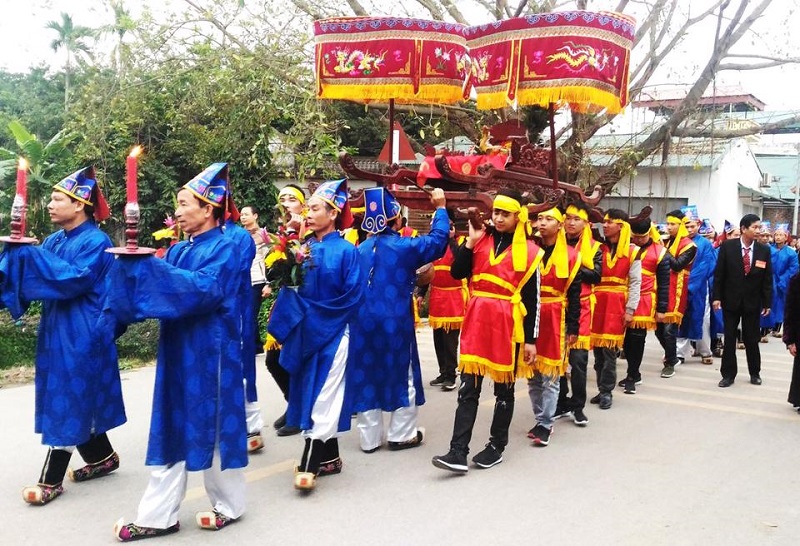
Meanwhile, the Va Temple Festival takes place until February 7 at Van Gia Village, Trung Hung Ward, Son Tay Town, Hanoi.
The temple worships Saint Tan Vien, one of the four immortals of Vietnamese popular myth. Also called "Palace of the East", it is one of four temples in the Son Tay region dedicated to this legendary figure.
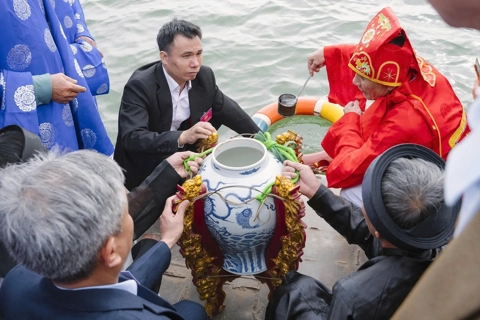
The most awaited ceremony is the procession of the ancestral tablets of the three deities of Mount Tan Vien (Saint Tan Vien and his two cousins) from the Va Temple to the Doi Temple in the neighboring province of Vinh Phuc across the Red River.
Va Temple Festival was recognized as a National Intangible Cultural Heritage in 2016.
According to Son Tay Town People's Committee, the organization of the festival aims to preserve and promote the value of local historical and cultural relics, and at the same time, helps enhance the tourism potential of Son Tay Town.