Hanoi uses technology and certification to boost green farming
The city's agricultural sector aims to improve the quality, value, and productivity of its key agricultural products through production restructuring.
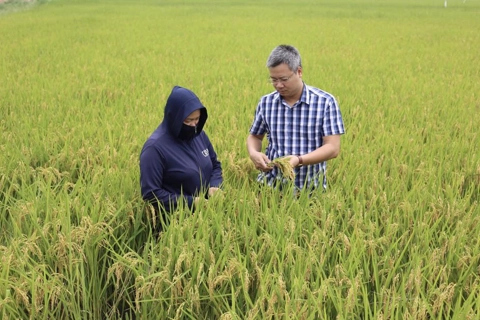
Hanoi's agricultural sector has led farmers to focus on green, safe and environmentally friendly agricultural production. Many green farming models have emerged, not only achieving high economic efficiency and export potential, but also playing a role in minimizing environmental pollution.
Double benefits of safe production
| Nguyen Thi Thu Thoan and the poultry and wild boar farm. |
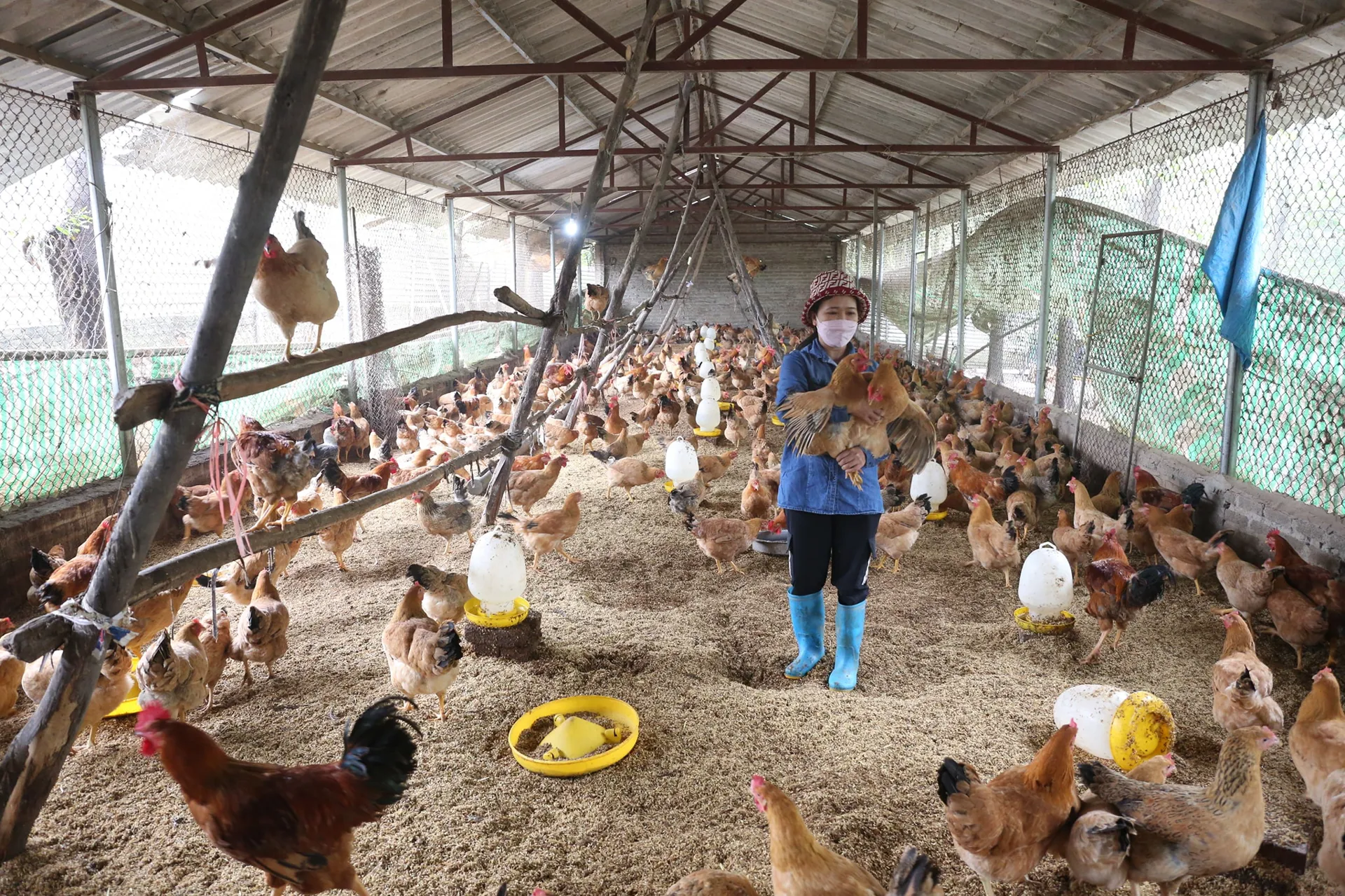
The Nguyen Thi Thu Thoan family's poultry and wild boar farm (in Minh Phu commune, Soc Son district) is one of the circular models that has achieved high efficiency.
The farm uses organic bedding made from livestock by-products, which helps reduce disease in the herd and minimize odor in the barn area. The used organic bedding is then recycled with waste to make organic fertilizer. The chicken feed is a plant-based mix with probiotics, without the use of antibiotics or growth promoters.
In 2021, Thu Thoan's probiotic chicken products received a four-star OCOP (One Commune One Product) certification, and the farm received a certificate of compliance with Vietnam's organic farming standards.
In Phu Cuong commune in the same district, Nguyen Thi Lien's farm has integrated vermiculture to produce feed for livestock and poultry, and even plays music for the pigs.
She said with this method, the farm supplies the market with about one ton of breeding worms, 100 kg of dried worms, and four tons of pork per month, earning about VND2 billion (US$79,000).
More and more "green" livestock models, such as Thoan and Lien's, are being replicated to meet changing customer preferences. According to industry insiders, maximizing the use of agricultural by-products for organic livestock production and creating a circular economy is seen as an inevitable trend for sustainable industry growth.
In the riverside area of Thuong Coc Commune, Phuc Tho District, Nguyen Van Mo's model for growing black grapes not only ensures food safety but also provides high economic value. The entire process of his black grape cultivation adheres to the VietGAP production standards.
He added that to ensure the grapes grow regardless of the weather, the vineyard is designed with advanced technologies such as automated irrigation systems that conserve water, and temperature and light controls.
"The 1,500-square-meter vineyard with 600 grape vines produces two harvests a year, each providing 15 to 20 tons of grapes for the market, generating a total income of over VND500 million (nearly $19,800) per season," Mo said.
Director of the Hanoi Agricultural Extension Center Vu Thi Huong said that since the beginning of 2024, the center has implemented 18 agricultural extension models, including 10 crop, four livestock and four aquaculture projects.
She added that these models primarily focus on developing organic, VietGAP-certified production of vegetables, flowers and fruits, while utilizing advanced technologies. The models also promote climate-smart agriculture and environmental protection in line with market demands.
Huong noted that agricultural stakeholders have been proactive in adopting sustainable practices, including improved farming methods, integrated pest management (IPM), the "four rights" principle for crop protection products, and reduced use of inorganic fertilizers.
Cooperative seeks support for green transition
| A model of safe and organic vegetable production in Hong Thai commune, Phu Xuyen district, Hanoi. Photo: Ngoc Anh/ The Hanoi Times |
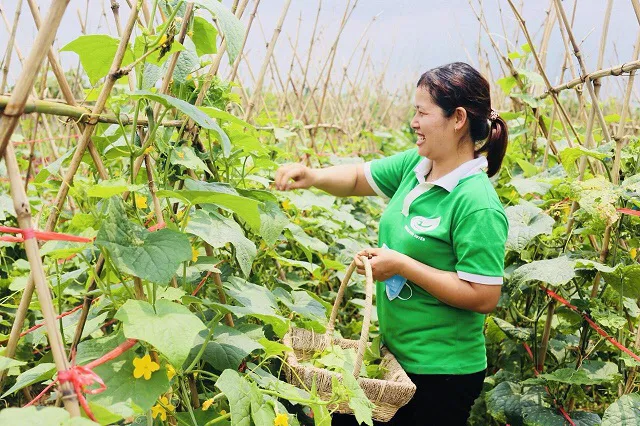
Dong Thi Vinh, Director of the Hong Ha Safe Fruit and Vegetable Cooperative (in Phu Xuyen District), has called on relevant authorities to prioritize funding and resources from the National Target Program for New Rural Development to support the cooperative's transition to green agriculture.
She also urged the authorities to help the cooperative register production processes, finalize labeling and packaging, and implement traceability systems to build brand recognition for their agricultural products.
Vinh suggested establishing a dedicated e-commerce platform to connect producers, cooperatives, and consumers of safe agricultural products.
According to Nguyen Thi Tuyet Anh, Head of the Thanh Tri District Economic Division, the district is helping cooperatives and farmers adopt safe production methods to limit fertilizers, chemicals, and antibiotics, with the goal of promoting VietGAP-certified safe and clean agricultural products.
It also encourages cooperation, investment, trade and market development for agricultural products to create favorable conditions for the production of high-quality, safe goods that meet market demands.
Nguyen Dinh Hoa, Deputy Director of the Hanoi Department of Agriculture and Rural Development, emphasized that the city's agricultural sector is focused on restructuring production to improve the quality, value and efficiency of its key and distinctive agricultural products.
He added that Hanoi is accelerating the OCOP program and digital transformation in agriculture. The city will implement policies to boost production, increase the use of science and technology, and shift to a green, economy-oriented approach.
Hoa stressed that while the transition to green, clean and safe agricultural production is an inevitable trend, the conversion process requires a roadmap tailored to the conditions of each locality and the city's socio-economic development strategy.
Hanoi aims to have 1.5-2% of its arable land under organic cultivation by 2025, with organic livestock products accounting for 1-2% of total production, according to a 2022-2030 plan. The city also plans to have 10 hectares of certified organic aquaculture and 150 hectares of aquaculture transitioning to organic practices. Hanoi's agricultural sector is undergoing comprehensive restructuring, aligning its rural economic development with the new-style rural development program. These efforts revolve around three key pillars, including ecological agriculture, modern rural areas, and a civilized agricultural community. The city is shifting its mindset from a production-centric approach to an economy-oriented one, focusing on the green values generated by green transformation, green consumption, and a green economy. |