Hanoi village gates: Where time stands still
Hanoi's village gates have become part of people's memories, a testament to the city's rich history and cultural significance.
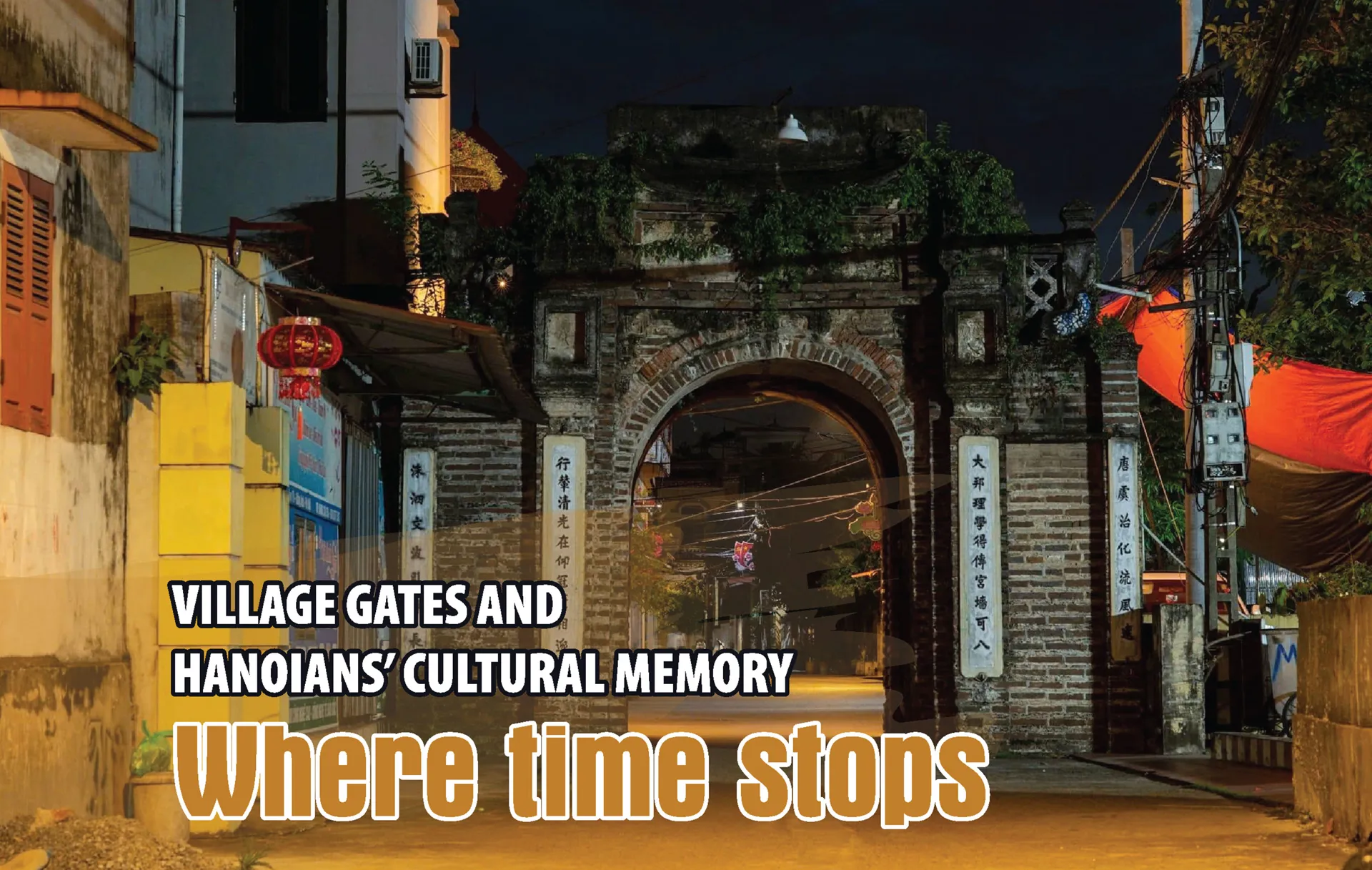
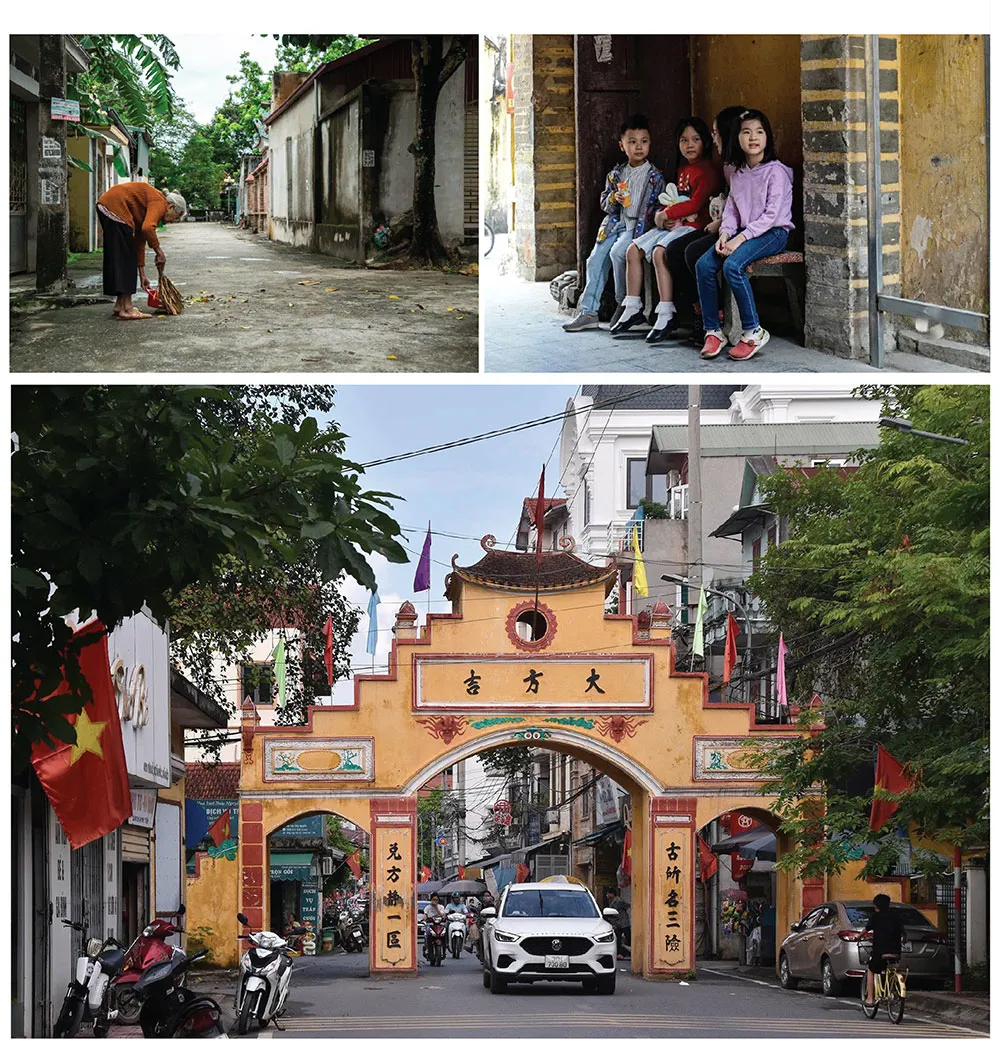
THE HANOI TIMES — Amidst the vibrant symphony of modern life in downtown Hanoi, the village gates on Thuy Khue Street have become a quiet backdrop. Yet, these places continue to whisper old stories and hold on to their identity.
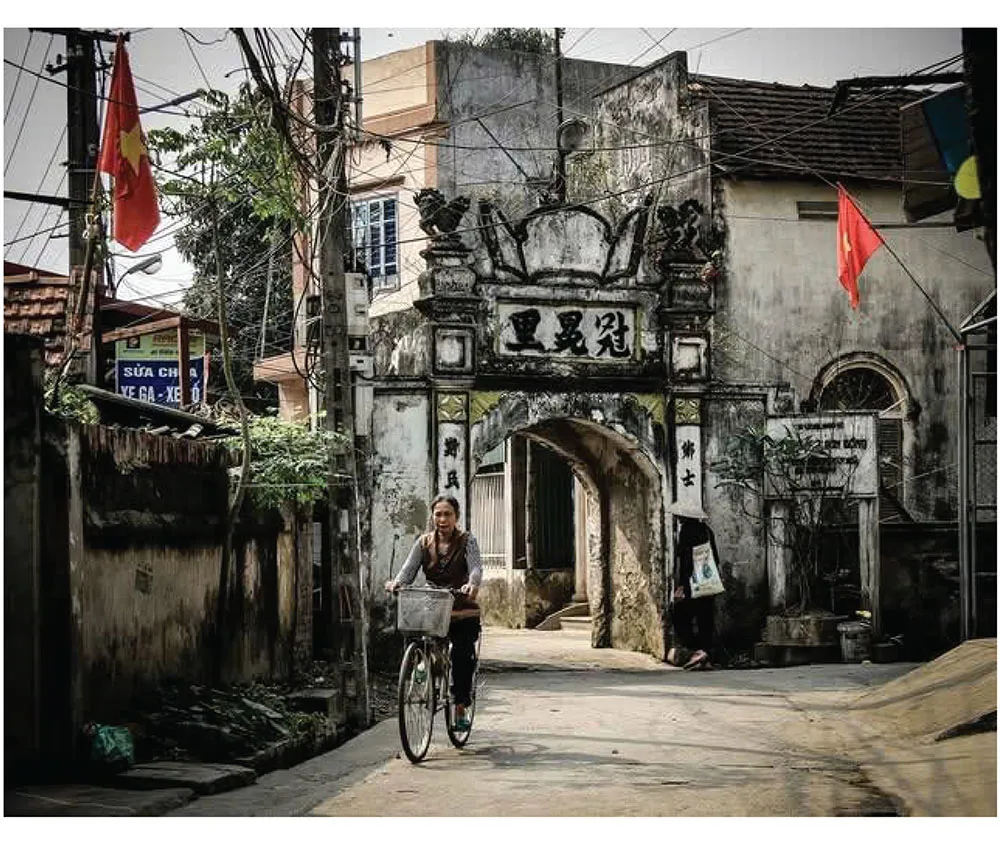

Thuy Khue Street, along West Lake, is renowned for its historic village gates, including those from Dong Xa, Yen Thai, Ho Khau, and Thuy Khue. Each gate is a unique slice of history reminiscent of Hanoi's renowned ancient craft villages, such as those specializing in making Do paper, tanning, and wood sculpture.
Hoang Thi Yen, a resident who has lived next to the Ho Khau village gate for decades, has heard many stories about it from her father. As far as she knows, the structure has been there for hundreds of years.

"The Ho Khau village gate was repainted in 1995. Before that, it retained its aged, mossy exterior. I’m now 60 years old, yet I still don’t know its origin because it’s so old. Over the years, the villagers have tried to preserve the unique cultural features of each village and gate, from the mossy tiled roof to the steps," she said.
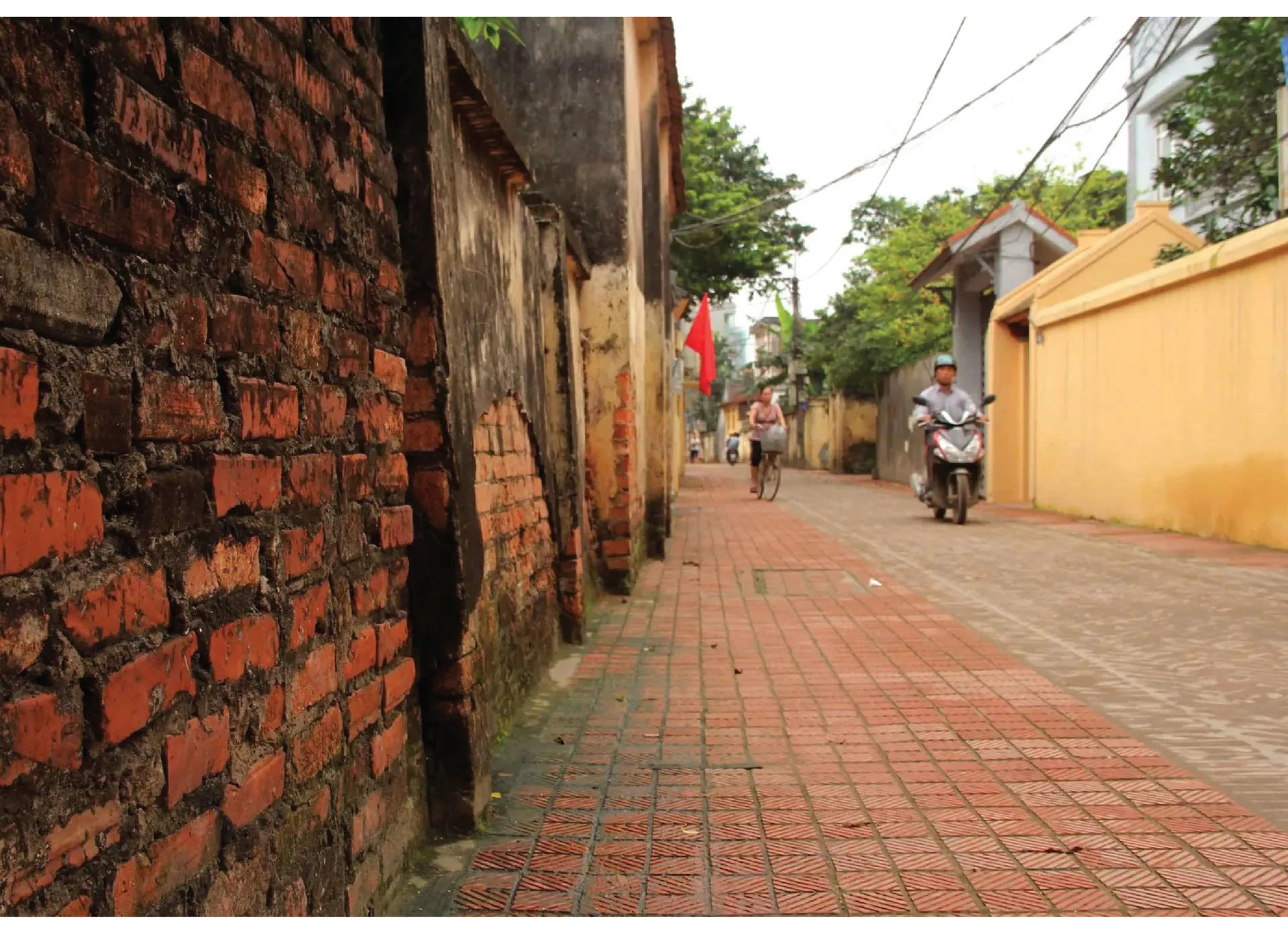
One of the oldest villages on Thuy Khue Street is Yen Thai, which still boasts a 300-meter-long red brick road, a historical witness to the past. According to the people of Yen Thai, although the road has been repaired multiple times, leaders at all levels of government and the local community have always agreed to preserve its original form.

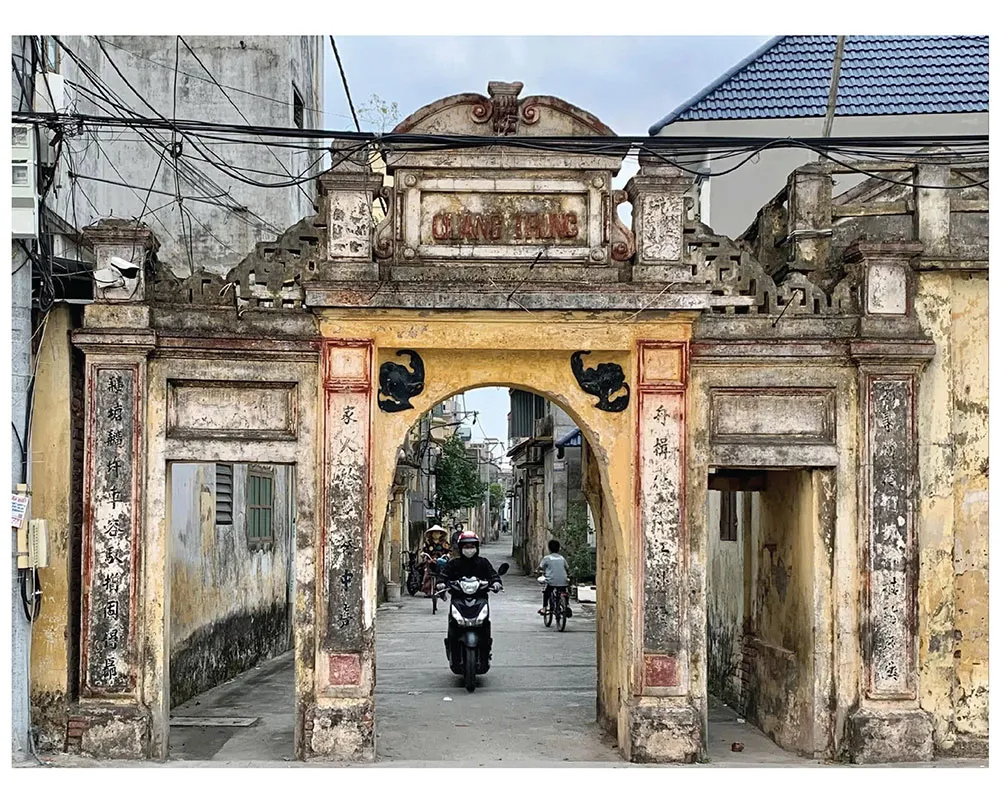
“I’ve lived here for 75 years, spending almost my entire life in this land. Among the remaining village gates along the street, the Yen Thai village gate is the one I remember the most. It’s famous not only for its ancient appearance, the moss-covered tile roof still features the old type of tiles, which have never been replaced, but also because Yen Thai Village used to be known for its craftsmanship, particularly its Do paper, which was famed throughout the region,” comments Nguyen Van Tuan, an elderly resident.
He said that from the past until now, Hanoi streets have always been bustling and noisy with vehicle horns. However, just stepping through the gate of Yen Thai Village seems to separate people from the outside hustle and bustle. The space inside the village seems to be quieter, and life here is a few beats slower, gentle and peaceful under the shade of banyan trees and communal house roofs.
According to the elders on Thuy Khue Street, all the village gates used to have doors. They would open the doors early in the morning to mark the beginning of a new day and close them at night. Later, the doors were removed to make it easier to enter and exit. The old-fashioned carvings that once supported the doors remain below.
Thuy Khue is not alone. Several streets around Hanoi still have ancient village gates, serving as quiet symbols amidst modern streets and gentle reminders of the land's deep roots and millennial civilization.
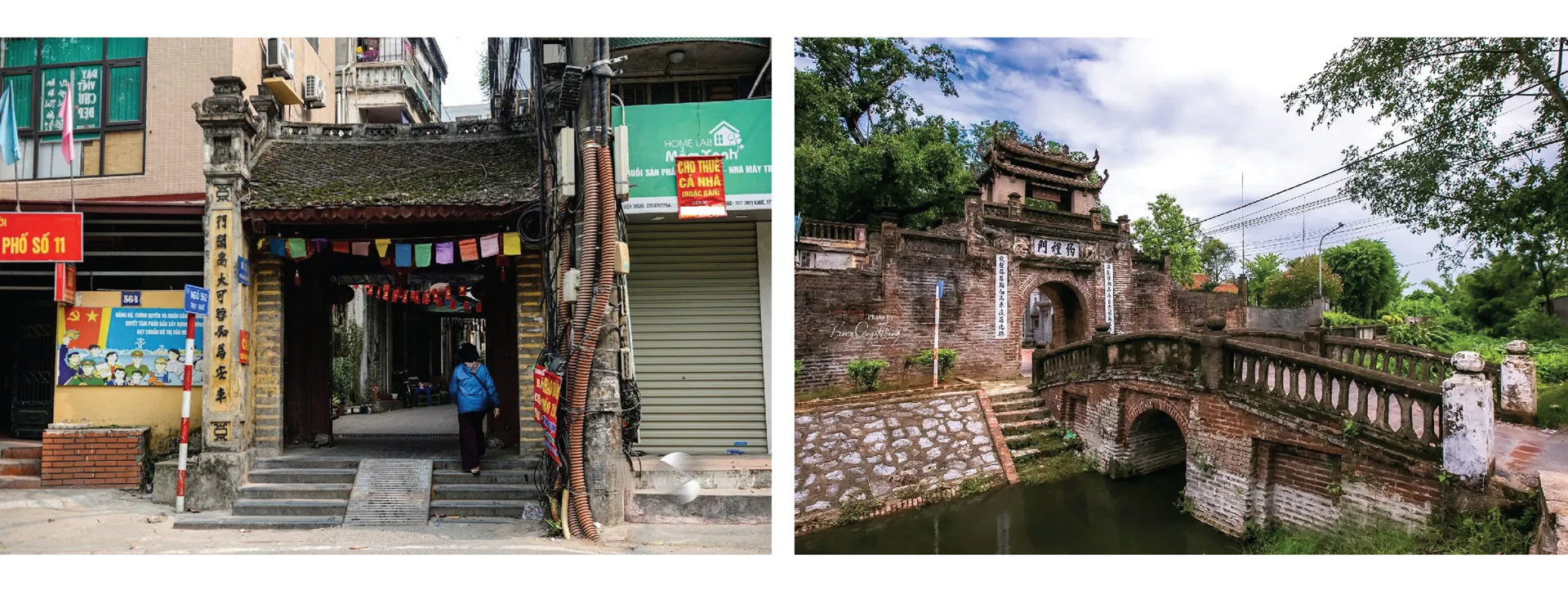
On Nguyen Hong Street, which was formerly part of Thanh Cong Village, a small village gate is nestled behind an old-style apartment building. Worn down by time, it recalls the tranquil atmosphere of the old village.
Several village gates, such as that of Nghia Do, have been restored and preserved on Buoi Street to maintain some of the old soul amidst urbanization.
Further from the city center, ancient villages such as Cu Da and Duong Lam have become rare "living museums" where Northern Vietnamese village architecture, with the village gate as a special highlight, remains almost intact.
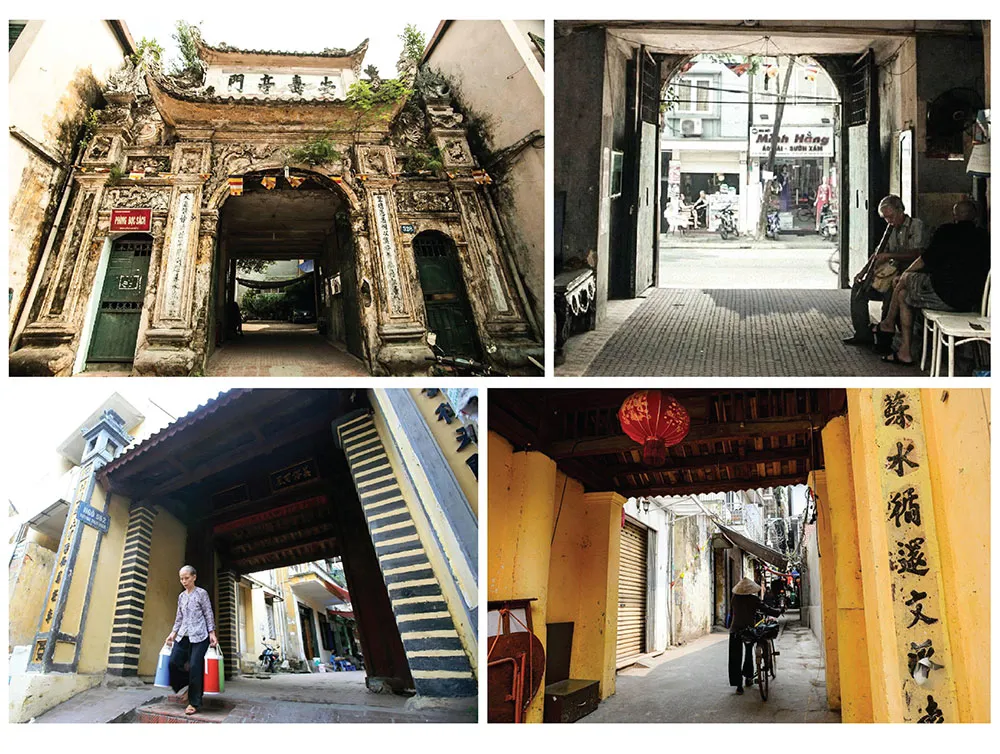
The Cu Da village gate has a mossy tiled roof and graceful curves reminiscent of ancient brush strokes. Meanwhile, the Mong Phu village gate in Duong Lam, built of laterite, is considered one of the oldest village gates in Hanoi and has retained most of its original appearance.
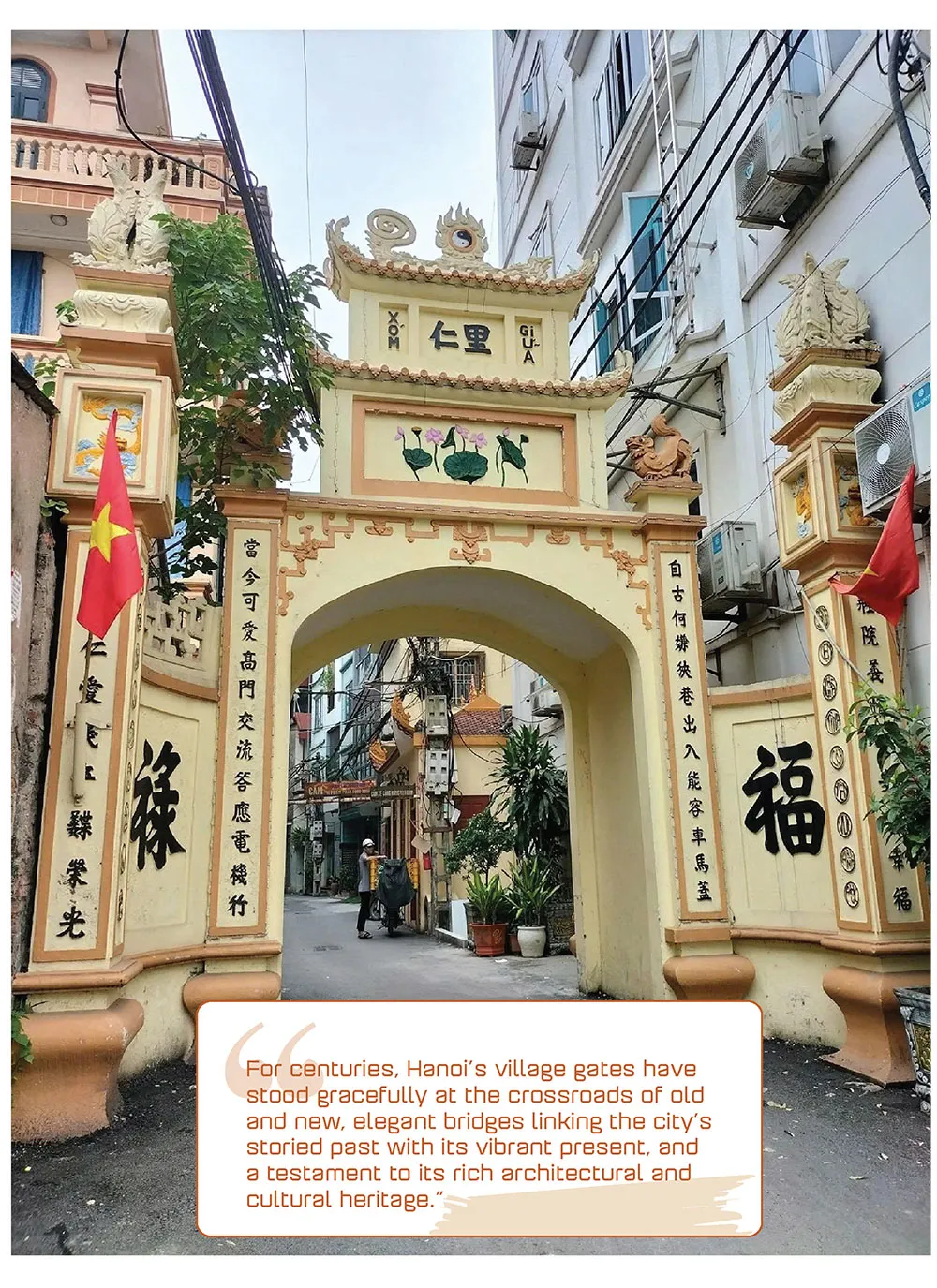
Each gate has distinctive architectural features that reflect the creativity and talent of the ancients. They show a harmonious blend of aesthetics and functionality, from traditional materials such as laterite, ancient bricks, and ironwood to intricate carvings. The area surrounding a village gate often features a banyan tree, a well, and a communal house, resulting in architecture imbued with a rural vibe.
Besides, the village gate plays an important role in the community's social and spiritual life. Communal activities such as festivals, village meetings, and guest receptions occur here, as does showing reverence toward ancestors and deities.
The couplets and horizontal inscribed boards carved on the village gates are works of art that contain the Vietnamese people's philosophies of life, ethics, and good traditions.

However, many village gates are facing risks of degradation in the context of sweeping modernization and urbanization. Pressure from expanding transportation infrastructure and new construction has caused many of them to be overshadowed or demolished.
According to a report from Vietnam Architecture Magazine, many village gates in Hanoi are over a century old and have become cultural heritage sites that must be preserved. However, due to a lack of strict regulations and proper attention, the construction and renovation of these gates is often chaotic, resulting in ostentation, excessive alterations, and the loss of their inherent characteristics and essence.
Dr. Nguyen Thi Thanh Mai, from the Faculty of Cultural Industries and Heritage at the School of Interdisciplinary Sciences and Arts, said that, in the context of socioeconomic development, many villages have proactively called on their residents and expatriate natives to renovate and rebuild village gates to uphold traditional beauty while creating a neater appearance for the villages.
Nevertheless, this process results in both positive and negative consequences, including keeping the old architecture intact and eroding the original values as well.
Currently, Yen Thai Village's entrance still retains its ancient appearance, thanks to a red tile road with a coconut leaf pattern.
Another issue is the shortage of funding and experts in heritage conservation. Restoring village gates requires an in-depth understanding of traditional architecture, construction materials, and techniques. However, not all communities have the necessary resources and manpower to carry out this mission effectively.
To preserve and promote the values of village gates amidst urbanization, a comprehensive strategy involving administrative levels, experts, and local communities is needed.
It requires long-term preservation strategies, including raising community awareness through regular heritage education and communication activities within communal cultural programs. At the same time, it needs a refined legal framework and supportive policies that define village gate protection, classify valuable works, provide financial support for restoration and embellishment, and control new constructions to prevent encroachment.
Another indispensable step is taking an inventory of village gates and creating scientific records that assess their current status, architectural features, and historical significance. These records will serve as the basis for determining appropriate intervention plans and proposals for relic recognition.
Restoration must strictly preserve original elements using traditional materials like laterite, ancient bricks, and Vietnamese tiled roofs, avoiding modern renovations, with direct involvement from conservation experts, architects, and craft village artisans.
Mobilizing social resources is also a sustainable approach. Various heritage-loving organizations, businesses, and individuals are willing to contribute as long as there is a transparent mechanism. As beneficiaries of heritage, the local community ought to become a monitoring force and join the conservation process.
Combining conservation with community-based tourism allows ancient village gates to become highlights of craft and village routes, generating livelihoods and transforming living heritage into a resource for sustainable development.