Hanoi warns against mukbang trend of eating raw and unfamiliar foods
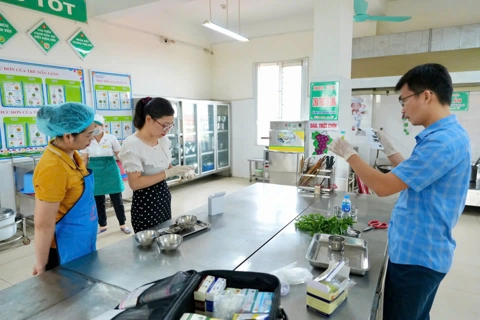
A communication campaign has been in place for the dissemination of information on food safety regulations in Hanoi.
Many videos of people eating raw or strange food have recently surfaced on social networks, which is considered a mukbang trend that has appealed to many young people. As a result, Hanoi authorities are urging people to be more aware of food safety.
Videos showing raw food or strange food combinations are spreading on social networks, and experts are concerned that it could become a trend that damages people's health and causes eating disorders. In particular, the consumption of raw or uncooked food poses a risk of parasitic infection, food poisoning and others. Most of the "raw food videos" posted on Youtube are highly popular among netizens, with thousands or even millions of views.
Dr Nguyen Trong Hung, from the National Institute of Nutrition, said the mukbang trend should be considered an unhealthy eating habit, one that negatively impacts young people.
"During the video recording process, mukbang practitioners may buy more food than they need, causing food waste; or they may overeat, which affects their health. For viewers, the trend may encourage them to overindulge, which is harmful to their health," Hung told The Hanoi Times.
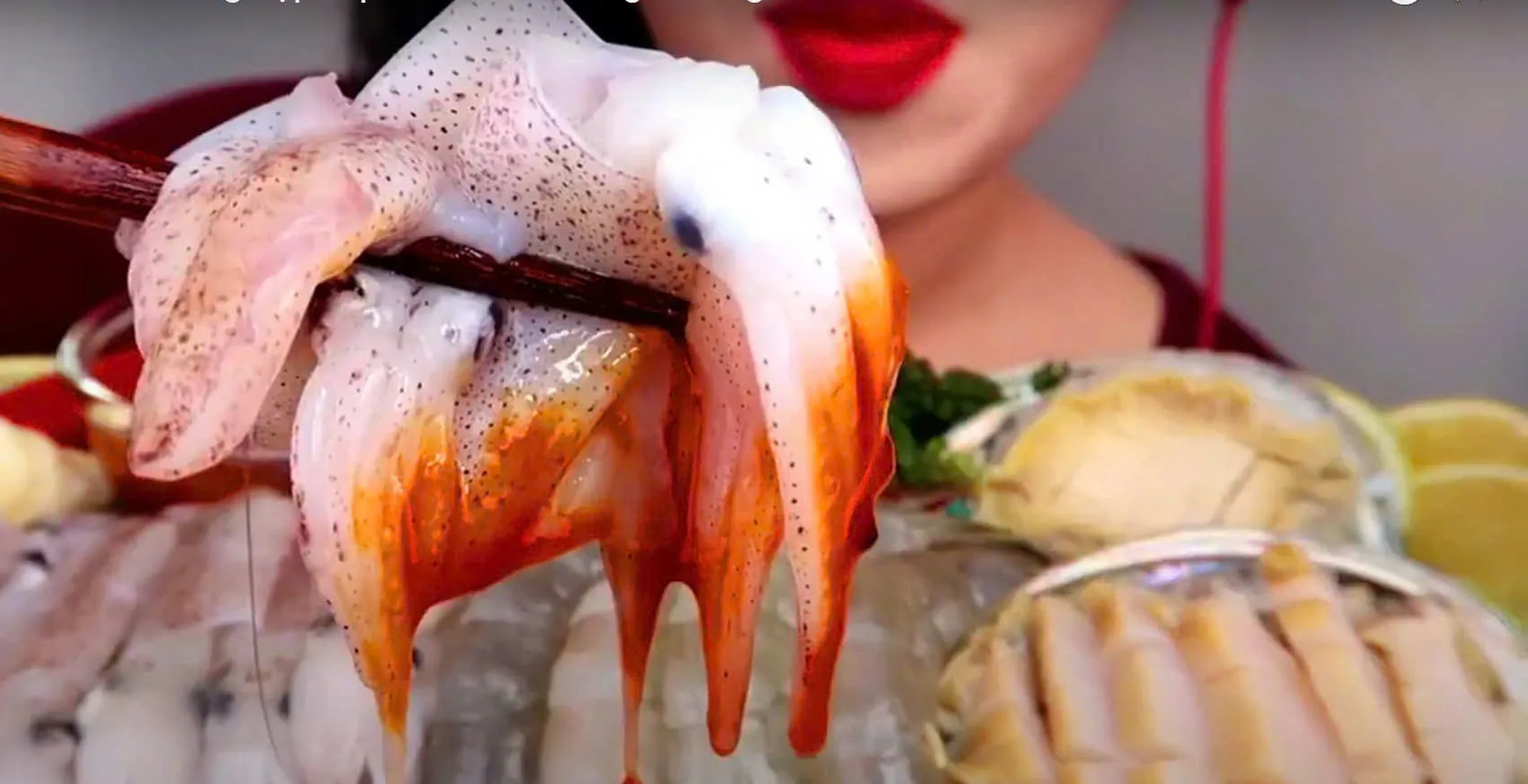
A girl eats an uncooked octopus on Youtube. The mukbang trend should be seen as an unhealthy eating habit that has a negative impact on young people. Photos: Thanh Binh/The Hanoi Times |
He added that the trend could also lead to unhealthy eating habits and affect the psychology of viewers.
Therefore, Hung recommends that people with digestive issues such as stomach ulcers, digestive disorders, liver disease, obesity, or other problems related to the digestive tract should not join this trend.
Especially for children who are in the process of developing both physically and mentally, watching mukbang can negatively affect their development. "Children with mental illnesses related to eating behavior, such as eating disorders, should avoid this trend to avoid negative effects on their mental health," Hung said.
Tran Thanh Nam, Vice Rector of the College of Education under the Vietnam National University in Hanoi, echoed Hung's sentiments, saying that the content on social networks can strongly influence the psychology of viewers, especially young people. "They lack knowledge about health protection, so they are easily imitated," Nam said.
Notably, most of the distasteful raw food-eating videos on social networks are not labeled "not for children" and the content creator does not include any warnings throughout the duration of the video.
"For example, a video on YouTube shows how to eat an uncooked octopus, and after giving the recipe for making the dipping sauce, this person starts eating the raw octopus that is crawling on the table. It's so horrible!" Nam said.
He told The Hanoi Times that many people believe that if you eat raw food, you only need to add spices such as lemon juice, mustard, chili, salt, pepper or strong alcohol to kill germs. "However, according to medical experts, this is impossible because these spices only have the effect of removing the fishy smell and increasing the stimulation, deceiving the taste buds when eating."
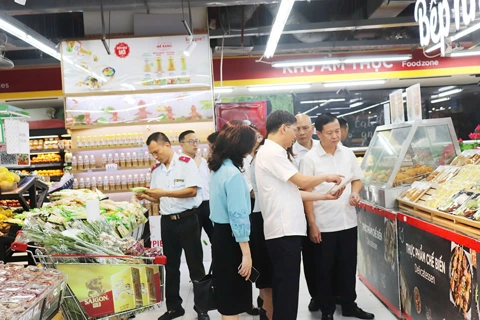
Inspection Team 1 of the Hanoi Food Safety Department inspects food at a supermarket in Hanoi. |
.jpeg)
Dr. Le Thi Thu Ha, of Military Hospital 175 under the Ministry of National Defense, said that uncooked food is very difficult to digest. There is currently no clear research on the benefits of eating raw foods.
"We belong to the group of people who eat cooked food and drink boiled water, so we do not eat raw meat. Our digestive enzymes do not support the absorption of raw foods. If there is any, it is only to absorb some micronutrients and minerals," Ha said.
She noted that eating raw foods also has many potential risks, such as allergies, diarrhea, bloating, and indigestion. In addition, food safety issues ranging from the processing method to the environment increase the likelihood of parasite infection in the consumer.
Dr. Nguyen Trung Nguyen, Director of the Poison Control Center at Hanoi's Bach Mai Hospital, warned that raw foods have many potential health risks, such as being infected with bacteria that cause poisoning.
Moreover, when eating raw foods, people will get diseases transmitted through the digestive tract, such as HP bacteria infection (can cause stomach cancer), hepatitis E. In particular, it is very easy to get infected with parasites, including liver flukes, fish tapeworms, lung flukes. Once parasitized, it is very difficult to treat and can cause many complications such as epilepsy, convulsions, myocarditis, pneumonia, and others.
“Eating unprocessed foods also makes us a target for the hepatitis A virus, worms and many other parasites that stealthily destroy the body," Nguyen told The Hanoi Times.
He added that swallowing foods such as uncooked octopus or raw crab poses a risk of choking, even a risk of intestinal perforation. "In terms of acute conditions, we can mention food poisoning and blood infection. Acute meningitis can also be caused by eating unprocessed food."
According to Dang Thanh Phong, Head of the Hanoi Food Safety Department, everyone must fully implement the ten "golden" principles in food processing to prevent food poisoning.
A health worker inspects a food sample at a supermarket in Hanoi. |
.jpeg)
"Consumers must choose fresh, clean, unblemished food of clear origin; practice cooked food, boiled water; carefully wash fresh vegetables and fruits, wash vegetables under running water, soak them in salt water," Phong said.
He emphasized that each person should carefully preserve cooked food, eat it immediately after cooking, cook used food thoroughly before eating it again, and not mix raw and cooked food.
"People must wash their hands before processing food; wash their hands before eating and after using the toilet; keep the kitchen, utensils and processing area clean, tidy and dry; not eat spoiled, moldy food; and use clean water to process food and drink," he told The Hanoi Times.
To reduce food poisoning, a communication campaign has also been launched to disseminate information on food safety regulations in production and trade, Phong said.
The recent back-to-back food poisoning outbreaks are due to the hot weather, which favors the growth of disease-causing bacteria, especially those that cause gastrointestinal illness, he said.
"The problem is exacerbated by inadequate processing and storage of food ingredients and the failure of certain food production and processing facilities to comply with food safety and hygiene regulations."
"To ensure food safety and prevent food poisoning, we have called on relevant authorities and localities to strengthen inspection and supervision of food safety and hygiene," Phong said.
This includes a focus on ready-to-eat meal processing plants, school canteens in industrial areas, schools, food vendors and street vendors, and bottled and packaged drinking water.
In addition, the health sector is advising parents to be more cautious about their children's food purchases before school.