How Hoan Kiem Lake looks different after more than 100 years?
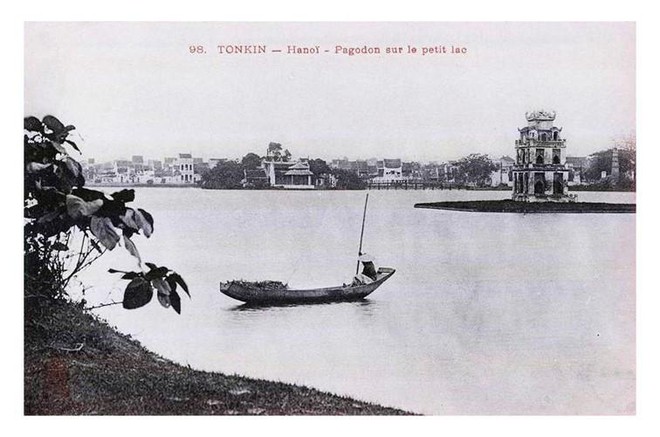
The precious black-and-white photos of the iconic Hoan Kiem Lake, which was taken about a century ago, will be displayed in an online exhibition.
The exhibition, entitled “Sword Lake- the convergence of East and West”, was held on the occasion of the 67th anniversary of the Liberation of the Capital (October 10, 1954 - October 10, 2021) by the National Archives Center I – Department of State Records and Archives.
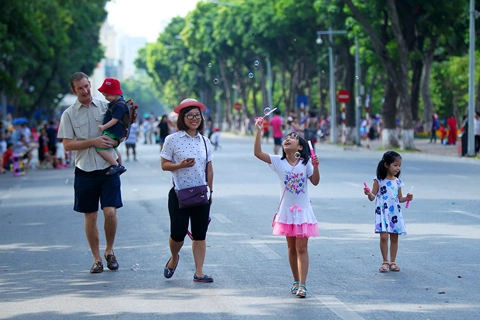
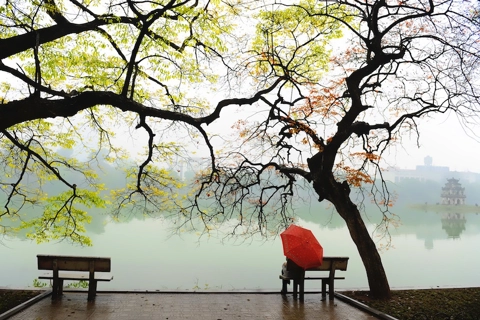
| Nowadays Hoan Kiem Lake (Sword Lake). Covering a spacious area of 12 hectares, the lake is considered the heart of Hanoi, not only geographically but also symbolically. Photo: Pham Hung |
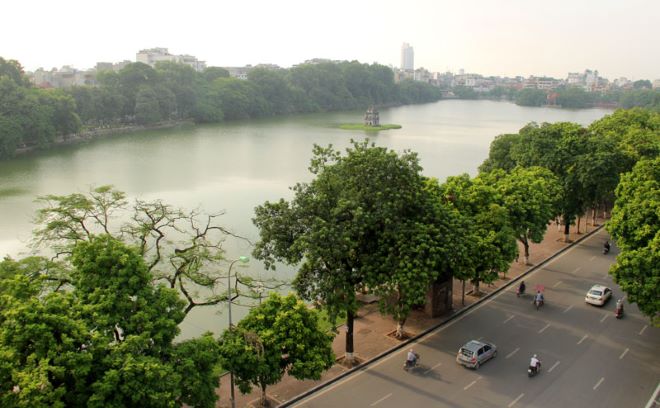
The famous scenic spot of the capital- Hoan Kiem Lake is a vestige of ancient Nhi Ha River some centuries ago. The lake now is surrounded by Hang Khay, Le Thai To, and Dinh Hoang Streets. The virtual exhibition featuring 100 documents, photos, and drawings themed Hoan Kiem Lake and old Hanoi will be displayed online from October 8 at http://archives.org.vn and https://facebook.com/luutruquocgia1.
With its prime location, the lake was soon chosen by the French colonial government to make it the heart of the city as soon as they arrived in Hanoi in 1884.
According to the experts, when the French set out to redesign Hanoi, they weren’t simply looking to leave an imprint of their urban vision on the Vietnamese. They were looking to create a city of the future. Under their smart plan, Hoan Kiem Lake was the convergence of the architectural and cultural features of the East and West, and an appropriate transition between the residential areas of the locals in the north and of the western colonizers in the south.
| Square du Petit Lac - The Sword Lake Quare in the early 19th century. Photo courtesy of National Archives Center I |
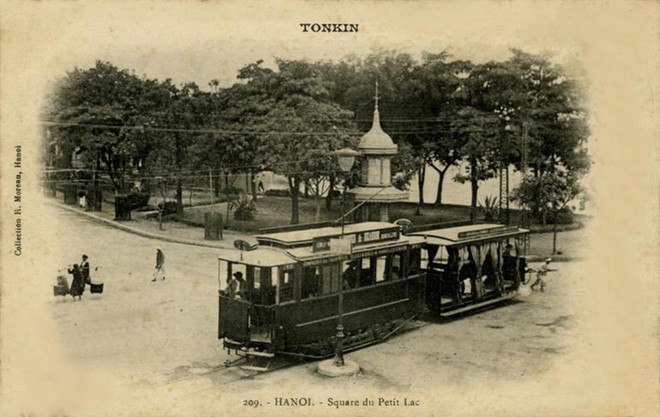
A series of French-style buildings were erected around Hoan Kiem Lake between 1873 and 1940.
The Sword Lake, East-West Convergence exhibition is divided into three parts including “The Process of Changing of Sword Lake”; “Preserving the Cultural and Historical Space of Sword Lake” and “Sword Lake - Centre of Service, Culture and Entertainment”.
The first part will enable the viewers to witness the changes of this historical landmark over the past century, starting in 1873 when French constructed its first-ever building on Pham Ngu Lao Street today.
In the renovation of French in Hanoi, Sword Lake has helped to maintain the original Asian landscape and architecture of the capital city, making it different from other westernized cities.
| The Sword Lake in the old days. It is always a pride of all Hanoians. Photo courtesy National Archives Center I |
The second part of the exhibition showcases the city authorities’ efforts in preserving Hoan Kiem Lake through the implementation of many policies.
On display in the third part are documents and materials confirming that Hoan Kiem Lake is the service, cultural and entertainment center of the capital and the whole nation.
French Government built mansions and administrative offices east of Sword Lake, turning it into the center of culture, politics and commerce of the city.
Through the online exhibition “Sword Lake, East-West intersection”, the Organizing Committee wishes to bring to the public good memories of Hoan Kiem Lake and old Hanoi, thereby spreading affection and responsibility for preserving and promoting the cultural values of the capital to Hanoi’s young generations.