HSBC supports ASEAN’s commitment to joint economic recovery plan
To build economic recovery and install supply chain resilience, HSBC advocates three reform planks: trade and investment flows; digital connectivity; and linking nation development projects to globally agreed sustainable development goals.
HSBC has announced that it supports the ASEAN member states’ joint agreement to increase reform cooperation and integration in order to stem the immediate health and longer term economic impacts to Southeast Asia as a result of the Covid-19 pandemic.
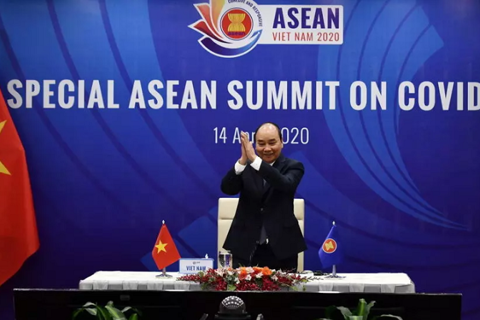
The agreement was adopted at the ASEAN leaders’ annual summit which was held on June 26, 2020 in a virtual manner under Vietnam chair.
Tim Evans, CEO of HSBC Vietnam. Photo: HSBC |

“We support ASEAN member states’ desire to double down on further integration efforts in order to combat the economic effects from Covid-19. As Southeast Asia begins to reopen, member countries cannot approach economic recovery in isolation. The reason is simple: Southeast Asia is always stronger when it acts as a collective rather than the sum of its parts,” said Tim Evans, CEO of HSBC Vietnam.
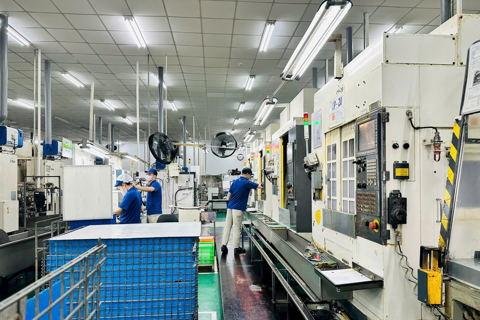
The region’s deeply interwoven supply chains - spanning electronics, automobiles, textiles and garments – have developed because of ASEAN’s ability to reduce trade and investment tariffs between the association’s 10 member states. The result has put many of its more than 650 million citizens on a path to prosperity.
To build economic recovery and install supply chain resilience, HSBC advocates three reform planks: trade and investment flows; digital connectivity; and linking nation development projects to globally agreed sustainable development goals and climate commitments.
Re-opening of trade and investment through multilateralism
HSBC advocates for the continued dismantling of non-tariff barriers that have proliferated Southeast Asia and to adopt trade mechanisms and trade agreement that will enable to freer flow of trade.
These include:
• Removal of non-tariff barriers such as increasing the minimum threshold for goods that require a Certificate of Origin (reducing red-tape for businesses already under pressure); and automating customs clearance processes.
• Adoption of the ASEAN Single Window.
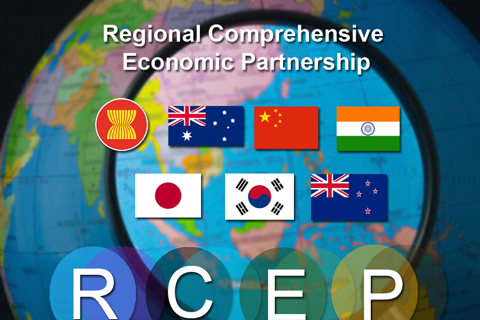
• Formally signing and ratifying the already-agreed Regional Comprehensive Economic Partnership which covers 30% of the world’s population and 29% of its world’s GDP (including all of ASEAN states)
Building stronger digital connectivity
Covid-19 has catapulted digital e-commerce into business critical. But unless the region can agree a common set of standards for cross-border data management and digital commerce, the potential for a thriving ASEAN-wide digital economy diminishes.
For growth to happen, already-agreed frameworks like the ‘ASEAN Digital Integration Framework Action Plan’ and the ‘ASEAN Framework on Digital Data Governance’ need to be fully implemented in order to integrate the currently disconnected rules and regulations of nations.
To deal with the imminent challenges coming from Covid-19, the ASEAN member states have agreed to install an ASEAN Pandemic Recovery Fund which will involve national-building projects aimed at increasing economy activity. HSBC recommends that the Fund’s design and the projects that are selected be consistent with globally agreed climate targets, and sustainable goals and commitments.