Identity at risk when economic development ignores culture
Vietnam is told to capitalize on heritage as a resource and material to develop a green economy.
The preservation of cultural heritage sometimes conflicts with socio-economic development goals, leading to the risk of heritage loss or damage. This is an issue seen in many countries.
Michal Teague (RMIT University Vietnam), an expert in cultural industries and creative application design from Australia, spoke to The Hanoi Times about reconciling economic growth and heritage conservation.
| Michal Teague is an expert in creative application design and cultural industries, currently working at RMIT Vietnam University. Photo: RMIT |

Many benefits will be lost
With the experience of conducting research in Vietnam since 2017, how do you assess the correlation between cultural preservation and economic development in the country today?
Cultural preservation can enhance the value of national identity, create tourist attractions, generate income and livelihoods for local communities, and contribute to environmental protection and sustainable development. For example, Ha Long Bay, Hue, and the ancient town of Hoi An are among the cultural heritage sites that have brought significant benefits to Vietnam's tourism industry. A focus on cultural tourism can benefit the country by encouraging visitors to stay longer and return for future visits, contributing more to the local economy.
On the other hand, cultural preservation can also face challenges such as the degradation, loss, or alteration of original heritage due to natural disasters, human activities, or tourism development. Cultural preservation can sometimes conflict with the demands of modernization, industrialization, or urbanization, which may require trade-offs or compromises between different values and interests.
It is therefore important to balance the conservation and promotion of cultural heritage with Vietnam's socio-economic development goals and to ensure the participation and benefit-sharing of all stakeholders, especially ethnic minority groups, who are the custodians of much cultural heritage.
What do you think are the risks of a country pursuing economic development while neglecting cultural preservation?
If Vietnam pursues economic development but neglects cultural preservation, it risks losing some of the unique aspects of its culture that make it distinct and valuable. It may also face social problems such as alienation, conflict, and discrimination. It may miss out on the potential benefits of cultural preservation, such as attracting tourists, stimulating creativity and innovation, and building resilience and adaptability.
Vietnam needs to strike a balance between economic development and cultural preservation and to ensure that both are integrated into its policies and plans. A focus on culture can create opportunities to promote a positive image of contemporary Vietnamese culture internationally. This will create a sustainable future in which everyone has a sense of ownership and pride.
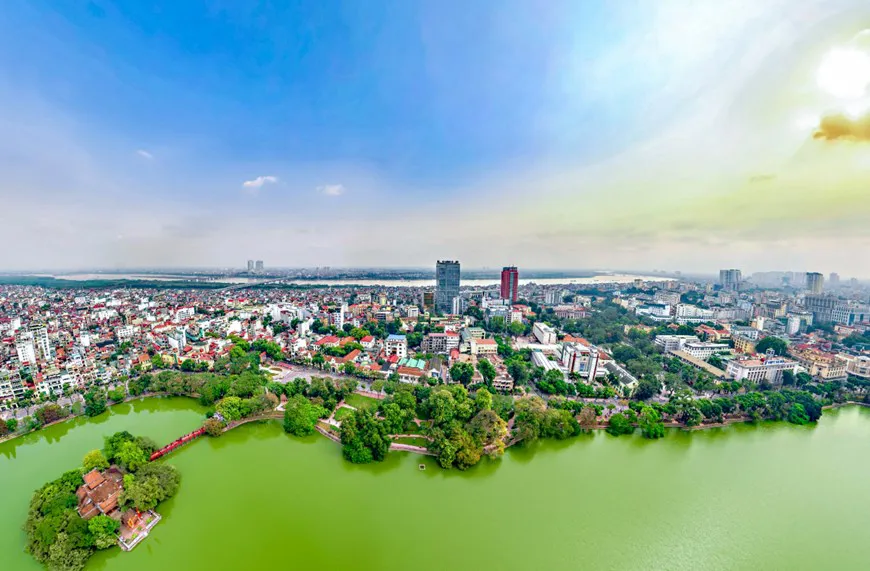
| The aerial view of Hanoi. Photo: VNA |
Harnessing cultural tourism for the green economy
The Vietnamese government has deliberately included the preservation of cultural heritage in its development strategy, but its implementation is still fraught with obstacles. What are your suggestions for solutions?
I would like to offer some solutions. First, it's necessary to strengthen the legal framework and enforcement of laws and regulations for the protection of cultural heritage, as well as to raise public awareness and participation in conservation efforts.
The government should develop and implement policies and incentives that promote the integration of cultural heritage into green economic sectors such as tourism, agriculture, handicrafts, and renewable energy.
They should strengthen the capacity and cooperation of relevant stakeholders, such as local communities, cultural institutions, the private sector, civil society, and international partners, in managing and utilizing cultural heritage resources for sustainable development.
On the other hand, investment in research and innovation can support the preservation and revitalization of cultural heritage as well as the creation of new cultural products and services that reflect the country's identity and diversity.
How do you think we can use cultural resources to develop a green economy?
Some of the ways Vietnam can harness its cultural resources to develop a green economy include
- Promoting ecotourism and cultural tourism that showcase Vietnam's natural beauty and cultural diversity while minimizing environmental impact and enhancing the well-being of local communities.
- Support the development of creative industries that use local materials, traditional skills, and indigenous knowledge to produce high-quality, low-carbon, and culturally relevant products and services.
- Encourage the preservation and revitalization of cultural heritage sites, landscapes, and practices that contribute to the conservation of biodiversity, the enhancement of ecosystem services, and the promotion of cultural identity and values.
- Promote a culture of innovation and entrepreneurship that encourages the creation and diffusion of green technologies, solutions, and business models that address the environmental and social challenges facing Vietnam.
- Strengthen the education and awareness of the public, especially the youth, on the importance of environmental protection, cultural diversity, and green economy principles and practices.
- Leverage cultural resources through storytelling to represent Vietnam in technology industries such as gaming and animation, beyond supporting international productions.
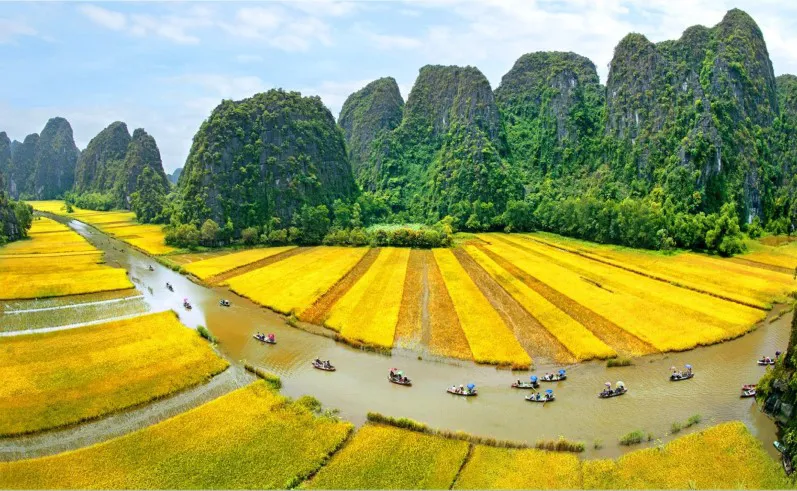
| Trang An World Heritage Site in the northern province of Ninh Binh. Photo: VNA |
Can you share a typical case of cultural preservation for green economic development that you find impressive in Vietnam?
The Trang An Complex in the northern province of Ninh Binh is a good example of a well-managed UNESCO heritage site. This attraction seems to have found a balance between culture, conservation, and tourism. It is clean and well-maintained and provides a livelihood for the local community without compromising the beauty of the landscape.
Vietnam could consider a national education program on the value of culture and heritage to the economy, to promote responsible tourism, and to develop a ranger and volunteer program to help manage its many natural and cultural heritage sites.
Thank you!