Social Affairs
Inadequate from being over the official line
In contrast to the bleak scene at the clinics, in large hospitals, patients are queuing waiting for examination. In particular, many patients over the line can be treated at lower levels.
Self-torture
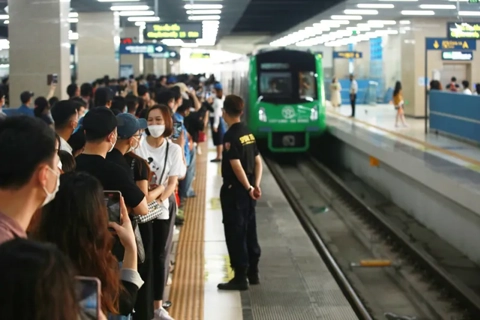
The scene of the patient lining up from the early morning to retrieve a number of examination at the voluntary examination departmentof Bach Mai Hospital. Even at the department of regular medical examination, patients who want to have a medical examination and have results in the day must also come before 7am to take the number. Nguyen Huu Tuan (Thach That district) hadbeen having a fever, cough and sore throat for many days, lining up in the hospital from 6 am for examination. In fact, his disease was common sore throat, bronchitis. Even Thach That District Hospital, or even Huu Bang Commune Health Station, where he lives, can also diagnose and prescribe medication to treat the disease, without having to go to a central hospital like Bach Mai Hospital. However, he still accepts going early to queue, waiting for the whole day because of the thought "wantingto be examined and treated by good doctor".
The scene of the patient lining up from the early morning to retrieve a number of examination at the voluntary examination departmentof Bach Mai Hospital. Even at the department of regular medical examination, patients who want to have a medical examination and have results in the day must also come before 7am to take the number. Nguyen Huu Tuan (Thach That district) hadbeen having a fever, cough and sore throat for many days, lining up in the hospital from 6 am for examination. In fact, his disease was common sore throat, bronchitis. Even Thach That District Hospital, or even Huu Bang Commune Health Station, where he lives, can also diagnose and prescribe medication to treat the disease, without having to go to a central hospital like Bach Mai Hospital. However, he still accepts going early to queue, waiting for the whole day because of the thought "wantingto be examined and treated by good doctor".
People come to Hanoi Doctor's Center.
Duong Duc Hung, Head of General Planning Department of Bach Mai Hospital, said that the hospital received about 4,000 patients every day. In particular, many patients havediseases which can completely be examined at downstream hospitals. In addition, due to psychology, most people rush to the hospital in the morning, while in the afternoon, there are not many patients. "With such a choice, patient are in self-torture by themselves," Hung said. This is also the general condition of many central hospitals in Hanoi. Hugging children moving from district to city, from provinces to the National Hospital of Pediatrics to queue at 2 or 3 am for examination is considered "routine." There are even cases in which parents whose children had been taken to downstream hospitals and diagnosed to be well felt unsecured, so they went to central hospitals to check again (!?).
As in the case of Mrs. Do Van Anh (Nam TuLiem district), her child had a feverish rash. Right at the beginning, Van Anh rushed to take the child to a leading international hospital in Hanoi with a fee of 3 million per day and night room, not including medical examination and drug costs. Hospitalized in 5 days for treatment, the total amount of hospital fees was up to nearly 20 million dongs. However, the treatment regimen of her baby at that International Hospital is not different from the treatment regimen at Dai Mo medical station - only 200m away from her family. If treated at the clinic, Van Anh's family would not lose a penny because her baby is under 6 years old and 100%covered by health insurance.
Downstream hospitals and clinics must build trust
Although the health sector has issued regulations not to pay insurance coverage when being over the line, contributing to reducing the load on the mainstream line, but in fact people still spend money on central examination on their own. Mrs. Tong Thi Song Huong - Head of Health Insurance Department, Ministry of Health said that for 70% of diseases, patients did not need to go to mainstream hospitals. Ms. Huong said that patients would have to pay much for unnecessary costs on accommodation and travel. In order to deal with this situation, medical experts say it takes time to implement synchronized solutions, in which the most radical solution is to build brand and strengthen trust in medical institutions at the lower line.
In fact, many years ago, the "revolution" in improving the quality of downlines has taken place in many provinces and cities throughout the country. In Hanoi, in order to create a professional working environment for employees, the health care system has implemented a rotating plan with a deadline for doctors at the higher level to support the lower levels. In 2015, the health sector in Hanoi had 26 units to develop a plan to send staffs to support the downstream hospitals. The total number of downstream facilities supported was 37 units, including 22 hospitals and 15 medical centers. At the same time, laparoscopic surgery has been implemented in 100% of district hospitals with the goal of reducing the load on the higher level.
In particular, from 1 January 2016, the list of health insurance drugs at the health station has been increased to be more diversified, patients coming to the medical clinics have the opportunity to be treated with more advanced drugs as compared to before. Nguyen Van Dung, deputy director of Hanoi Authority for Health, said that in order to attract more people to the medical clinics, Hanoi Authority for Health organized health care campaigns at the clinics with support from the upper level hospitals, and professional training courses for doctors and nurses at the medical stations in the city. Yet, there are still patients who do not believe in the downlines, they are willing to cross the line to be examined and treated.
As in the case of Mrs. Do Van Anh (Nam TuLiem district), her child had a feverish rash. Right at the beginning, Van Anh rushed to take the child to a leading international hospital in Hanoi with a fee of 3 million per day and night room, not including medical examination and drug costs. Hospitalized in 5 days for treatment, the total amount of hospital fees was up to nearly 20 million dongs. However, the treatment regimen of her baby at that International Hospital is not different from the treatment regimen at Dai Mo medical station - only 200m away from her family. If treated at the clinic, Van Anh's family would not lose a penny because her baby is under 6 years old and 100%covered by health insurance.
Downstream hospitals and clinics must build trust
Although the health sector has issued regulations not to pay insurance coverage when being over the line, contributing to reducing the load on the mainstream line, but in fact people still spend money on central examination on their own. Mrs. Tong Thi Song Huong - Head of Health Insurance Department, Ministry of Health said that for 70% of diseases, patients did not need to go to mainstream hospitals. Ms. Huong said that patients would have to pay much for unnecessary costs on accommodation and travel. In order to deal with this situation, medical experts say it takes time to implement synchronized solutions, in which the most radical solution is to build brand and strengthen trust in medical institutions at the lower line.
In fact, many years ago, the "revolution" in improving the quality of downlines has taken place in many provinces and cities throughout the country. In Hanoi, in order to create a professional working environment for employees, the health care system has implemented a rotating plan with a deadline for doctors at the higher level to support the lower levels. In 2015, the health sector in Hanoi had 26 units to develop a plan to send staffs to support the downstream hospitals. The total number of downstream facilities supported was 37 units, including 22 hospitals and 15 medical centers. At the same time, laparoscopic surgery has been implemented in 100% of district hospitals with the goal of reducing the load on the higher level.
In particular, from 1 January 2016, the list of health insurance drugs at the health station has been increased to be more diversified, patients coming to the medical clinics have the opportunity to be treated with more advanced drugs as compared to before. Nguyen Van Dung, deputy director of Hanoi Authority for Health, said that in order to attract more people to the medical clinics, Hanoi Authority for Health organized health care campaigns at the clinics with support from the upper level hospitals, and professional training courses for doctors and nurses at the medical stations in the city. Yet, there are still patients who do not believe in the downlines, they are willing to cross the line to be examined and treated.