Indochina fine arts heritage in the heart of Hanoi
The artistic consciousness of Vietnamese artists was awakened by the Indochina School of Fine Arts in Hanoi, and Vietnamese fine arts evolved in tandem with modern nationalism to become more globally integrated.
After only 10 years of running the Indochina Fine Arts School (L'Ecole des Beaux-Arts de L'Indochine) in Hanoi (now known as Vietnam University of Fine Arts), Rector Victor Tardieu declared: "From now on, the school in Hanoi will be on a par with those in Spain or the Netherlands."
In fact, it was the first formal, systematic university-level training school for fine arts, which produced great names in national art. To this day, the period of the Indochina School of Fine Arts is still a brilliant milestone in the history of Vietnamese fine arts, a window for the world to know Vietnamese art.
The glorious aura of Vietnamese art
The French painter Victor Tardieu (1870-1937) traveled to Indochina in 1921. In April 1924, he sent a report to the Governor General of Indochina, Martial Merlin, proposing the establishment of a school of fine arts.
On October 27, 1924, the Governor General of Indochina signed the decree establishing the Indochina School of Fine Arts in Hanoi with Victor Tardieu as its first rector. The painter Nam Son (Nguyen Van Tho) was Victor Tardieu's able and dedicated collaborator.
| A workshop in the Indochina Fine Arts School. File Photo |
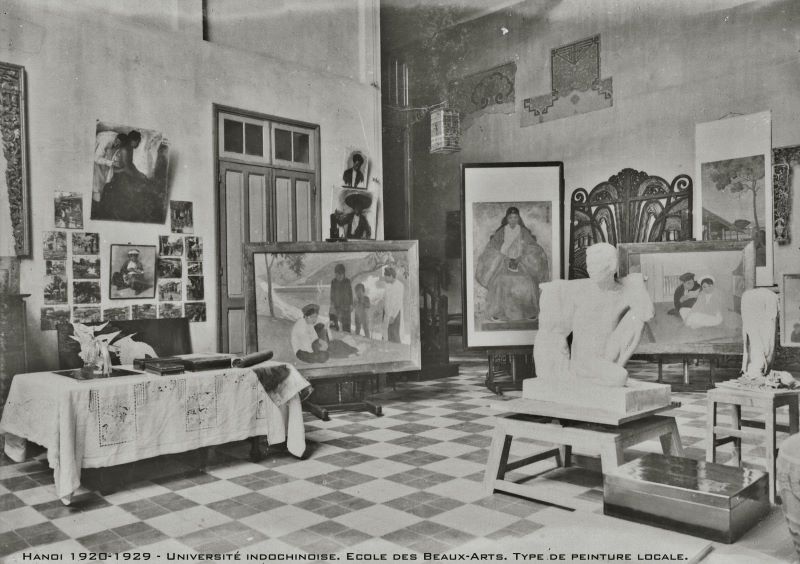
According to Dang Thi Phong Lan, Vice Rector of the Vietnam University of Fine Arts, the opening ceremony of the first training course was held in November 1925, which became a milestone in the birth and development of the Indochina School of Fine Arts, now the Vietnam University of Fine Arts.
The establishment of the Indochina School of Fine Arts was the prerequisite for the emergence of modern Vietnamese fine arts in the fields of painting, printmaking, and sculpture. The training program of the Indochina School of Fine Arts was based on the pedagogical system of the West (National School of Fine Arts of Paris).
"Since 1925, the Indochina School of Fine Arts has been training Vietnamese artisans to become artists, along with the development of traditional Vietnamese art. From this school, the artistic consciousness of Vietnamese artists was awakened and nurtured; Vietnamese fine arts developed along the path of modern nationalism to integrate with world fine arts," Lan said.
Professor Nguyen Xuan Tien, Chairman of the Ho Chi Minh City Fine Arts Association, said that the establishment of the Indochina Fine Arts School is truly a transformation, a qualitative breakthrough of Vietnamese fine arts, from folk and popular fine arts to scholarly fine arts with a formal training environment.
| Silk painting Tailors by Nguyen Phan Chanh, one of the first students of the Indochina Fine Arts School. |
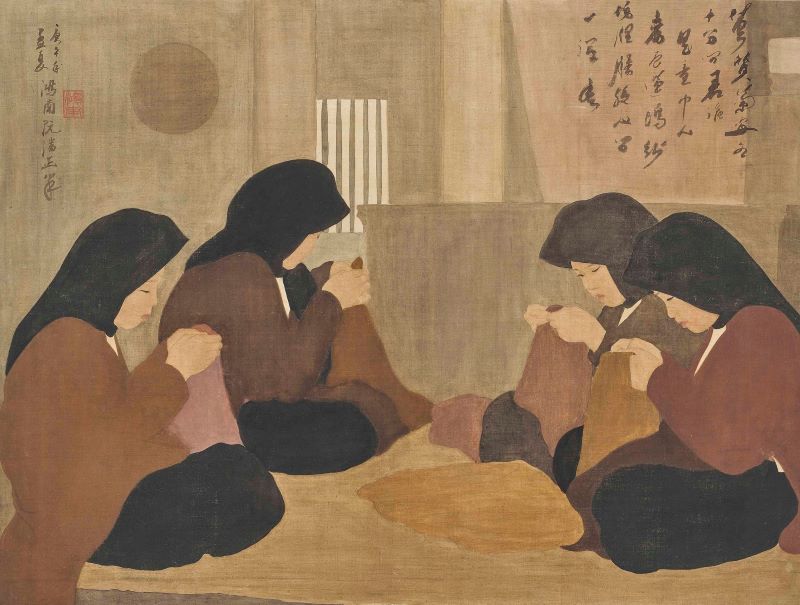
From then on, Vietnamese art works officially had the author's name, year of creation, and materials, marking the end of a period of anonymous authorship in ancient Vietnamese art.
"The excellent students of the Indochina Fine Arts School have become masters of a new fine art by exploring and discovering materials imbued with national identity such as silk, lacquer, oil painting, sculpture; expressing portraits, landscapes, daily life, still life, and others. This is an important starting point for Vietnamese fine arts to develop in a new way," said Professor Nguyen Xuan Tien.
Vietnamese art in a new era
Recently, a discussion on "The Revival of Modern Art in Indochina" was held in Hanoi, with the participation of many international experts, especially descendants of famous painters of the Indochina Fine Arts period. It was chaired by Charlotte Aguttes-Reynier, President of the Association of Asian Artists in Paris (AAP).
Nicola Baudo, a descendant of the painter Victor Tardieu, said that the most important legacy, the spirit left by Victor Tardieu, his colleagues, students and successors, is a humanistic approach to art, an art created through humility, respect and expertise.
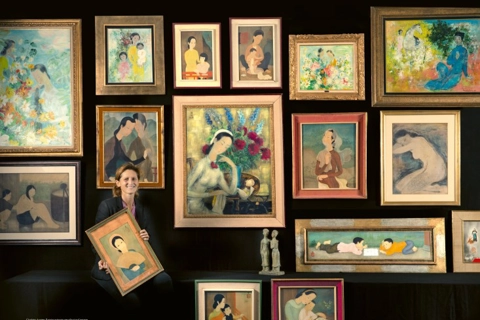
| Charlotte Aguttes-Reynier has spent 10 years researching Vietnamese fine arts. Photo: Viet Art View |
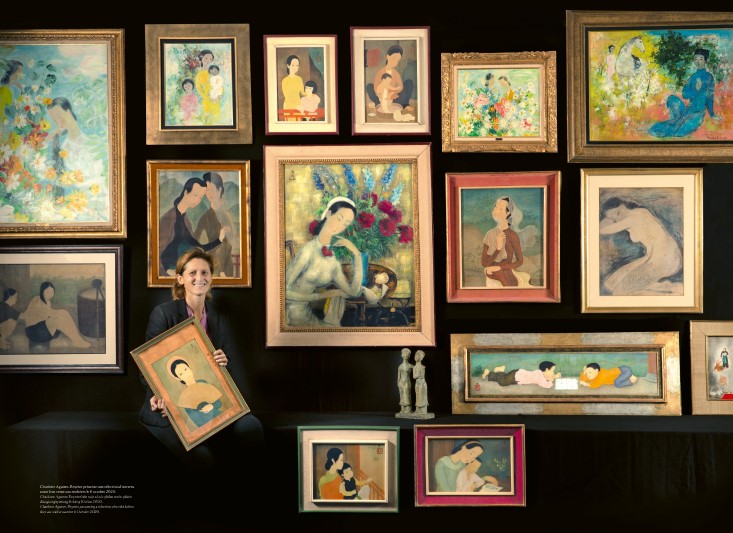
"This has contributed to the maturity of many artists. The spirit of respect between people and sincerity in the search for art is very contagious, because it is passed on from generation to generation. This is a good thing, because art creates connections between people, regardless of historical changes," said Nicola Baudo.
Art researcher Ngo Kim Khoi, nephew of artist Nam Son, said Vietnamese paintings, especially those from the Indochina period, currently occupy a very special position in the international market. In France, there are auctions dedicated to Indochinese art.
Khoi said contemporary art is in a period of finding its own way to escape the huge shadow of Indochina art.
"Young artists today are creating a special creative trend for themselves, mixing materials and styles. They always have new ways. Of course, nothing special is successful. Vietnamese artists are still searching for their own style. Personally, I think installation art is the success of Vietnamese fine arts today," Khoi said.
| Art scholar Ngo Kim Khoi (second from left) and colleague Charlotte Aguttes-Reynier (right) at the talk show in Hanoi. Photo: Ngo Minh/The Hanoi Times |

Dr Pham Trung, fine arts researcher, said the cultural and spiritual values left behind by the Indochina School of Fine Arts still exist today in social aesthetics, the Indochina Fine Arts style. Many typical examples can be found in the architectural design creations of the early architects, the interior design of the Memo Company, the design of Le Mur ao dai (long dress), which laid the foundation for innovative aesthetics in fashion.
"Vietnam's art history has been greatly influenced by the last generation of painters from the Indochina School of Fine Arts, whose creations both paved the way for contemporary artistic creations and consolidated the heritage. They are the ones who create works with strong personal imprint, aiming at nationalism and modernity, opening a new page for generations of Vietnamese artists to confidently create a Vietnamese identity in today's fine arts," Trung said.