Japanese food companies step up focus on Vietnam market
As Vietnam’s income levels rise, consumer demand has gradually shifted toward higher-quality and more diverse food products.
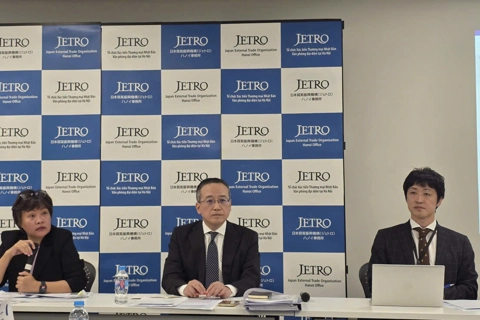
THE HANOI TIMES — Ozasa Haruhiko, Chief Representative of JETRO Hanoi, spoke with The Hanoi Times about Vietnam’s market potential for Japanese food products and how trade promotion activities are evolving to better align with local distribution systems and regulatory requirements.

How does JETRO’s recent Japanese food promotion event in Hanoi fit into its broader trade promotion strategy in Vietnam?
This event represents an initial step in diversifying JETRO Hanoi’s trade promotion approach in Vietnam. Previously, our activities mainly focused on business matching between Japanese exporters and Vietnamese importers. This time, we expanded the scope to include restaurants and hotels, which play an important role in connecting imported food products with end consumers.
The objective was not immediate trade expansion, but market testing and capacity building. By introducing products that are still unfamiliar in Vietnam, we aim to better understand market readiness and identify potential barriers related to distribution, handling and consumer acceptance.
What role does JETRO expect Vietnamese retail systems and F&B chains to play in bringing Japanese food products closer to Vietnamese consumers?
Retailers and F&B operators are essential links in the food supply chain. For imported products, correct storage, preparation and presentation are critical to maintaining quality and meeting food safety requirements.
Through this event, JETRO sought to enhance mutual understanding between Japanese suppliers and Vietnamese distributors regarding technical standards, handling procedures and usage practices. This helps ensure that products entering the Vietnamese market comply with quality expectations while remaining suitable for local consumption habits.
What changes have you observed in Vietnamese consumer demand for imported food products in recent years?
As Vietnam’s income levels rise, consumer demand has gradually shifted toward higher-quality and more diverse food products. Japanese food has become more accessible in urban areas, particularly through restaurants and modern retail channels.
From JETRO’s perspective, this reflects broader changes in consumption patterns rather than short-term trends. These changes create opportunities, but they also require careful alignment with pricing, distribution capacity and regulatory compliance.
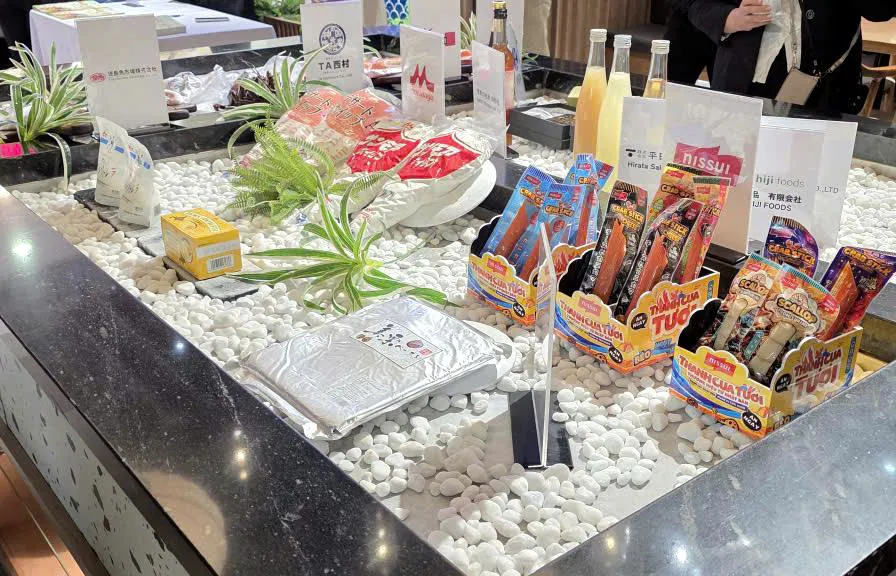
Japanese specialities on display during JETRO's event in Hanoi. Photo: Ngoc Mai/The Hanoi Times
How does JETRO assess opportunities for Vietnamese companies to participate more deeply in the Japanese food supply chain?
Successful cooperation depends on shared standards and long-term commitment. Japanese food companies place strong emphasis on food safety, quality control and traceability. Vietnamese partners need to understand and meet these requirements to participate effectively in the supply chain.
JETRO selected a local partner with experience in Japanese cuisine to co-organize the event because local knowledge is critical for market adaptation. Such partnerships help bridge differences in business practices and support more sustainable cooperation.
How do you expect cooperation in the food sector to contribute to Vietnam–Japan economic relations in the coming period?
We have not planned specific future programs. However, based on the outcomes of this event, JETRO will continue to focus on products with clear market potential and strong compliance with Vietnamese regulations.
Beyond trade volume, cooperation in the food sector contributes to deeper economic ties by strengthening supply chains, promoting quality standards and supporting more resilient and sustainable consumption systems in both countries.
|
JETRO, in cooperation with Lotus Group JSC, organized the event “Promoting Japanese Food in Hanoi” on January 22 for chefs and managers in Hanoi’s F&B sector. The program introduced a selection of Japanese food ingredients through a professionally prepared tasting menu to enhance understanding of product characteristics, preparation requirements and quality standards. The event focused on information exchange and market familiarization rather than direct commercial transactions. |