Kinh Thien Palace and imperial ceramics reveal Thang Long’s royal soul
From porcelain fragments and carved roof tiles to traces of vanished palaces, each discovery brings Vietnam closer to understanding its imperial past.
THE HANOI TIMES — A vivid portrait of royal life has taken shape after more than 15 years of excavations beneath Hanoi, as archaeologists uncover the enduring legacy of the Thang Long Imperial Citadel, the former political and cultural heart of Dai Viet.
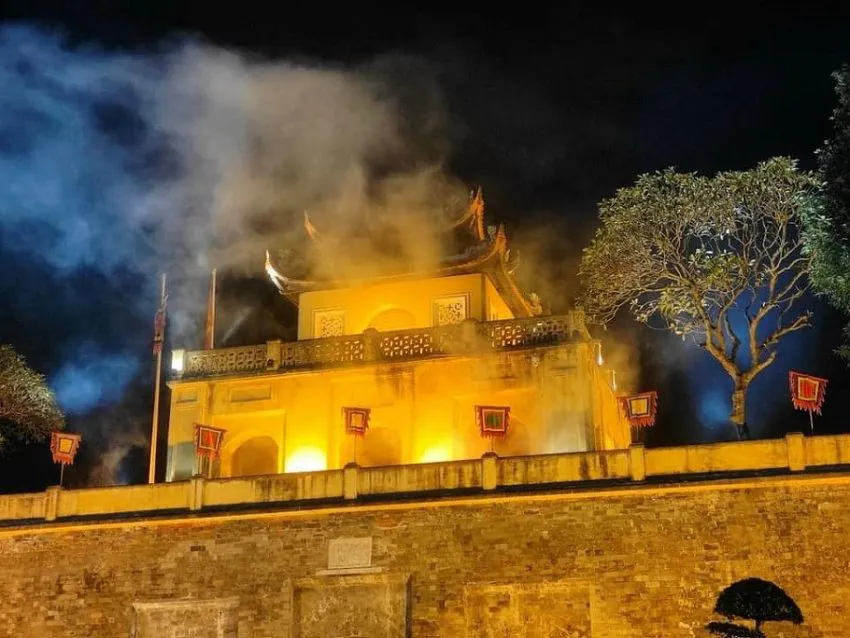
The vibrant Thang Long Imperial Citadel at night. Photo: Huy Pham/ The Hanoi Times
The latest findings were presented at the international conference “Thang Long Imperial Citadel Relic Site - Achievements and Emerging Issues After 15 Years of Research (2011-2025),” held last week in Hanoi.
Organized by the Institute of Archaeology under the Vietnam Academy of Social Sciences, the event brought together Vietnamese and Southeast Asian scholars to share new insights into the UNESCO World Heritage site.
The conference got a total of 32 proposed presentations, including 10 from international scholars, demonstrating the strong academic interest in the Thang Long Imperial Citadel heritage site.
Decoding the royal heart: Kinh Thien Palace
Dr. Dang Xuan Thanh, Vice President of the Academy, said that for the Thang Long Imperial Citadel to truly be revitalized and become a priceless national asset, local researchers must adopt a breakthrough vision, ensure coordinated investment and foster stronger connections among science, technology and society.
“With remarkable achievements, 14 years of research have helped clarify and affirm the scientific significance and outstanding universal value of the Thang Long Imperial Citadel - a heritage site where the essence of Asian civilization converges, crystallizes and shines," he stated.
"It is time for us to move from a mindset of praise to a mindset of action, so that this heritage may become a vital resource for the economic, cultural and tourism development of the capital and the nation,” he added.
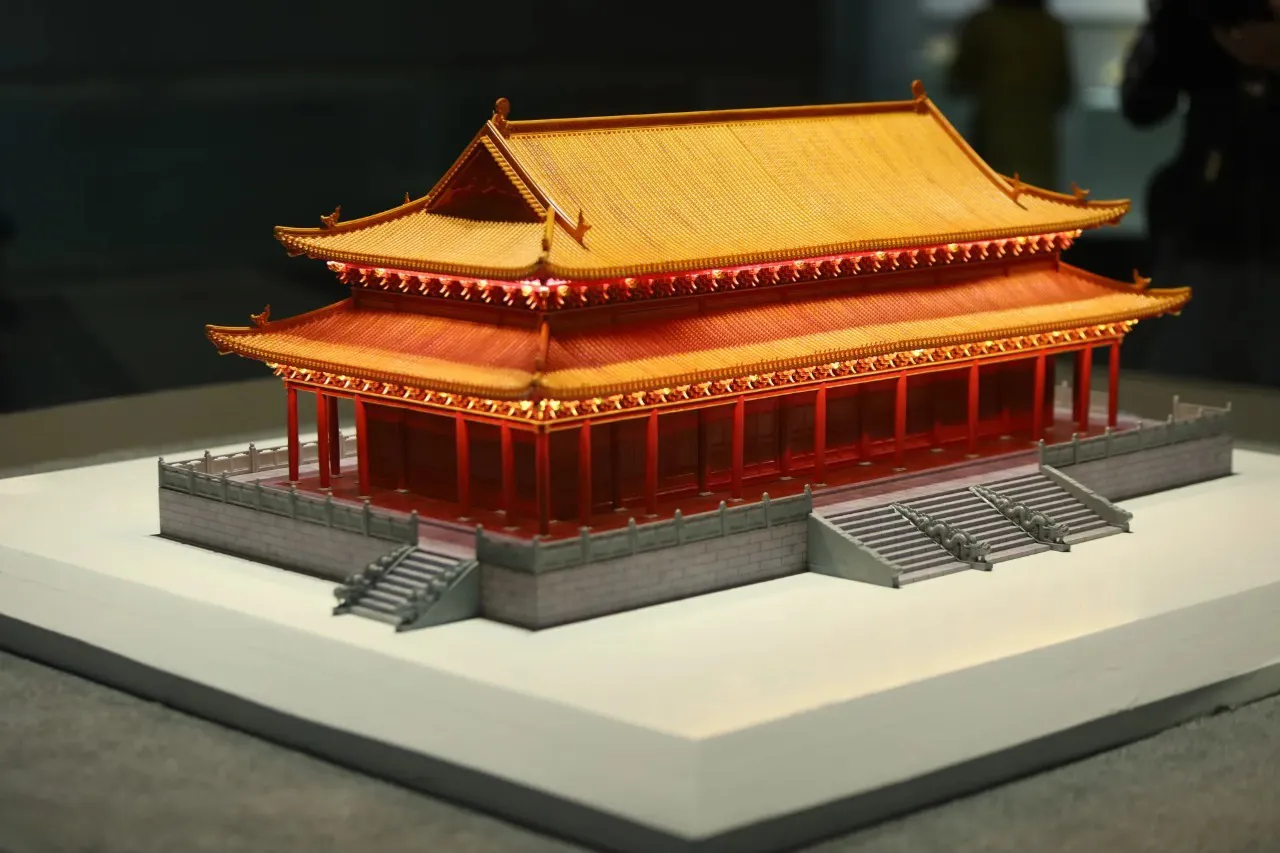
Assoc. Prof. Dr. Bui Minh Tri, former Director of the Institute of Imperial Citadel Studies, leads the research on the architectural form of Kinh Thien Palace. For more than a decade, his team has worked to reconstruct the lost architecture of the palace, the symbolic center of royal life in Thang Long.
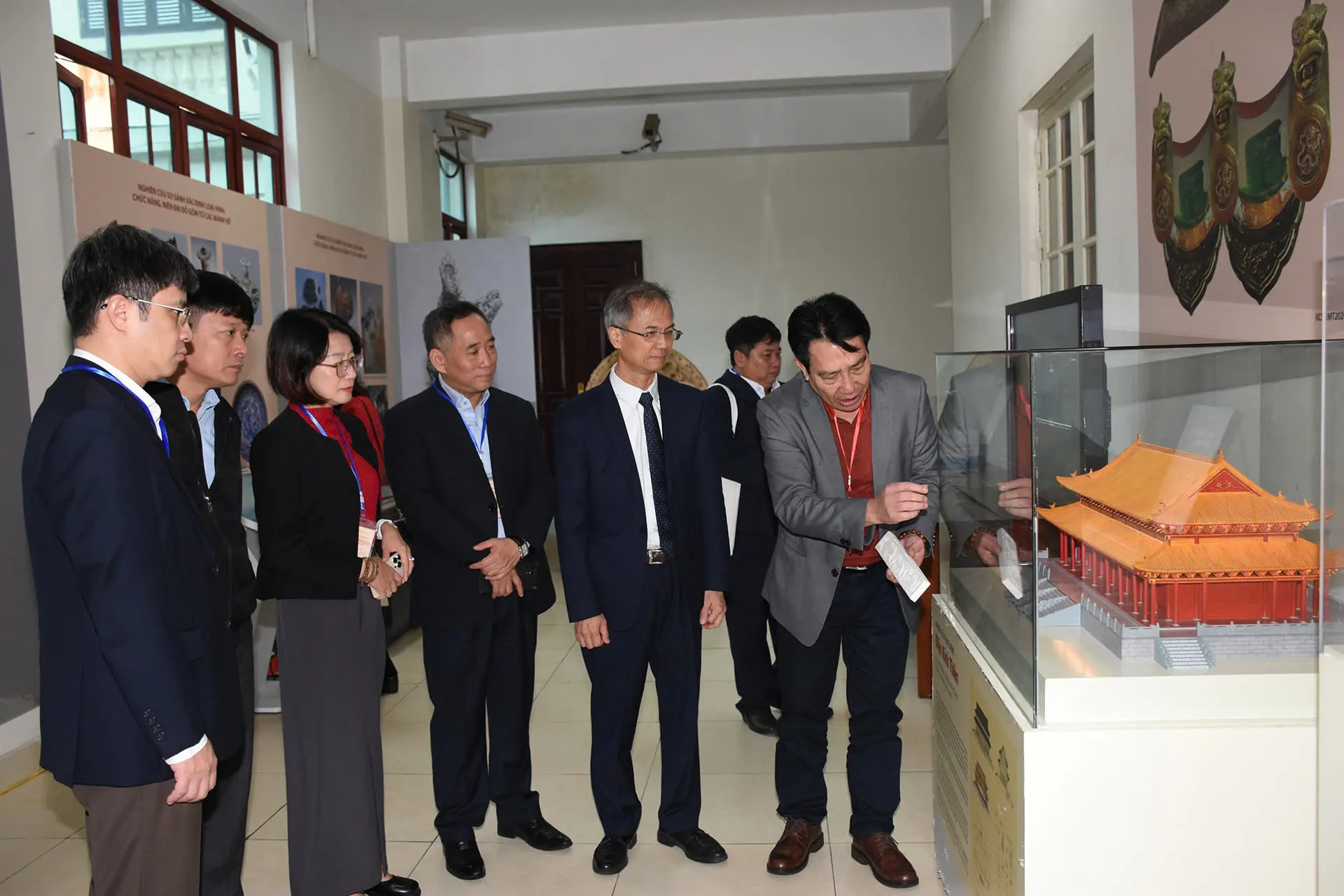
Assoc. Prof. Dr. Bui Minh Tri, former Director of the Institute of Imperial Citadel Studies (IICS) introduces the architecture of Kinh Thien Palace. Photo: Dai Bieu Nhan Dan
Reconstructing a structure lost for centuries demands both science and imagination. The team combined excavations at 18 Hoang Dieu Street, studies of roof tiles and wooden relics, analysis of architectural models and comparisons with historical data and East Asian capitals.
Their most significant breakthrough was decoding the dau cung system, an intricate wooden bracket structure that supported palace roofs refined by Vietnamese builders of the Ly (1009-1225) and Tran (1225-1400) dynasties to create large wooden halls with heavy tiled roofs, showcasing both artistic and engineering mastery.
From these findings, researchers reconstructed a vivid image of the Ly Dynasty Imperial Citadel, a vast complex of 38 palaces and corridors, 26 hexagonal pavilions, surrounded by walls, gates and meandering royal paths.
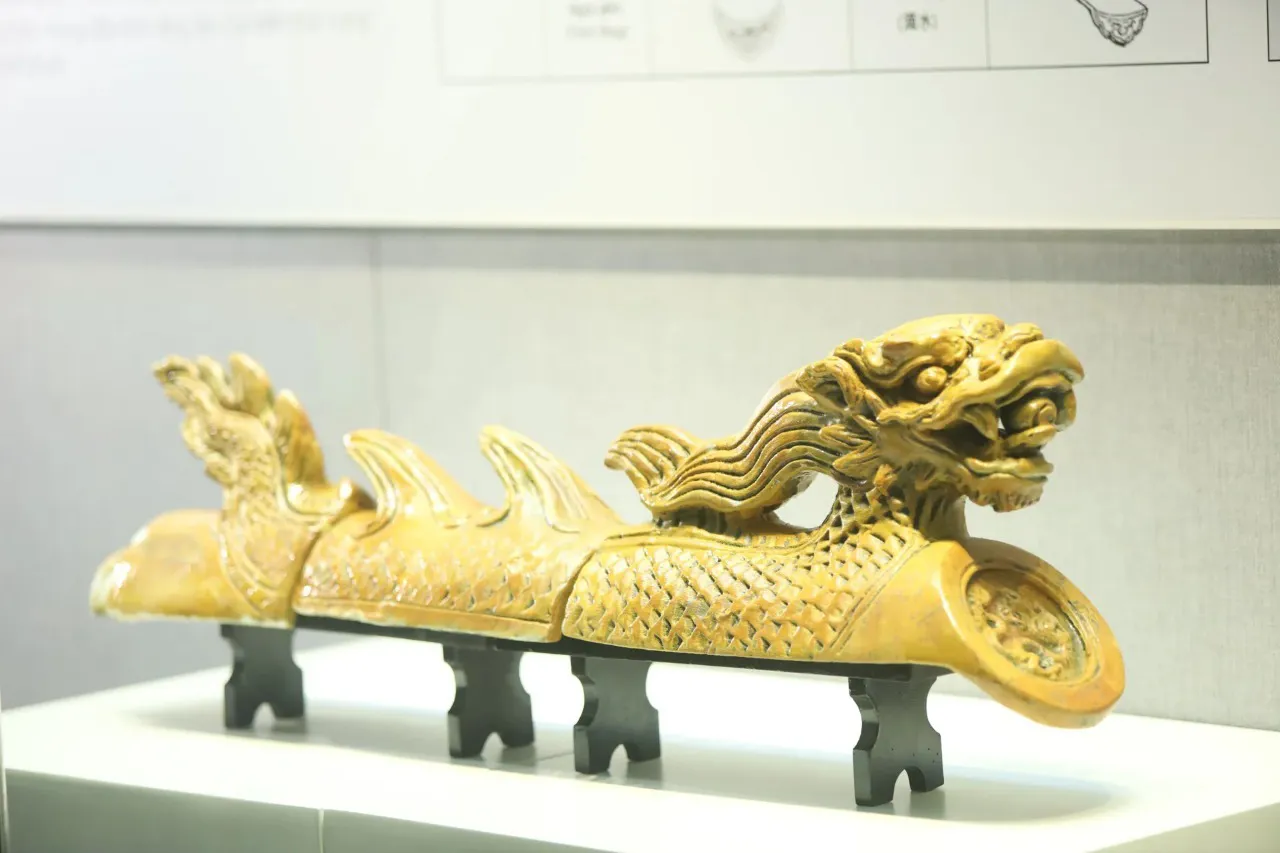
Dragon-tiled Roof of Kinh Thien Palace. Photo: Ngoc Tu/ The Hanoi Times
In 2023, a miniature model of the celestial palace inspired by these findings was unveiled, sparking public interest in the potential restoration of Kinh Thien Palace. Yet Dr. Tri remains cautious. “We must continue to verify and refine our research. Reconstruction should begin only when the evidence is conclusive, scientific rigor must come first,” he said.
Ceramics: Everyday elegance of empire
Chairman of the Vietnam Archaeological Association, Dr. Tong Trung Tin, noted that despite the random destruction over time, the remains of the Thang Long Citadel have yielded a vast number of valuable relics.
Artifacts from the Le Dynasty include many national treasures, such as collections of blue-and-white porcelain adorned with dragon motifs, thin white porcelain bowls with embossed dragon designs, white porcelain vases decorated with dragons and bronze cannons.
“Through research on these artifacts, we can see that the art of Thang Long reached a peak of creativity. The blue-and-white and white porcelain objects also mark a period when Vietnamese ceramics were most vigorously produced and widely exported,” said Tin.
Meanwhile, Dr. Nguyen Dinh Chien, former Deputy Director of the National Museum of History, emphasized that the ceramic assemblages unearthed at the Thang Long Imperial Citadel have helped illuminate 2,000 years of Vietnamese ceramic history, spanning dynasties from Dinh to Early Le, Ly, Tran, Early Le, Mac and Later Le.
He added that these research findings also shed light on the cultural life within the Thang Long Imperial Palace, providing scholars with new and reliable insights into the types and chronology of ceramics from the Ly to the early Le dynasties - a subject that had long remained underexplored.
While the architecture reflects Thang Long’s grandeur, the unearthed ceramics reveal the intimate rhythms of royal life.
Millions of fragments have been carefully cataloged, showcasing the refined taste of the Vietnamese elite and the capital’s cosmopolitan ties. Dr. Tri noted that the Ly Dynasty porcelain achieved exceptional craftsmanship.
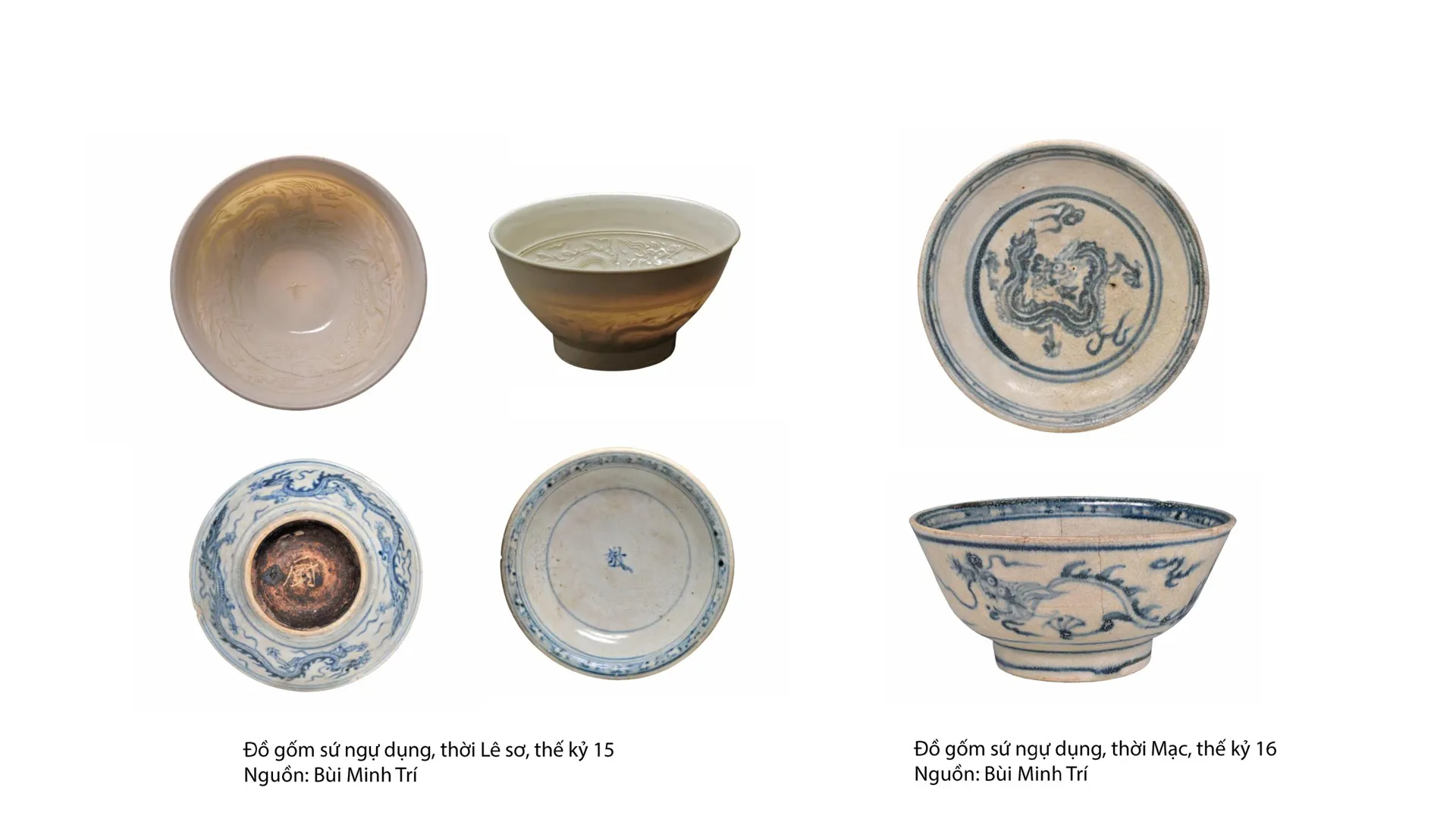
The ceramics founded underneath today's Thang Long Imperial Citadel historical site. Photo: IICS
Among the discoveries are earthenware shards decorated with dragons and lotus motifs once reserved for the emperor and empress. Believed to have been fired in Thang Long’s royal kilns, they embody both the court’s elegance and the centralized power of Dai Viet’s imperial administration.
Equally remarkable are imported ceramics from China, Japan, Korea and West Asia, highlighting Thang Long’s role as a regional hub of trade and diplomacy long before globalization became a modern term.
Dr. Ha Van Can, Director of the Institute of Archaeology, said that scientific achievements gain true value when they inspire preservation and education.
The next step is to transform research into action through digital exhibitions, interactive storytelling and international collaboration that enhances Vietnam’s archaeological capacity to bring it to life, allowing visitors to experience Thang Long as a living cultural landscape rather than a relic of the past.
The long road to revival
Despite remarkable progress, researchers acknowledge that fully reconstructing the Thang Long Imperial Citadel, especially Kinh Thien Palace, remains a long and complex task.
Dr. Tri admitted: “We cannot claim to have a complete picture. We’ve uncovered the foundation, but questions remain about the palace’s layout, construction methods and decorative details.”
Scholars plan to continue mapping palace boundaries, decoding column and roof structures and studying ancient building techniques. Each finding, brings them closer to understanding the citadel that once symbolized the power of Dai Viet.
For Vietnam, this effort goes beyond archaeology but is a journey to reclaim a lost chapter of the nation’s soul – one carved in stone, glazed in porcelain and rooted in Hanoi’s soil.
Dai Viet was the official name of Vietnam from 1054 to 1804, beginning under Emperor Ly Thanh Tong of the Ly Dynasty. The period marked Vietnam’s full emergence as an independent kingdom after centuries of Chinese rule.
This era saw the consolidation of Vietnamese identity – a confident, literate, and resilient civilization that built the foundations of today’s Vietnam.
The spirit of Dai Viet – Independence, learning and unity – continues to define the nation’s cultural core.