Liver cancer becomes most commonly acquired one in Vietnam
The number of liver cancer patients surpassed lung cancer, ranking first in both newly-contracted liver cancer and mortality, each reaching more than 25,000 people in 2019.
Liver cancer has become the most commonly acquired one in Vietnam, ahead of lung cancer, VnExpress reported.
According to Professor Nguyen Chan Hung, president of the Vietnam Cancer Association, liver cancer is becoming a "great disaster" in the country.
| A cancer patient receives treatment at Hanoi's K Hospital. Photo: Ha Tran |
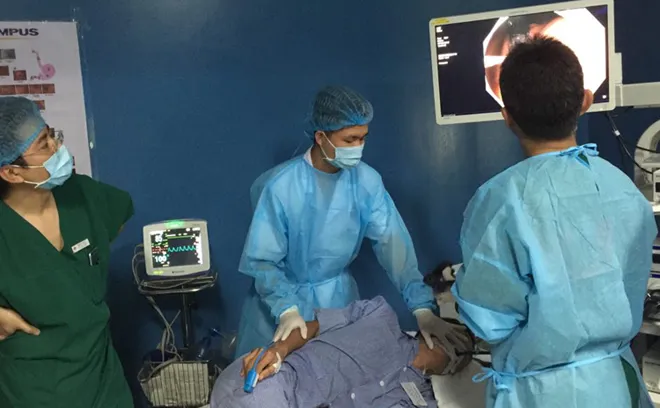
The number of liver cancer patients ranks first in both newly-contracted cases and mortality, each reaching more than 25,000 people this year. In comparison with lung cancer, 23,667 people acquired liver cancer and 20,701 died of it in 2018.
The main risks of liver cancer are chronic hepatitis B or hepatitis C infection, aflatoxin exposure, heavy alcoholism, obesity, smoking and type 2 diabetes.
"Viral hepatitis is a pandemic and needs to be prevented in order to avoid the threat of liver cancer," Professor Hung stressed.
He added that hepatitis B and C progressed slowly to chronic liver diseases, cancer and death. Globally, liver cancer is the fourth most common fatal cause in men.
He also said that the liver cancer rate among Vietnam’s male population was three times higher than that among women, with 39 men out of 100,000 succumbing to the disease, ranking third in the world behind Mongolia and Egypt, according to VnExpress.
Vietnam and 10 countries including Brazil, China, Egypt, India, Indonesia, Mongolia, Nigeria, Pakistan, Uganda, carry 50% of the global chronic hepatitis burden. Some 1.4 million people die each year from acute infection and liver cancer related to hepatitis, cirrhosis, which is a close approximation of the total mortality from malaria, HIV/AIDS and tuberculosis.
Dr. Margaret Chan, director general of the World Health Organization (WHO), warned that viral hepatitis is now considered a public health challenge that needs urgent response.
The number of people infected with the hepatitis B virus will increase in the coming years with 20 million deaths between 2015-2030, Margaret Chan said, adding that WHO calls for more actions to eliminate hepatitis B and C by 2030, by reducing the number of new infections and deaths.
The hepatitis B virus (HBV) is spread by blood, mother-to-child transmission, unsafe injecting, and sexual intercourse. Hepatitis B can be prevented effectively and safely by vaccines. WHO recommended hepatitis B vaccine administration as soon as possible after birth, preferably within 24 hours.
The hepatitis C virus (HCV) increases the risk of liver cancer by promoting fibrosis and cirrhosis. About 15-30% of people infected and then recovered themselves without knowing it was acute HCV. In the remaining of 70-85%, the disease will become chronic and persistent, which leads to cirrhosis or liver cancer.
According to the WHO’s Global Cancer Observatory, almost 115,000 Vietnamese died of cancer last year, or over 300 a day, and the number of new cases is on the rise.
Liver cancer is the most common among men in Vietnam, followed by lung, stomach and colorectal cancers. Among women, breast, stomach and lung cancers top the list.
WHO also placed Vietnam at 78th out of 172 countries in the number of cancer patients worldwide in 2018. Liver cancer is among the five most common cancers and kills 782,000 people around the world every year.