Mangroves: Precious resources of Vietnam in mitigating climate change
Mangrove forests play a critical role in climate adaptation in Vietnam as the country has a long coastline which is managed by 28 out of 63 cities and provinces.
Mangrove forests are once again affirmed precious resources for local communities and significant components of "blue carbon" ecosystems, making them an advantageous asset for sustainable carbon financing and climate change mitigation.
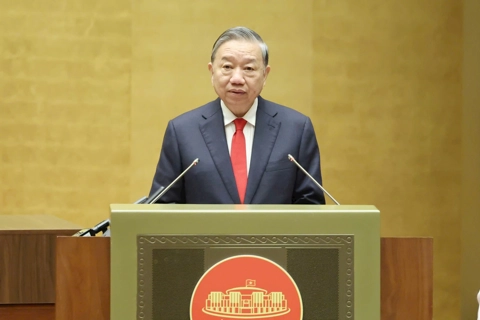
| Nguyen Quoc Tri, Minister of Agriculture and Rural Development (MARD), highlights the role of mangroves in mitigating climate change in Vietnam. Photos: UNDP |

The view was shared at an international workshop themed "Leveraging Plural Values of Mangroves for Climate Change Mitigation and Adaptation Goals" that gathered global experts, government officials, and local stakeholders to explore the multifaceted role of mangroves in environmental and community well-being on November 21.
It made it possible for nations in the global south to exchange knowledge and experiences about best practices in managing, protecting, and developing mangrove forests. It also highlights mangroves in the Nationally Determined Contributions (NDCs) and utilizes the blue carbon potential of mangroves to finance initiatives to restore and protect them.
Nguyen Quoc Tri, the Minister of Agriculture and Rural Development (MARD), highlighted the Vietnamese Government's dedication to enhancing forest management policies. He called on coastal provinces in Vietnam to step up efforts to protect and reforest mangroves, emphasizing the need to increase these ecosystems' economic value and effectiveness.
He said after the event co-hosted by MARD and the United Nations Development Programme (UNDP), the ministry will keep giving orders to specialized units to develop technical guidelines and improve forestry policy mechanisms for approval by the Government.
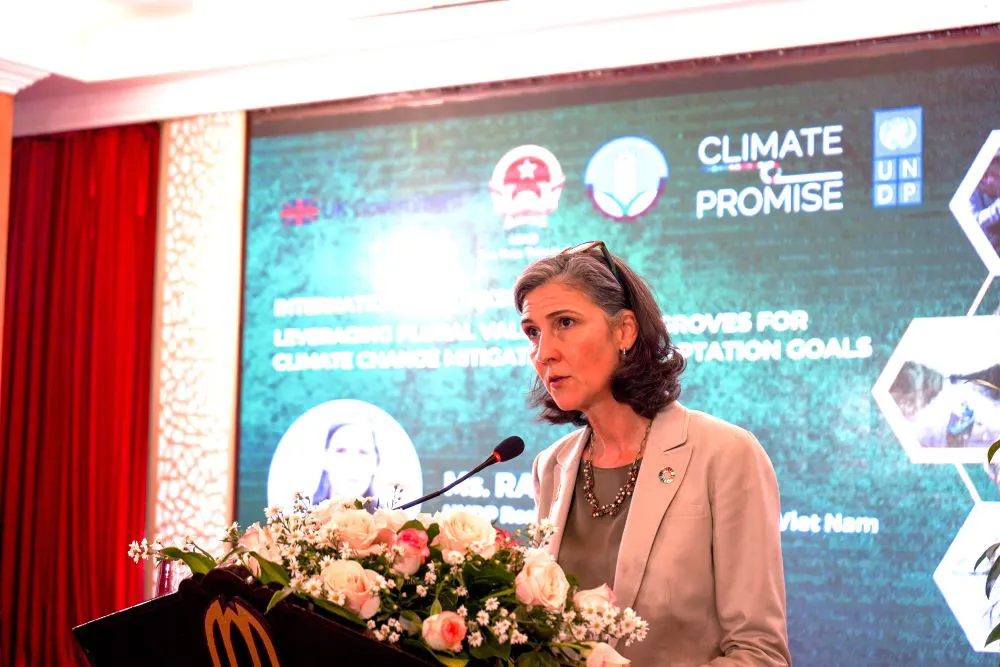
| Ramla Khalidi, UNDP Vietnam Resident Representative, addresses the international workshop held on Nov 21. |
International support
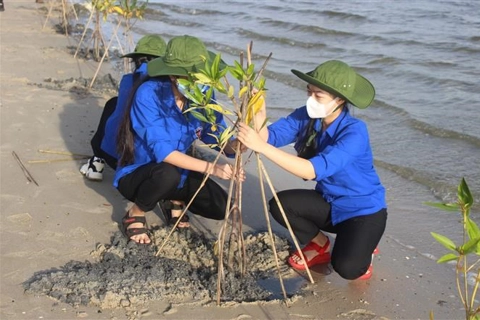
Ramla Khalidi, the UNDP Vietnam Resident Representative, praised Vietnam's leadership in mangrove conservation. She gave an overview of joint projects carried out with MARD, such as the planting and restoring of more than 4,000 hectares of mangrove forests and a future project funded by Canada to preserve and create an extra 600 hectares.
She brought up the cooperation under UNDP's Climate Promise, which is backed by the UK government, to assess carbon stocks in all 28 of Vietnam's coastal provinces, identify sustainable financing options, and explore the possibility of creating high-integrity carbon markets under the future implementation of Articles 6.2 and 6.4 of the Paris Agreement.
"The rapid loss of mangroves poses a severe threat to coastal resilience, biodiversity, and the livelihoods of millions of people who depend on these ecosystems for sustenance. The restoration of mangroves is not merely an environmental imperative; it is a moral obligation to future generations," she emphasized.
Alex White, Department of Environment, Food & Rural Affairs, the United Kingdom said: "The UK recognizes the importance of mangrove forests in addressing climate change, biodiversity loss, and sustainable development, and their valuable role in supporting climate resilient and nature positive green growth."
For that reason, the collaboration with the UNDP on Forests, Land Use and Nature focuses on understanding the benefits of these important ecosystems, and it is good to see examples of the joint work in Vietnam.
| Domestic and international speakers at the event. |
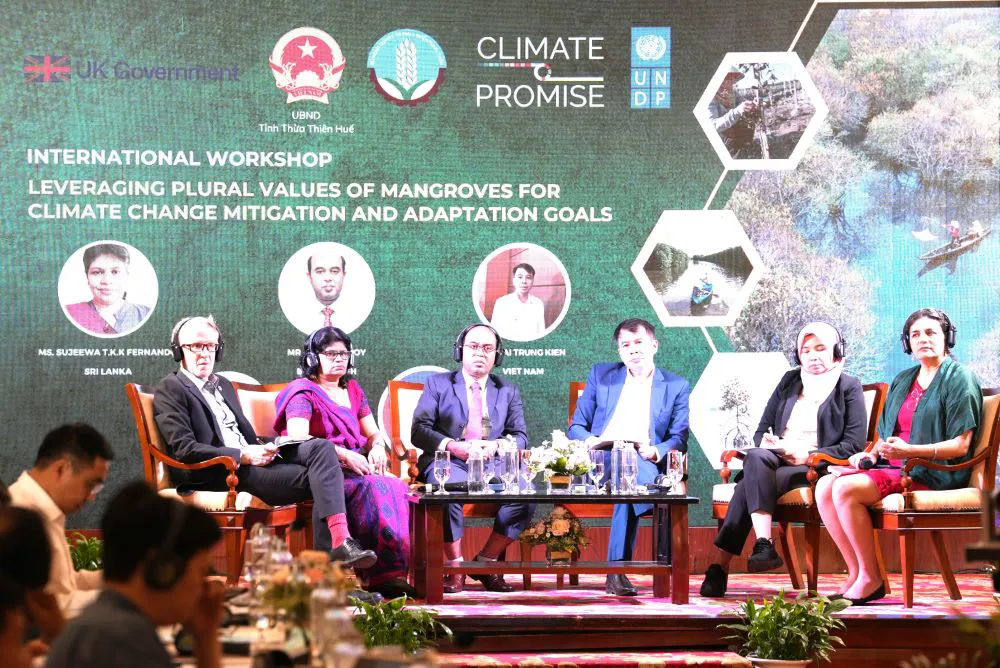
The workshop featured insightful presentations from international and national experts. Clea Paz-Rivera from UNDP underscored the global significance of mangroves in carbon sequestration and coastal protection.
Meanwhile, Vu Tan Phuong from the Vietnam Forest Certification Office (VFCO) mentioned the critical role of Vietnam's forestry sector in carbon storage and emission reduction, the forestry development strategy and GHG mitigation measures that align with the Nationally Determined Contributions (NDCs) for climate targets.
Phuong also presented a plan for developing the carbon market, which aims to involve the private sector in the development of the low-carbon economy and boost business competitiveness by establishing the infrastructure and legal framework for carbon trading.
At the same time, experts from Indonesia and Sri Lanka also share information about mangrove rehabilitation programs in their respective nations, highlighting how urgent it is to protect these important ecosystems in light of the world's climate problems.
Maitreyee Mukherjee, an expert from Singapore, analyzed carbon markets, carbon taxes, and Emission Trading Systems (ETS) and their potential role in sustainable forest management, emphasizing the role that carbon credits play in international environmental policies. As the first nation in ASEAN, Singapore implemented a progressive carbon tax in 2019 that would cover 80% of the country's carbon emissions and send a price signal to the entire economy.
Also at the workshop, Trieu Van Luc, Vice Director of the Department of Forestry, MARD, presented a report on Vietnam's "Protection and Development of Coastal Forests for Climate Change Response and Green Growth Promotion 2021-2030" project.
He reviewed the progress made in protecting forests and reforestation, as well as the obstacles that still need to be overcome, such as problems with mangrove plantations and land use. He also highlighted the advancements in policy and technical guidelines for sustainable forest management.
At the end of the workshop, everyone agreed that local and international action was required to protect mangrove forests, which are vital to the preservation of biodiversity.
With an aim to support local economies, the participants advocated for increased inter-sectoral cooperation, sustainable funding, and the incorporation of mangrove preservation into national and global climate policies.
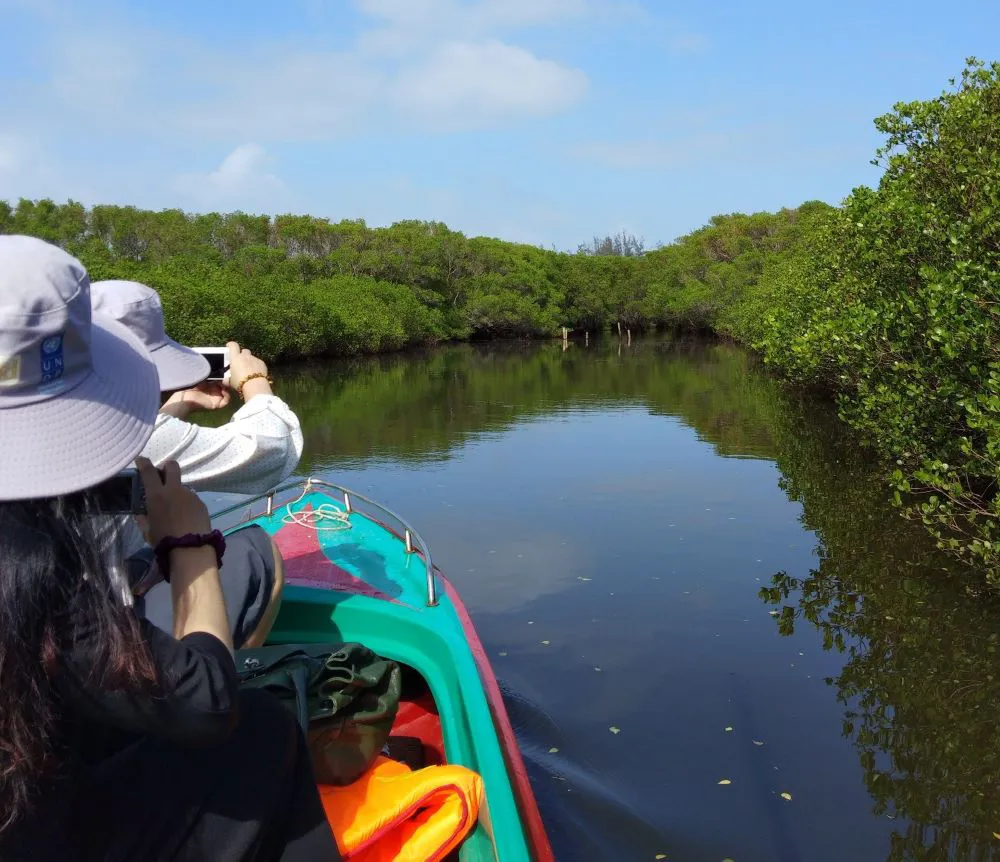
| A mangrove forest in Vietnam's Central province of Quang Ngai which is funded by UNDP. Photo: Linh Pham/The Hanoi Times |