Open AI technologies key to Vietnam’s digital sovereignty and sustainable growth
At the Vietnam Open Summit 2025, experts stressed that Vietnam must develop open AI, domestic computing infrastructures and open data systems to ensure digital sovereignty and sustainable innovation.
THE HANOI TIMES — Vietnam needs to develop national computing infrastructure, open data platforms and an open artificial intelligence (AI) community as key pillars to build its digital sovereignty, said Ho Duc Thang, Director of the National Institute of Digital Technology and Digital Transformation.
Speaking at the Vietnam Open Summit 2025 themed “AI with Open and Open-Source Technologies” on November 3, Thang said Vietnam must pursue an independent, innovative and self-reliant path instead of relying on closed, proprietary “black box” technologies controlled by others.
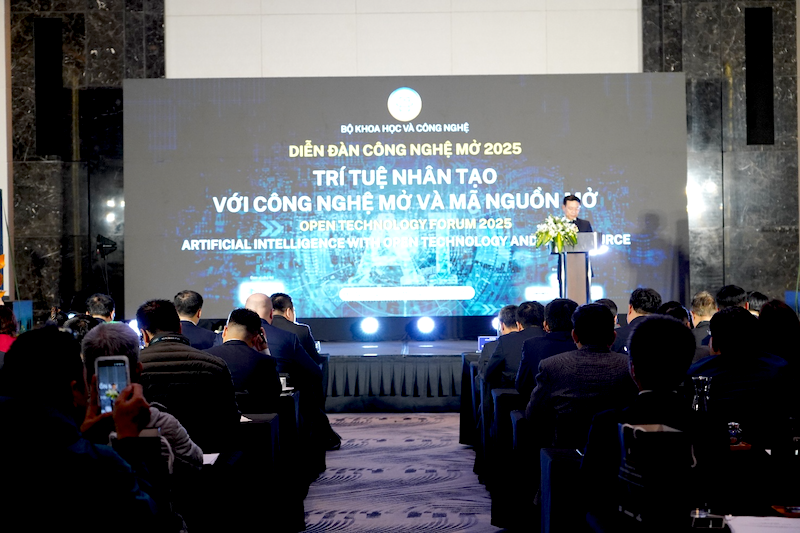
Delegates at the Vietnam Open Summit 2025. Photos: Ministry of Science and Technology
To achieve this goal, he proposed that the government build a national computing infrastructure, including data centers and high-performance computing clusters “Make in Vietnam” that are secure and autonomous.
He also suggested forming national open data repositories to share data safely and standardize Vietnamese-language datasets so that AI “speaks our language, understands our culture and serves our people.”
“Embracing open AI is the path to building Vietnam’s digital sovereignty,” said Thang.
Sharing this view, Hoang Quang Huy from Palo Alto Networks Vietnam said open AI must go together with safety and standardization.
He warned that risks lie in data protection, cybersecurity, system failures and supply chain vulnerabilities. Vietnam, he said, should align its AI standards with evolving international frameworks.
Assoc. Prof. Ngo Hong Son, Chairman of the Vietnam Free and Open Source Software Association (VFOSSA), said Vietnam “must stand on its own feet.”
He noted that while AI can develop in many directions from infrastructure and data to models and applications, infrastructure should come first as the solid base for growth.
He called for training professionals who are skilled in technology, language and ethics so that Vietnam’s AI can “go far and go right.”
From an enterprise perspective, Nguyen Di An, Regional Sales Manager of Quantum Vietnam, emphasized that AI infrastructure is expensive and must be optimized.
“If data is crude oil, then AI systems are refineries – able to process different inputs into diverse outputs,” he said.
He added that open technology reduces costs, improves transparency and promotes ethical AI systems. Quantum is developing flexible data storage infrastructure to meet the changing needs of AI development.
Building Vietnam’s open AI ecosystem
Minister of Science and Technology Nguyen Manh Hung said mastering AI is essential to mastering the digital future.
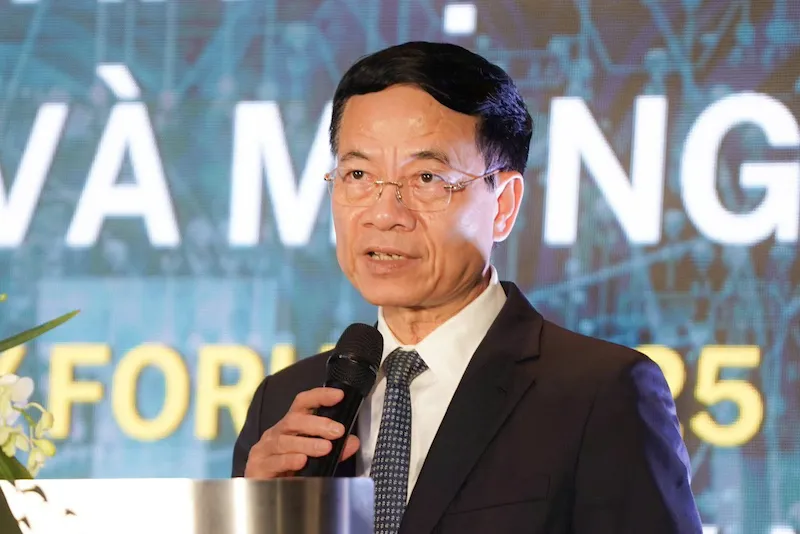
Minister of Science and Technology Nguyen Manh Hung speaks at the Vietnam Open Summit 2025.
“To lead in AI, Vietnam must embrace open technologies where data is shared safely, computing infrastructure is domestic and the community co-creates,” he said.
Hung announced that the Ministry of Science and Technology is advancing several key initiatives, including finalizing the AI Law and the National AI Ethics Code, setting technical standards and investing US$300 million in a national shared AI supercomputing infrastructure over three years. The first phase, worth $100 million, will begin in 2026.
The ministry is also building a Vietnamese open AI data repository and will allocate 5% of the national science and technology budget (around US$100 million a year) to fund AI-focused postgraduate scholarships.
To promote an AI-driven market, the government will adopt an “AI-first” approach in public procurement, prioritize domestic open-AI products and publicly announce national AI challenges for local firms to solve.
Small and medium-sized enterprises will receive vouchers to test Vietnamese AI solutions, while 40% of the national R&D and innovation budget will go to AI projects.
Through discussions on open-source technology, computing infrastructure and AI safety, the Vietnam Open Summit 2025 aims to strengthen collaboration among the State, enterprises and academia, foster public-private partnerships and promote innovation, digital sovereignty and human-centered AI development in Vietnam.