Performing arts help promote tourism
Experts from UNESCO believe that the performing arts help improve people-to-people exchanges and promote tourism in Hanoi.
The Hanoi Water Puppet Show has left an unforgettable memory for Professor Israfil Shaheen of Dhaka University's Department of Theatre and Performance Studies.
Shaheen, who was a member of the international delegation that attended the first World Performing Arts Festival held in Phan Thiet City in Vietnam's central province of Binh Thuan from December 8 to 10, will provide input to Hanoi's arts authorities on how to leverage performing arts for tourism development after enjoying some of the capital's art programs.
Based on the festival's success, Shaheen and foreign experts gathered in Hanoi to help the capital city turn performing arts into a tourism product after exploring scenic spots and enjoying stage performances.
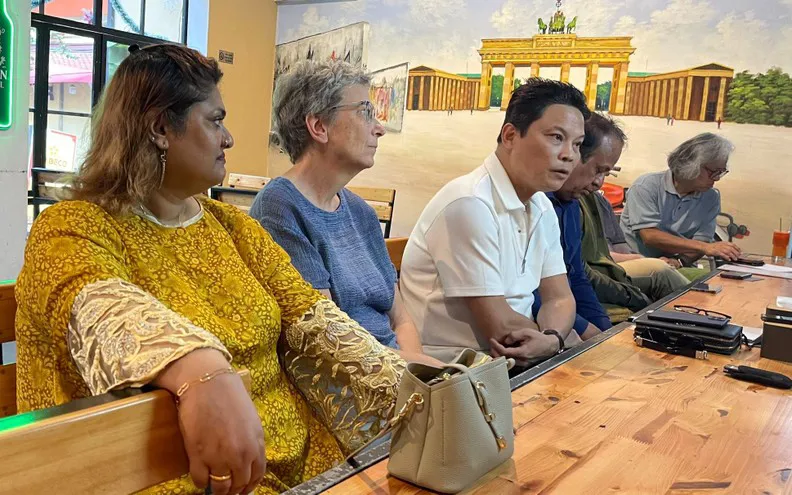
| International experts in Hanoi discuss solutions to boost local performing arts. Photo: Minh Giang/The Hanoi Times |
They visited St. Joseph's Cathedral, Hoan Kiem Lake, Ngoc Son Temple, and a 300-year-old banyan tree and watched a water puppet and Legend of Youth performances at the Vietnam Women's Museum.
Alvaro A. Franco R, an actor and producer from Colombia, said: "The feeling I got is the rich cultural and artistic life in Vietnam, and spaces and events like this festival are opportunities to show a brief picture of the whole culture."
Director Le Quy Duong was the first to lay the foundation for building unique festival brands in Vietnam, promoting the tourism industry and selectively introducing Vietnam's cultural and artistic heritage to the world.
"Previously, when people talked about where to watch performing arts, they thought of Europe, America, Japan, and South Korea. But through the festivals, Vietnam will become a destination for the world's performing arts," Duong said.
He also stressed that the festivals mean a space for all cultures and performing arts to create new works of art and cultural values.
Through the meetings in Binh Thuan and Hanoi, he expected that foreign and local experts would have a chance to exchange, understand each other, and find ways to cooperate in new art productions.
Professor Israfil Shaheen of Bangladesh was particularly pleased with the puppet show, saying it represented rural Vietnam, which is very similar to Bangladesh.
"The artists manipulated the puppets very spontaneously and skillfully. The presentation style was very simple but very creative and funny. It's a very good sense of fun," he said.
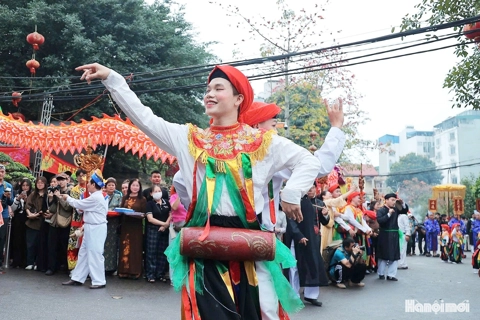
Israfil Shaheen noted that Vietnamese traditional performing arts are very simple and imaginative, with a lot of energy, rhythm, music, dance movements, choreography, and colorful costumes.
"They should bring performing arts from remote villages to cities, especially tourist spots. The government and other stakeholders should encourage artists to promote performing arts in tourism activities," he said.
Speaking to The Hanoi Times, German educator Christine Schmalor emphasized the role of education. Noting that the Hanoi government has introduced theater arts in schools, she suggests that performing arts should be included in the school curriculum so that students can practice, not just watch.
According to her, arts education from an early age not only helps train a generation of potential artists but also shapes the tastes and awareness of future performing arts audiences.
| Vietnamese puppetry is showcased at the first World Performing Arts Festival. Photo: An Khang Media |
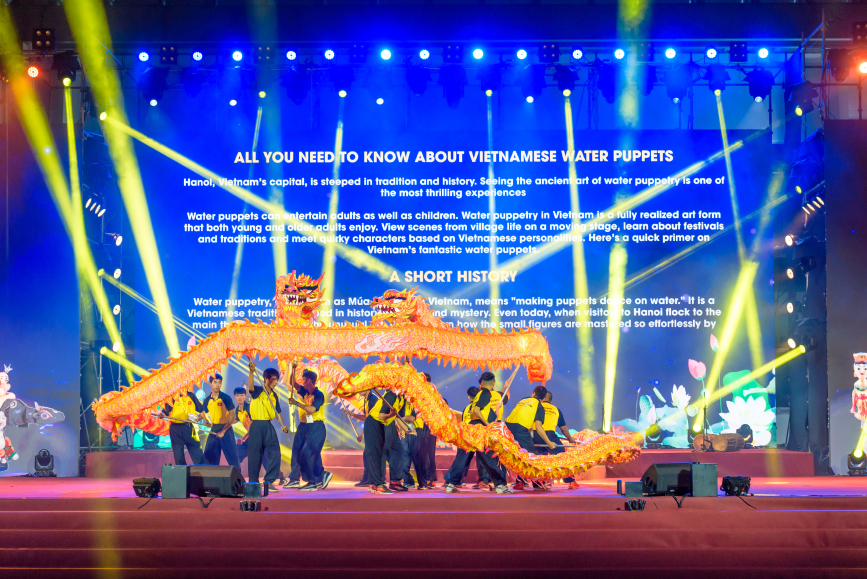
The World Performing Arts Festival was initiated by director Le Quy Duong, who is also president of the Festival and Collaborative Theatre Committee (FACT) of the UNESCO International Theatre Institute (ITI).
According to World Theater Ambassador Lemi Ponifasio, the arts always ask who we are and where we are going as communities, societies, cultures, nations, and creatures belonging to a tense and fragile world full of necessarily diverse beings and life forms. He said this festival is a commitment that initiates and sustains meaningful dialogues and friendships.
In his view, the festival is a reminder to make space to listen to one another. It is a powerful tool for bringing insights from the past and present to the task of imagining a more caring and understanding world.
| World Theatre Ambassador Lemi Ponifasio said that an arts festival is a commitment that initiates and sustains meaningful dialogues and friendships. |
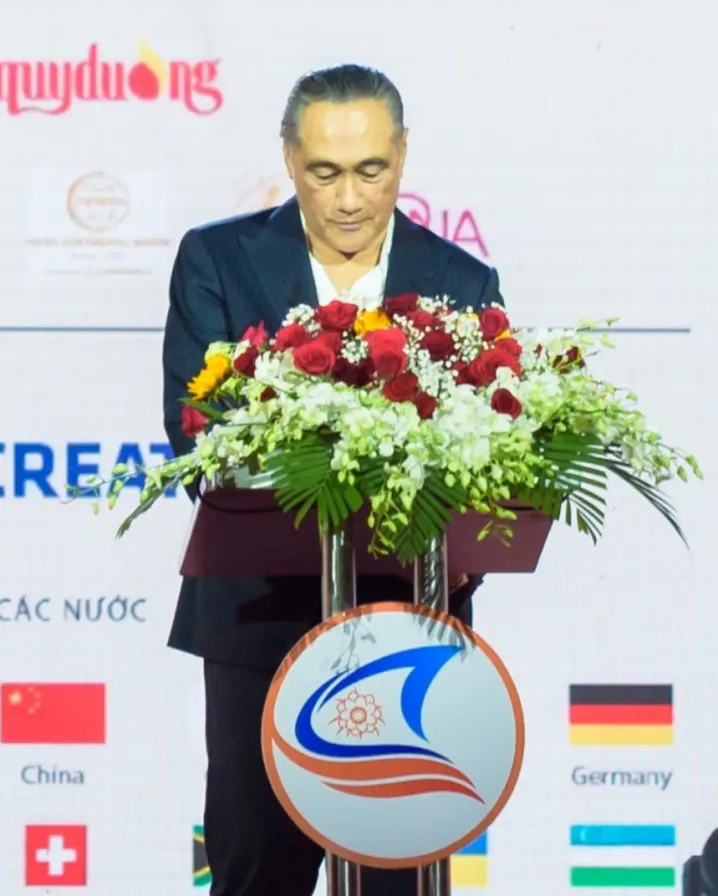
Prof. Tobias Biancone, Director General of ITI, said that the World Performing Arts Festival opens borders and brings shows from other countries to Vietnam and allows more Vietnamese productions to be sent abroad.
ITI highly appreciated the success of the festival and considered it a typical model in bringing performing arts to indigenous communities around the planet, as well as providing a professional and open creative space for artists to discuss, learn, and share professional knowledge and practical experience, to generate new creative values and narrow the cultural gap among continents, regions, and countries, for a world of peace, mutual support, solidarity, and prosperity.