Phu Dong Commune: Forging linkages and developing sustainable tourism
The commune in Hanoi’s outskirts is poised to captivate both domestic and international travelers, guided by a strategic vision that emphasizes service quality and connections with travel agencies across the city.
THE HANOI TIMES — Phu Dong Commune is strengthening linkages across cultural, spiritual, craft village, agricultural and ecological tourism to build a sustainable destination in Hanoi’s eastern gateway.
The locality about 20 kilometers from central Hanoi is promoting coordinated development among its communities to create a cohesive visitor experience.
These efforts are helping Phu Dong emerge as a leading model for integrated and sustainable tourism in the capital region.
A land of heritage
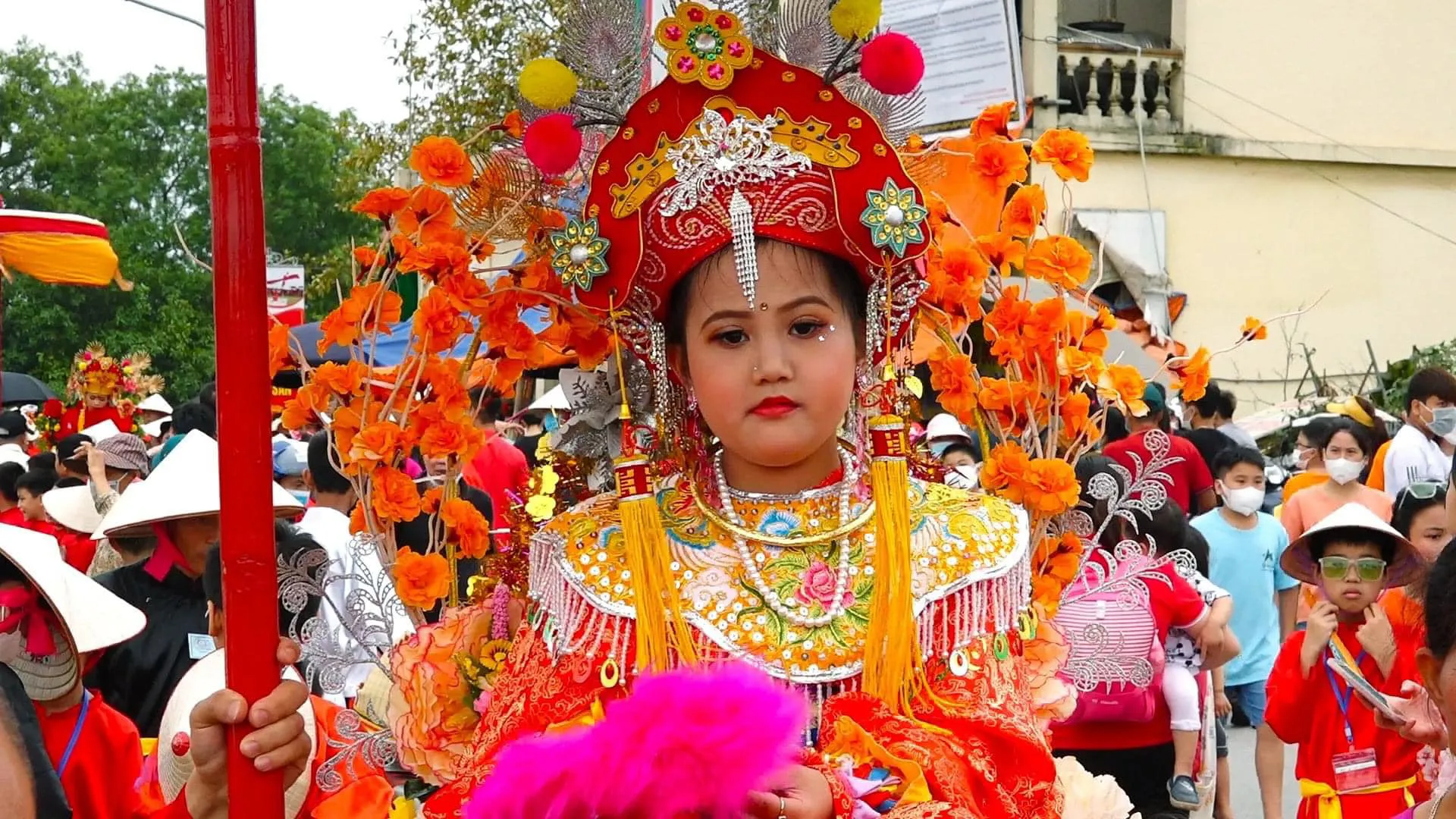
Phu Dong Commune’s Giong Temple Festival recognized by UNESCO in 2010 is a Representative Intangible Cultural Heritage of Humanity. Photo: Lang Viet Xua & Nay Group
Visitors to Phu Dong encounter a landscape shaped by legend. The commune is closely tied to the tale of Saint Giong, the Heavenly Prince of Phu Dong and one of the Four Immortals in Vietnamese folk belief.
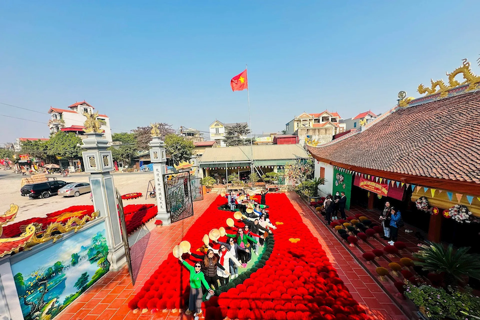
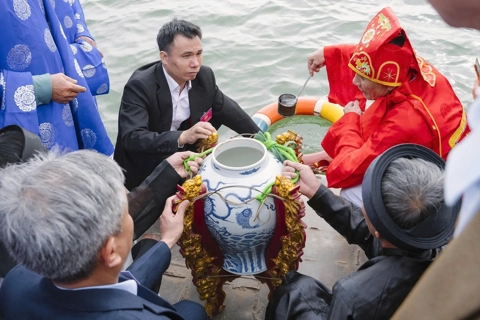
At its center stands the Phu Dong Temple complex, home to the Giong Festival, which UNESCO recognizes as a Representative Intangible Cultural Heritage of Humanity.
Phu Dong preserves 101 historical and cultural relics, creating strong foundations for meaningful tourism storytelling.
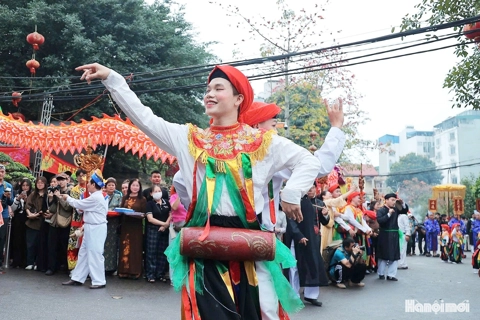
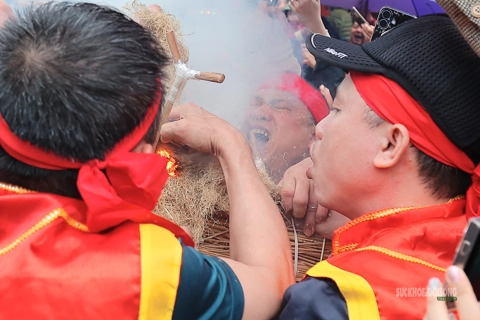
The Giong Festival, held from the 7th to the 9th day of the fourth lunar month (May 18-20, 2026), remains one of northern Vietnam’s most distinctive cultural events. Visitors can observe ceremonial water processions, victory parades, dragon horse cart displays, flag dances and army feasts. Performers portraying flag officers, Shang invaders, junior scouts, militia forces, standing army soldiers and dragon whip officers recreate the legendary battle scenes with striking clarity.
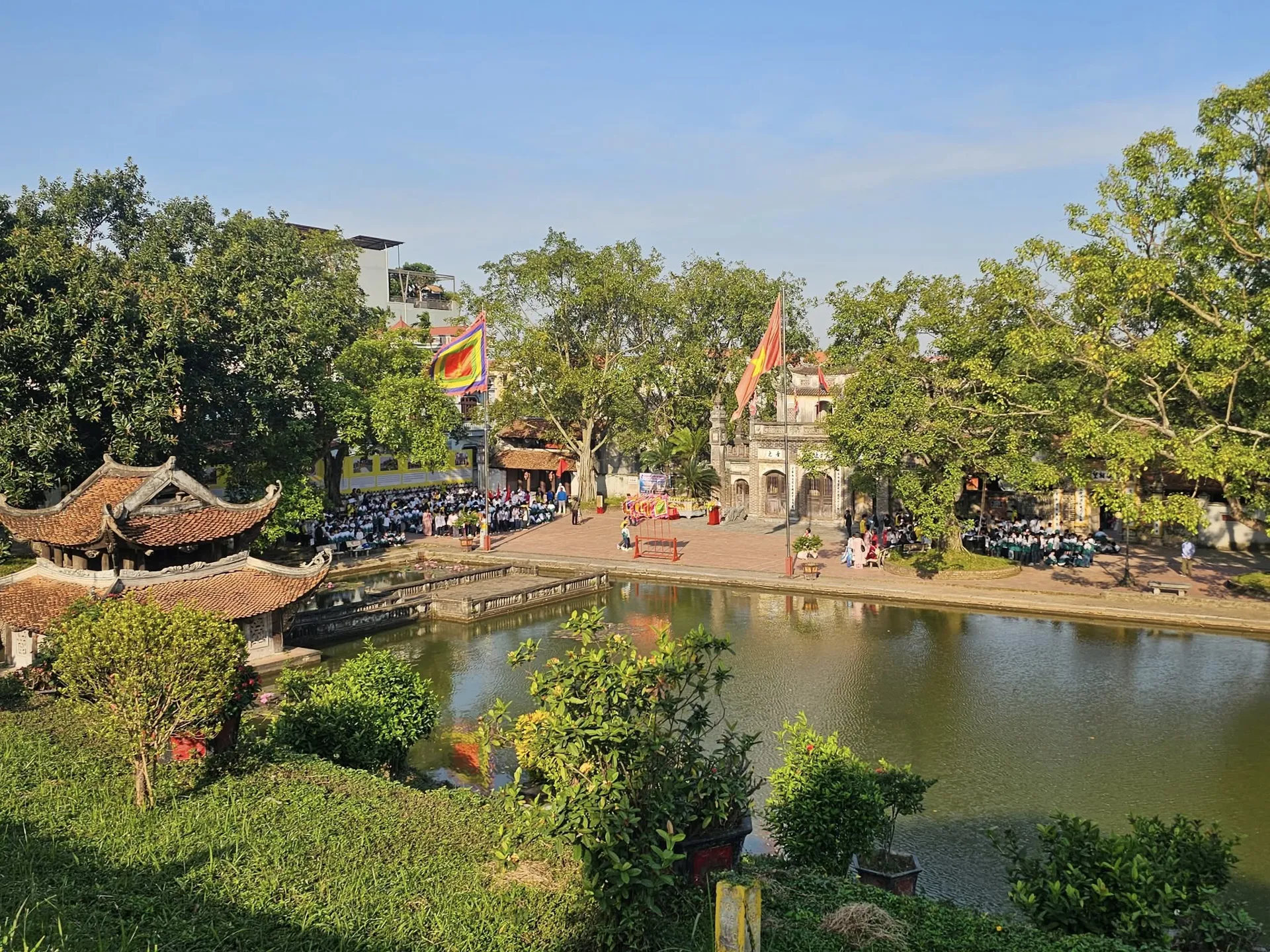
The tranquil beauty of Giong Temple is nestled in Phu Dong Commune, Hanoi. Photo: Lang Viet Xua & Nay Group
Phu Dong is also home to Kien So Pagoda, an ancient Buddhist site founded by Zen Master Cam Thanh before 820. King Ly Thai To once studied there, giving the pagoda both historical and spiritual significance. Historians consider it the ancestral temple of Vietnamese Zen Buddhism, a cultural asset that deepens the commune’s spiritual identity.
To harness its cultural resources, the Phu Dong People’s Committee has developed four tourism categories. Cultural and spiritual tourism highlights sacred sites and festivals. Educational tourism introduces students to local history. Craft village and culinary tourism presents traditional handicrafts and regional dishes. Eco and agri-tourism offers activities such as planting, harvesting and nature exploration.
Local authorities note that tourism growth still faces constraints. The Phu Dong People's Committee's Vice Chairman Nguyen Dinh Quang said transportation infrastructure, parking areas and support services remain uneven, promotional work is limited and the commune lacks experiential products and trained tour guides.
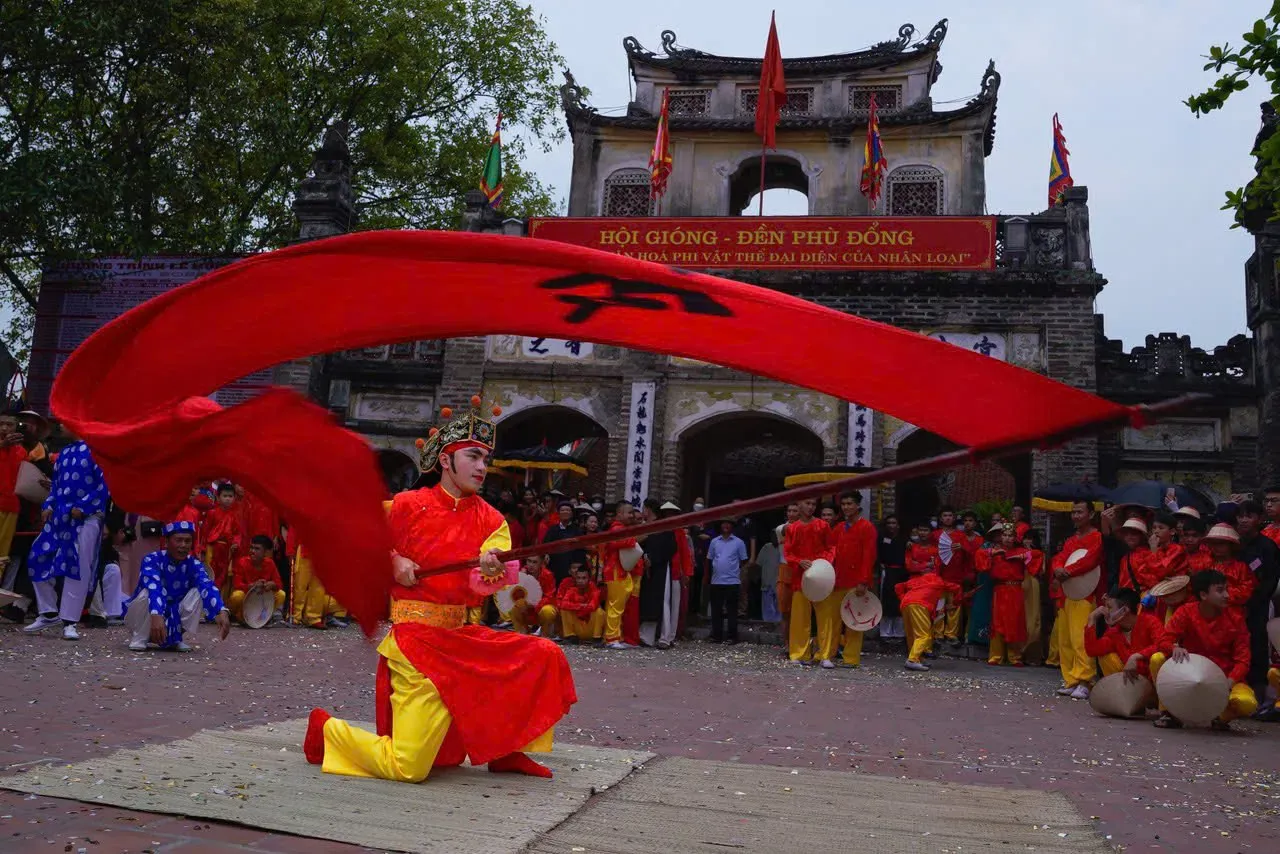
Flag dancing performance during the Giong Temple Festival in Phu Dong Commune. Photo: Dang Thanh Tung/ Kinh te & Do thi
Phu Dong is implementing the project “Preserving and Promoting Cultural and Historical Heritage Values in Conjunction with Tourism Development from 2025 to 2030” to overcome existing constraints.
The plan calls for renovating the entire relic landscape, installing a unified signage system, building a gallery for Giong Festival costumes, developing a Bamboo Park honoring the Four Immortals and creating heritage routes linking Phu Dong with major cultural sites across Hanoi.
The commune is also improving infrastructure by upgrading the dike area, adding public restrooms and building a large parking lot in front of Thuong Temple to provide a more convenient and professional setting for visitors and tour operators.
Community linkages and business cooperation
Sustainable tourism in Phu Dong is guided by a clear principle: the local community must shape the visitor experience, travel agencies need to act as partners and digital technology should enhance storytelling and engagement.
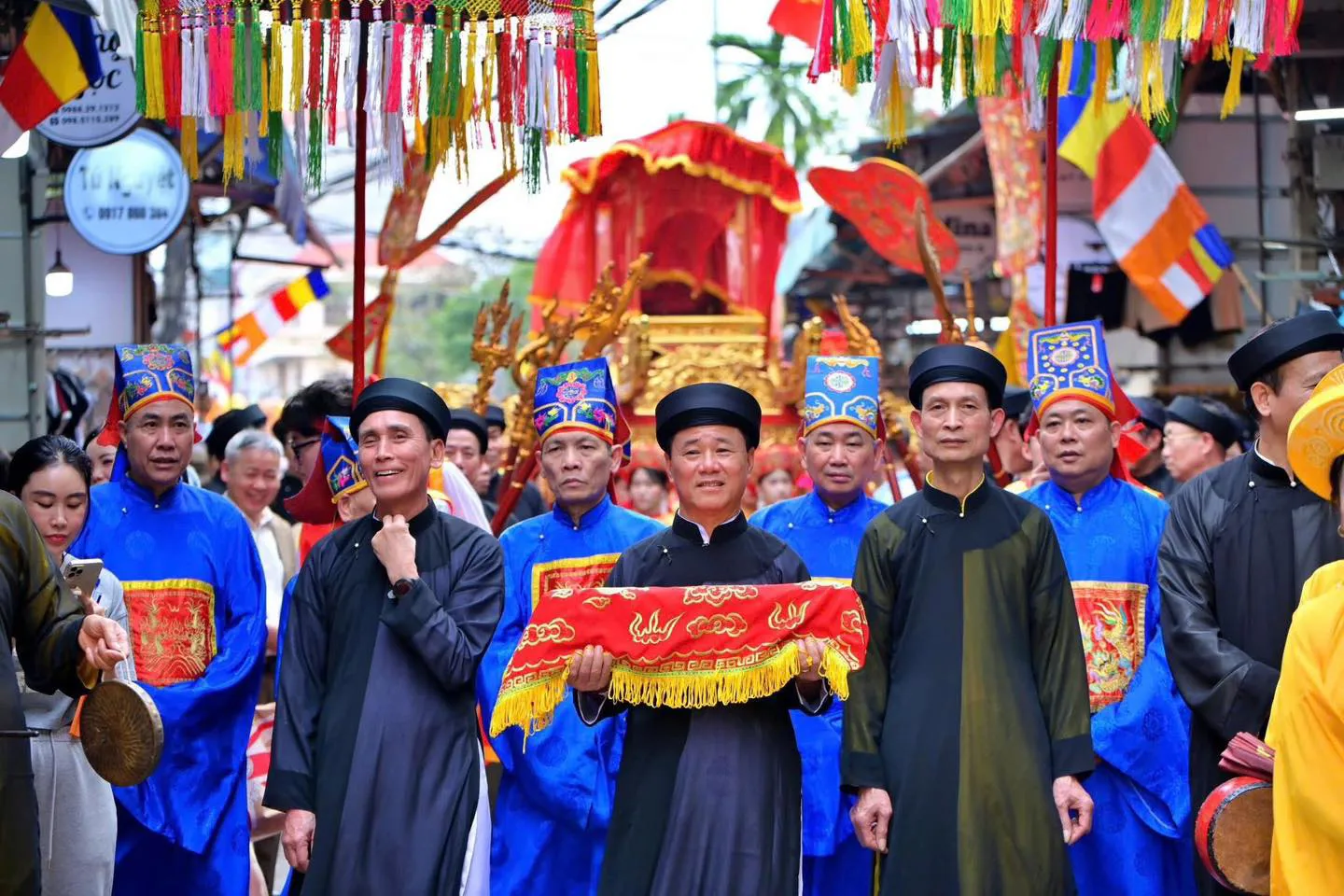
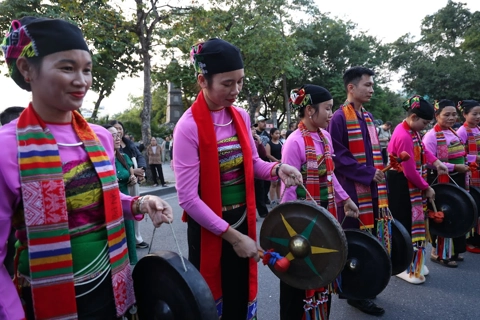
Held each year from the 4th to the 6th day of the second lunar month, the Nanh Pagoda Festival in Phu Dong Commune, Hanoi, is among the Northern Delta region’s unique cultural celebrations. Photo: Lang Viet Xua & Nay Group
These ideas were raised at the conference “Improving Service Quality and Linking Tourist Destinations of Phu Dong Commune with Hanoi Travel Agencies in 2025,” co-organized by the Hanoi Department of Tourism and the Phu Dong People’s Committee.
Experts urged the commune to build a distinctive tourism brand rooted in its relics, festivals and local specialties.
Phung Quang Thang, Chairman of the Vietnam Green Tourism Association, said digital transformation will be essential. Virtual reality technologies can animate legendary figures, create interactive narratives and offer immersive simulations that deepen understanding of historical sites.
Nguyen Duc Tang, Director of the Center for Research and Promotion of Cultural Heritage, highlighted the need for tours that connect heritage sites with craft villages and specialty products. This integrated model presents a complete cultural picture and supports year-round tourism through unique local offerings.
Experts also recommended developing a tourism route linking Phu Dong, Co Loa Commune and Bac Ninh Province to form a spiritual, ecological and agricultural tourism belt. Other proposals included expanding river tourism on the Red River, adding cycling and e-bike tours and increasing homestay and rustic culinary services to extend visitor stays.
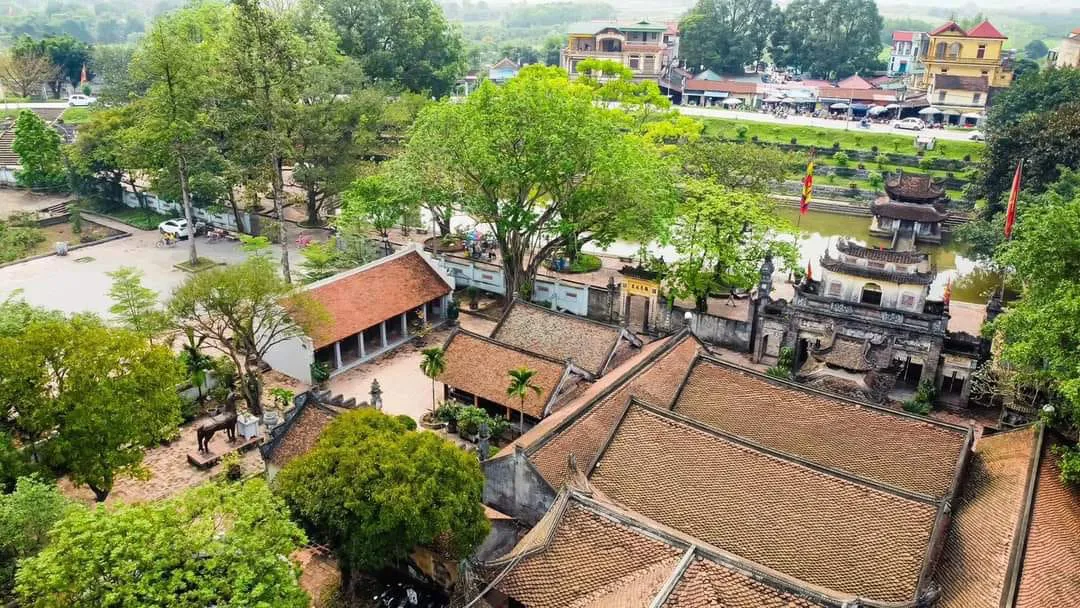
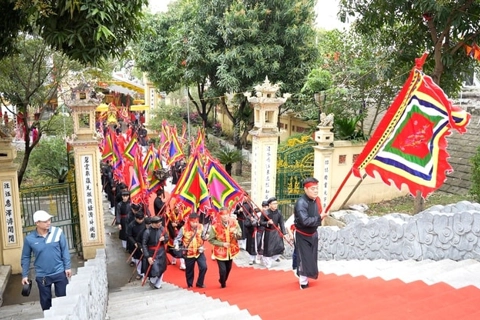
A bird’s-eye view of the striking architecture at the Giong Temple Festival, Phu Dong Commune, Hanoi. Photo: Lang Viet Xua & Nay Group
Tran Trung Hieu, Deputy Director of the Hanoi Department of Tourism, urged Phu Dong to continue upgrading infrastructure, supporting local businesses and strengthening community engagement. He said the commune should aim to become “a typical heritage, cultural and ecological destination of the capital.”
"Their hospitality and active participation in tourism services will define Phu Dong’s image as a welcoming cultural community," said Hieu.
Travel agencies should expand cooperation by developing tours that highlight spiritual heritage, ecological landscapes, craft villages and local cuisine, helping Phu Dong emerge as a new destination on Hanoi’s tourism map."
With careful planning, strong leadership and community consensus, Phu Dong is steadily becoming a model of sustainable tourism. By aligning relic preservation with infrastructure upgrades, digital innovation and diverse tourism products, the commune is forming a complete tourism ecosystem that appeals to both domestic and international visitors.
Architect and heritage expert Prof. Hoang Dao Kinh describes Phu Dong as “a heritage hub and a man-made wonderland.” With continued commitment, the commune will preserve the legend of Saint Giong while developing into a leading cultural, ecological and craft village destination, strengthening local economic growth and enhancing national cultural prestige.