‘Portrait of Mademoiselle Phuong’: the most expensive Vietnamese painting
Renowned Vietnamese Mai Trung Thu drew a portrait of his lover in 1930 and nearly 100 years later, it raised record auction proceeds of a Vietnamese painting, with US$3.1 million.
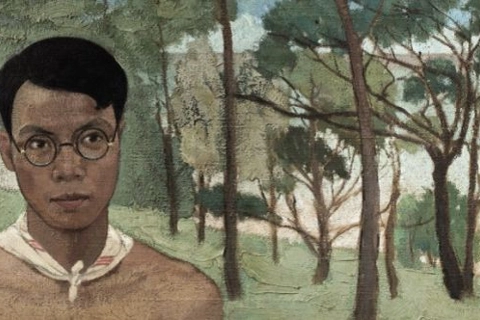
The oil painting entitled ‘Portrait of Mademoiselle Phuong’ created by painter Nguyen Trung Thu (1906 - 1980) in 1930 has fetched US$3,1 million at the auction ‘Beyond Legends: Modern Art Evening Sale’ that took place on April 18 by Sotheby's Hong Kong.
| Portrait of Mademoiselle Phuong. Photo: Sotheby's Hong Kong |
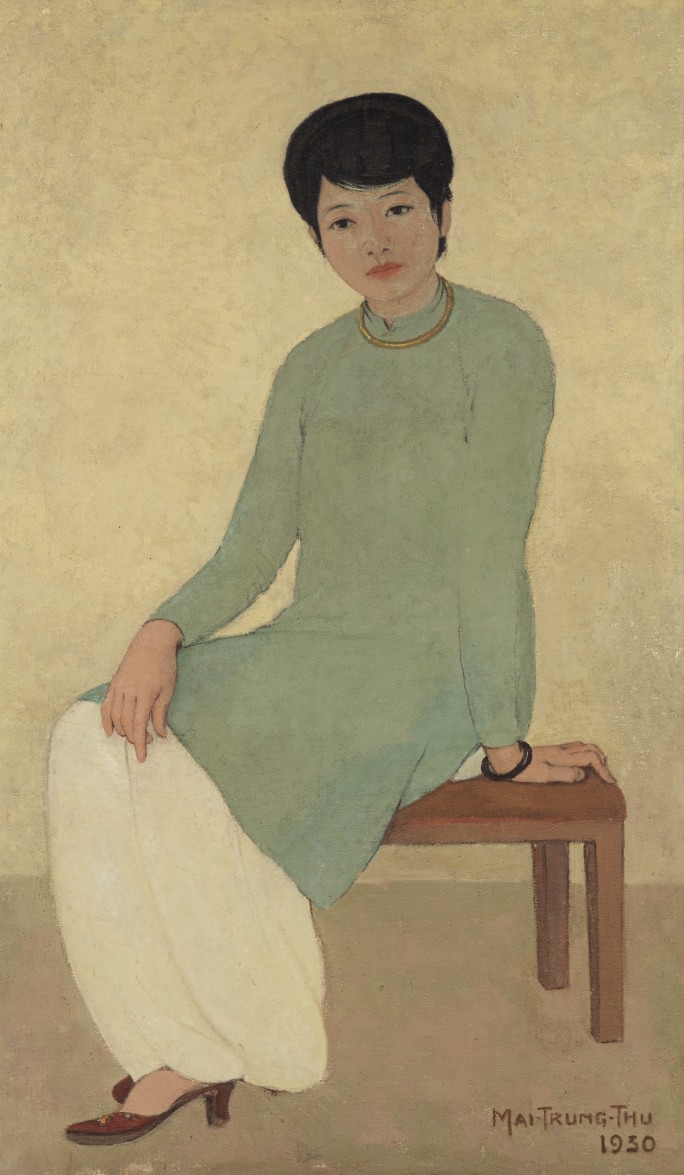
The oil-in-canvas painting, whose size is 135,5 x 80 centimeters, has broken the record of Le Pho’s ‘Nue’ (Nude), which fetched $1.4 million in 2019 at an auction by Sotheby's.
The painting was initially offered at between $900,000 and $1.2 million, then gradually increased to $2,5 million, and eventually sold for $3,1 million.
Mai Trung Thu’s ‘Portrait of Mademoiselle Phuong established a new canon of Vietnamese art, elevating traditional crafts and mediums to modern forms of expression.
Painted in 1930, Portrait of Mademoiselle Phuong stands as one of the most significant works by the artist to ever appear at auction - an extremely rare oil painting which was one of the few pieces selected for the 1931 Exposition Coloniale Internationale in Paris, and was featured in the iconic 1993 film The Scent of Green Papaya (L'Odeur de la papaye verte).
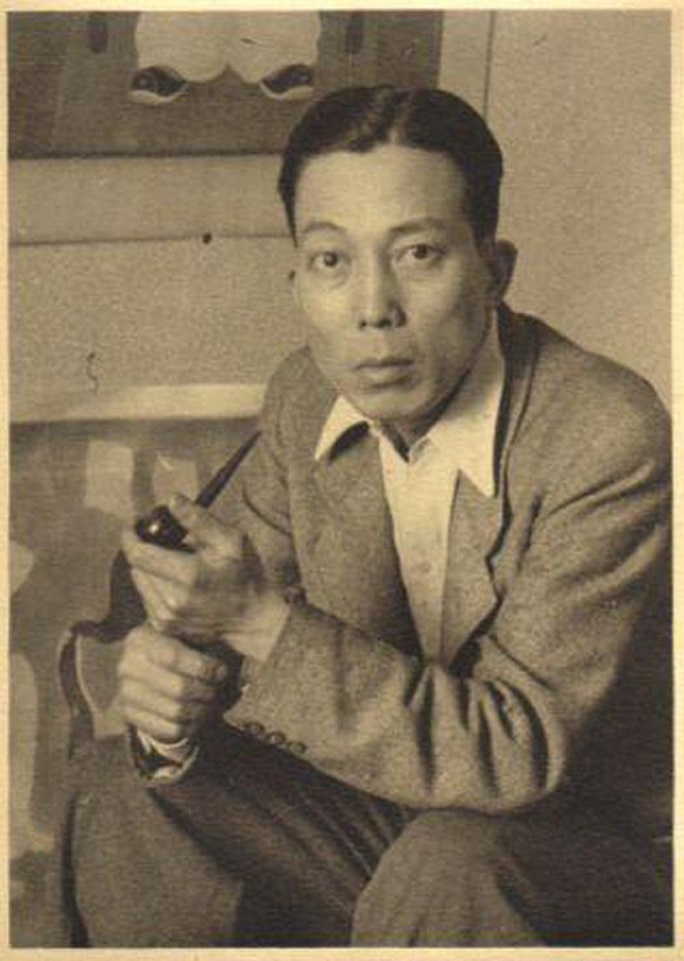
| Vietnamese renown Mai Trung Thu (1906 - 1980). Documentary photo. |
Portrait of Mademoiselle Phuong is part of a collection which also includes masterpieces by Vu Cao Dam and Pham Hau, each presenting an alluring mélange of French, Vietnamese and Chinese influences as well as nostalgia for Vietnam. The late Mrs. Dothi Dumonteil and her husband, Pierre Dumonteil acquired these works after Mrs. Dumonteil migrated to France as a child and established her career as a couture model for Yves Saint Laurant and co-founder of Galerie Dumonteil.
In recent years, the Vietnamese fine art market has been in the spotlight with paintings commanding higher prices and a growing number of talented artists emerging on the global stage.
Since the country opened its economy in 1986, artworks by Vietnamese artists had begun to attract an international audience and Sotheby’s has played an instrumental role in increasing recognition to some of the nation’s greatest artists.
In 2020, performance of works by Vietnamese artists was particularly exceptional at Sotheby’s Hong Kong, with Mai Trung Thu’s auction record being set consecutively in the Spring and Autumn sales, and works by many other artists sold for prices well above their pre-sale estimates.
| The tea time by Mai Trung Thu. Photo: Sotheby's Hong Kong |
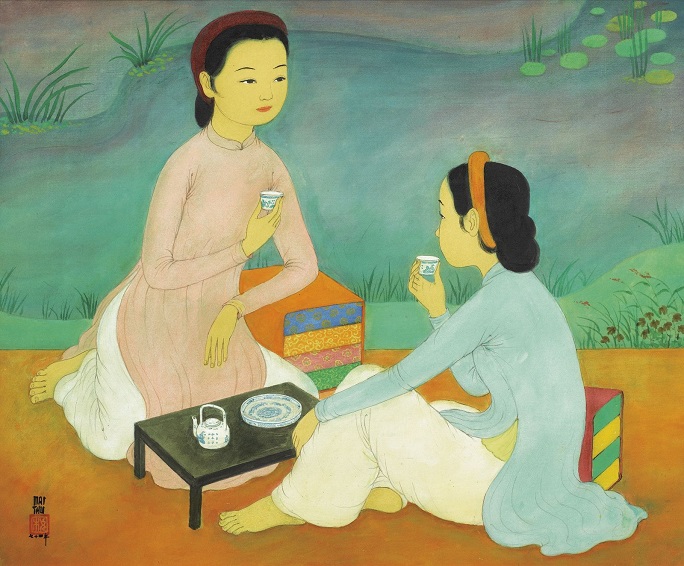
Being among the first graduates of the École des Beaux-Arts de 'Indochine (Vietnam University of Fine Arts) in Hanoi, Thu was a painter whose oeuvre celebrated the innocence of rural Vietnam.
His participation in the International Exhibition of Decorative Arts in Paris in 1937 led him to settle down in France.
Despite staying there for most of his life, Thu continued a deep sense of love for his homeland, painting tender images of Vietnamese women, children and idealized landscapes.
His silk paintings depict ethnically Vietnamese figures - mainly women - engaged in a variety of leisurely activities. Their serene facial expressions, evocative poses and lively interactions create a romantic and poetic vision of Vietnamese everyday life.
In contrast to other silk painters, Thu often used bold colours to illustrate traditional garments and paraphernalia, culminating in vibrant scenes of peaceful nostalgia.
Together with Vu Cao Dam, Le Thi Luu and Le Pho, Mai Trung Thu was one among four great names of Vietnamese paintings or so-called ‘quartet painters in Europe’ of Pho - Thu - Luu - Dam.