Log in
Business

Regional countries shocked at Japanese firms choosing Vietnam as investment destination: JETRO

Competition to attract FDI in Southeast Asia would be fiercer in the coming time.

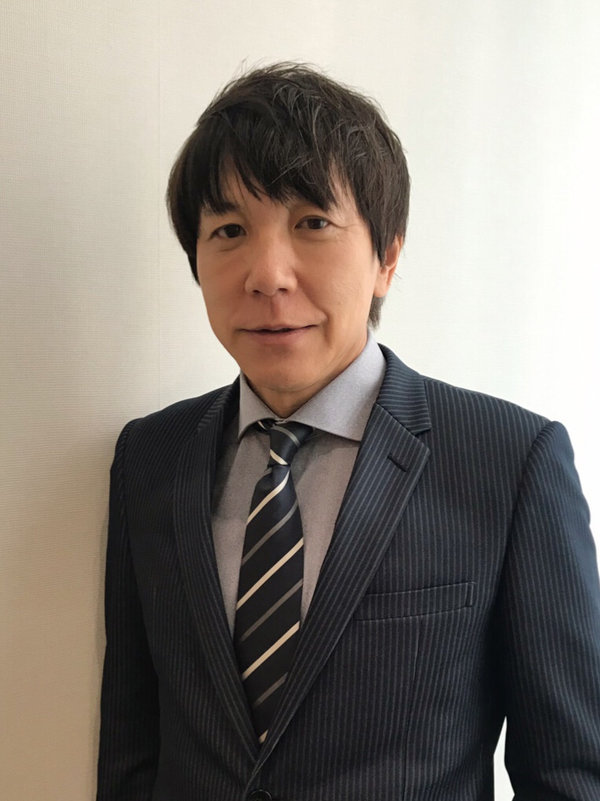
The fact that half of 30 Japanese firms have chosen Vietnam as an alternative investment destination in Southeast Asia away from China has shocked regional countries, according to Takeo Nakajima, chief representative of the Japan External Trade Organization (JETRO) in Hanoi.

Takeo Nakajima, chief representative of the Japan External Trade Organization (JETRO) in Hanoi.

Japanese firms are looking to diversify their supply chains, but it does not mean to shift their entire production facilities from one country to another, Nakajima said at a press conference on July 23 as reported by VnExpress.

JETRO earlier this month released a list of 30 Japanese firms that are poised to receive subsidies from its government to move production facilities from China to Southeast Asian countries, of them 15 eye Vietnam as a favorite destination.

JETRO said the financial support would range from US$900,000 – US$46.5 million to partly cover the required expenses of Japanese firms in expanding operation.

Japanese firms are required to complete the construction of facilities before March 2025, and for those producing medical equipment before March 2023.

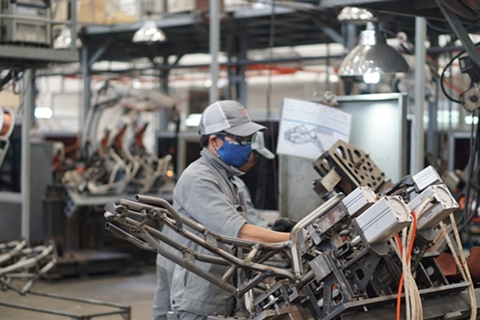
According to Nakajima, some companiesthat produce face masks, medical equipment or protective clothes prefer Vietnam as the country has many reputable and capable companies in the textile industry.

Meanwhile, one unique advantage that no other country other than Vietnam has is the large workforce with fluency in Japanese, Nakajima stated.

Nakajima also highly regarded the determination of the Vietnamese government in attracting investment from Japan, which partly offsets other shortcomings including the lack of transparency, inconsistent policies, among others.

Moreover, Vietnam also has an advantage of low production cost compared to other ASEAN countries such as Malaysia, Singapore or Thailand. However, Nakajima warned with growing labor wages and land rental fees, Vietnam could soon lose its advantage and should look for other competitive advantages.

Nakajima urged Vietnam to improve the localization rate and focus on the development of the supporting industries, especially as the competition for FDI in the Southeast Asia region is becoming fiercer.

This would pressurize Vietnam to improve its business environment, Nakajima stated.

The JETRO official expressed concern that the restriction in commercial flights between the two countries could affect investment activities from Japan.

The Japanese government earlier this year earmarked around US$2 billion in the fiscal year 2020 supplementary budget to create a subsidy program to encourage companies to move plants to Japan. Of that amount, US$219 million was set aside to promote the diversification of production sites from China to Southeast Asia.
Reactions:
Share:
Trending
Most Viewed
Related news
Vietnam to tighten biometric authentication for new bank cards next year

Vietnam to tighten biometric authentication for new bank cards next year

Bank card issuers must conduct a face-to-face meeting and match the biometric data of individual customers or the legal representative of organizational customers with their identity documents.

Make in Vietnam forum spotlights breakthroughs shaping digital future in the country

Make in Vietnam forum spotlights breakthroughs shaping digital future in the country

Vietnam will host the seventh National Forum on Vietnamese Digital Technology Enterprises on December 25 in Hanoi, highlighting policy directions, strategic technologies and progress under the “Make in Vietnam” initiative as the country pushes toward a stronger digital economy.

Hanoi and Moscow seek new economic momentum as partnership marks 75 years

Hanoi and Moscow seek new economic momentum as partnership marks 75 years

At the Moscow–Hanoi Business Forum, leaders from both capitals said 75 years of Vietnam–Russia ties provide a strong foundation to deepen economic and investment cooperation, especially in technology, trade and urban development.

Vietnam manufacturing maintains strong momentum despite storms disrupting supply chains

Vietnam manufacturing maintains strong momentum despite storms disrupting supply chains

Vietnam’s manufacturing sector continued to expand in November, marking the fifth straight month of improvement, even as severe storms caused supply-chain delays and slowed production, according to S&P Global.

Techfest 2025 returns to Hanoi, spotlighting Vietnam’s vibrant startup community

Techfest 2025 returns to Hanoi, spotlighting Vietnam’s vibrant startup community

Hanoi’s Hoan Kiem pedestrian street will host Techfest Vietnam 2025 from December 12 to December 14, welcoming entrepreneurs, investors and the public to explore emerging technologies and celebrate the country’s growing culture of innovation.

Vietnam expands major entrepreneurship program to unlock opportunities for women nationwide

Vietnam expands major entrepreneurship program to unlock opportunities for women nationwide

The Vietnam Women’s Entrepreneurship Support Program has surpassed nearly every target set for 2017–2025, empowering more than 118,000 women to launch new ventures and laying the groundwork for a stronger, more inclusive entrepreneurial ecosystem in the next decade.

HHTIP accompanies businesses in efficient energy use for sustainability

HHTIP accompanies businesses in efficient energy use for sustainability

As green transition becomes a decisive factor shaping future growth, Hanoi is intensifying efforts to push energy efficiency across its industrial zones. The city’s management board is building a development model centered on clean energy, responsible production and sustainable operations.

Vietnam launches Semiconductor Alliance to build skilled workforce, strengthen global industry ties

Vietnam launches Semiconductor Alliance to build skilled workforce, strengthen global industry ties

The newly launched Semiconductor Alliance in Vietnam seeks to develop skilled professionals, foster collaboration between universities and businesses while preparing the country to play a more active role in the global semiconductor industry.