Hanoi should set standard for a city of future: JETRO representative
A Japan External Trade Organization (JETRO) representative has high expectation for Hanoi as the city is joining a nationwide effort to boost the economy back on track.
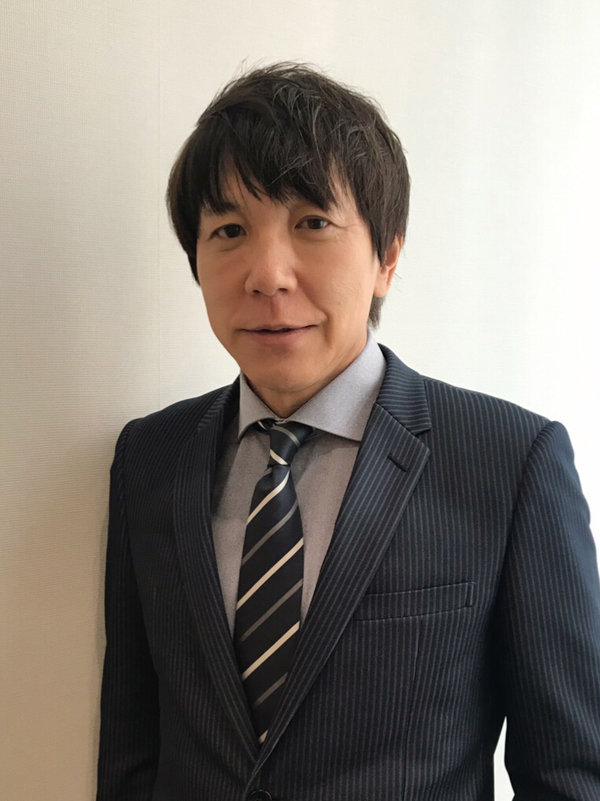
Takeo Nakajima, chief representative of the Japan External Trade Organization (JETRO) in Hanoi, shared his thoughts with Hanoitimes regarding the prospects of Vietnam and Hanoi in the post-pandemic period.
| Takeo Nakajima, chief representative of the Japan External Trade Organization (JETRO) in Hanoi. |
Recently, the Japanese government has earmarked US$2.2 billion of its economic stimulus package to help Japanese firms shift production out of China. What is your assessment regarding Vietnam's opportunity to become an alternative investment destination for Japanese firms in this case?
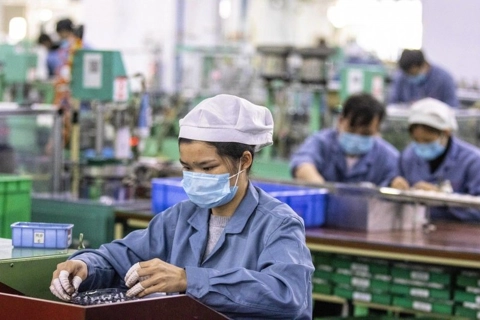
First, this program is not targeted at any country. The supply chain disruptions during the Covid-19 pandemic are primarily caused due to the high concentration of the production bases. The policy package will encourage firms to strengthen supply chain resilience. The key message is diversification and optimization but not a shift from country A to country B.
According to the survey by JETRO late last year, Vietnam was the second-highest country in the “business expansion” ranking among the Japanese respondents. 41% of the respondents planned to “expand the operation in Vietnam". They valued the country's market size, friendliness to Japan, and the quality labor force. Japan, however, is suffering from the pandemic now and is not able to picture an exit yet.
Japanese business activities abroad should be scaled down for a foreseeable future.
As Vietnam has gradually contained the Covid-19 pandemic and is pushing for economic recovery, what is your view on Vietnam's advantages to attract new FDI inflows, as well as its challenges?
The government of Vietnam handles well to contain the Covid-19 pandemic. The first step to normalize the life and activities of the people was successful. We have not seen, however, a clear scenario to kick in the economic engine. Promoting economic recovery requires different paths and tasks than containing the pandemic.
In the short term, the negative impact is serious. GDP growth of Vietnam for the first quarter of 2020 was 3.8% year-on-year, the lowest in the last ten years. The engine of the Vietnam economy is FDI, international trade, manufacturing, IT, tourism, and growing consumers. Most of them need a free flow of people, goods, and services across the borders. The domestic manufacturing activity keeps healthy, but there are not many oversea markets active yet. Vietnam cannot recover its economy alone. 71% of the Japanese companies say that the negative effects by Covid-19 would continue through 2020 according to the a survey jointly conducted by JETRO and the Japanese Chamber of Commerce and Industry in Ho Chi Minh City (JCCH) in March 2020. FDI into Vietnam could be slow as Korea, Japan, China, and other FDI source countries prolong the economic recovery.
The advantages of Vietnam to attract FDI are strong and stable leadership at the national and provincial levels. Human resources, strategic free trade agreements (FTAs), IT and foreign language literacy, and competitive costs are also attractive.
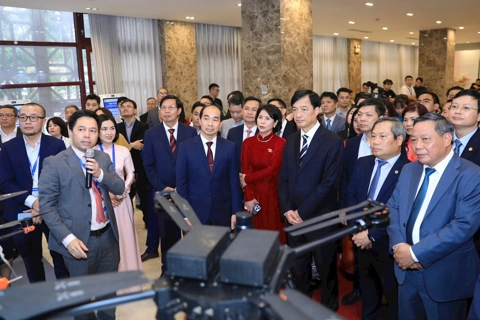
At a national dialogue between Prime Minister Nguyen Xuan Phuc and the business community on May 9, Chairman of the Hanoi People's Committee Nguyen Duc Chung said the city would soon organize an investment promotion conference at the end of June or early July. What is your view of this event and of Hanoi's efforts to improve the business environment over the past few years?
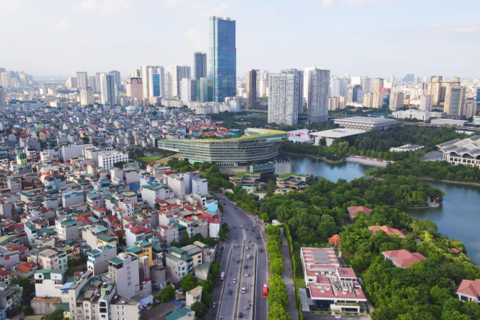
Hanoi and Ho Chi Minh are the two major FDI destinations for foreign enterprises including Japan, and the cities enjoy the highest per capita in the country. Chairman Nguyen Duc Chung of Hanoi is a strong leader. We like to hear his plan of how Hanoi promotes domestic and international investments, and how the city would innovate itself after the long "stay-at-home" period. Many large infrastructure projects are also important for the business community. Hanoi should lead to set a standard for "a city of the future" in Vietnam. Hanoi would be a sustainable, open, diversified, safe, innovative, and business-friendly city.
What are your suggestions for Vietnam in general, and Hanoi in particular, to boost the business and investment environment, especially when countries such as the US, Japan, and India are diversifying their global value chains and reduce their dependence on supplies from China?
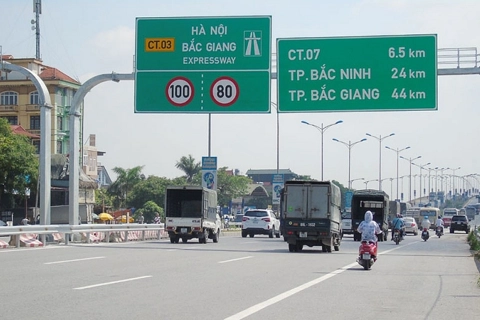
In the short term, sustaining the domestic economy is vital to attract FDI. Investing in the public sector such as constructing bridges, highways, hospitals is one of the spaces the government could focus on. The consumer market has been also damaged (by the pandemic). Some measures are already implemented to mitigate the impact (support income, rent, tax, etc). Opening the borders to let people outside Vietnam into the country could be done accordingly. We appreciate strong supports from the government of Vietnam to bring Japanese people back to Vietnam in these difficult circumstances.
In the long run, the government of Vietnam and Hanoi could make it clear what kind of country or city they would become in the future. The cost advantages of Vietnam are not the major drivers for Japan to invest in the country according to the survey of JETRO. 67% chose "market growth" as a drive, while 49% chose "cheap labor". Vietnam could partly be a substitute for China, but this should not mean a “cheaper manufacturing country”. Hanoi is one of the highest cost city in this country. The next economic engines of Vietnam, in my opinion, could be IT, high-technologies, robots, software, design, material, education, and healthcare. This is an important discussion to picture Vietnam in 2025 and beyond.
Thank you very much!