Vietnam economy accelerates to get back to normal state
With the resumption of key economic sectors' activities, such as manufacturing, services and retail, Vietnam’s economy is accelerating to get back to its normal state.
As the Covid-19 impacts start fading away, Vietnam is targeting domestic tourism as one of the key measures to boost economic recovery.
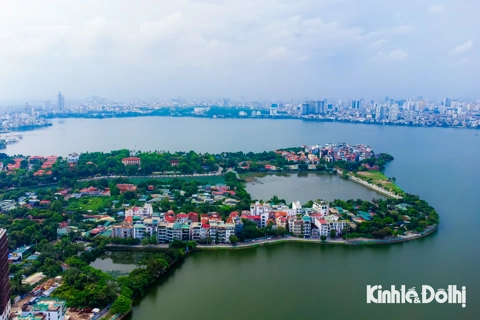
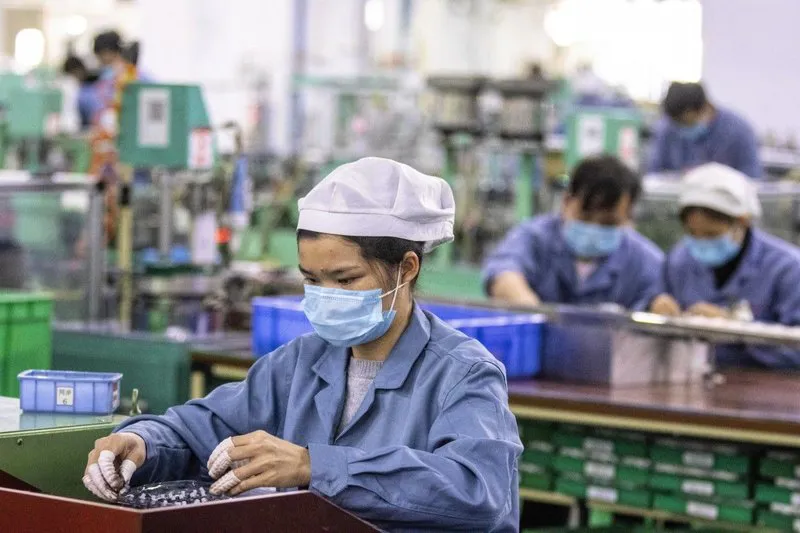
| Illustrative photo. |
Recently, airlines, including national flag carrier Vietnam Airlines, along with low-cost carriers Jetstar Pacific and Vietnam Aviation Service Company (VASCO), have announced their decisions to resume domestic flights and gradually return to full capacity from June.
In the manufacturing sector, companies are devising business strategies to cope with the new situation amid plunge in demands from major export markets. Firms in the garment and textile industry, including Garment 10, Chien Thang Garment, Thai Nguyen Garment, among others, have shifted from apparels to producing face masks and protective gear, aiming to meet growing demands from the domestic and foreign markets.
Automobile manufacturers and assemblers in Vietnam, such as Honda, TC Motor, Vinh Phat Motor have all resumed operations. Similarly, those in the services sector have reopened as people return to their normal lives.
Leverage for growth
The Asian region, despite being the first to be hit by the pandemic globally, has effectively contained it and maintained positive economic growth compared to other parts of the world.
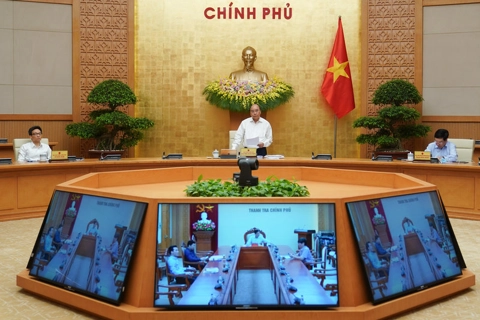
For Vietnam, while the International Monetary Fund (IMF) predicted the country to grow at 2.7% this year, the highest growth rate in Southeast Asia. Prime Minister Nguyen Xuan Phuc in a government meeting on May 5 said the country is determined to achieve a 5%-plus growth rate.
To support economic growth, since early March, the government has rolled out a number of support programs, including a credit aid package worth VND300 trillion (US$12.87 billion), a VND180-trillion (US$7.63 billion) fiscal stimulus package in forms of delay of payment of value-added tax, corporate tax and income tax, and a financial support package for vulnerable people worth VND62 trillion (US$2.7 billion).
There is expectation that more support would come. Recently, the State Bank of Vietnam (SBV), the country’s central bank, has further cut policy rates to buttress economic recovery. It is estimated that for Vietnam’s GDP growth to reach 5%, credit growth should be at least 10%.
Moreover, the government has stepped in to reduce prices of goods under its control, including electricity, water, or rice, aiming to boost production and put inflation under control.
The Ministry of Planning and Investment (MPI) previously said all the government support programs worth a combined of VND636 trillion (US$27.26 billion), or 10% of the GDP, would not negatively affect the consumer price index, a main gauge of inflation.
In its latest World Economic Outlook report, the IMF said Vietnam’s economy could be the best performer in the Southeast Asian region.
The Economist suggested Vietnam is the 12th strongest financially out of 66 emerging economies, thanks to stable economic indicators such as public debt, foreign debt, cost of borrowing, and reserve cover.
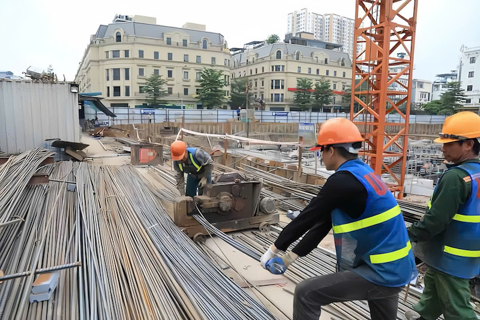
Among measures to boost economic recovery, the government has turned to public investment as top priority.
Data from the General Statistics Office revealed an increase of one percentage point in the amount of public investment disbursement would contribute an addition of 0.06 percentage points to overall growth.
More importantly, strong public disbursement would kickstart capital inflows into other sectors.
The Covid-19 pandemic, despite its severe consequences to the economic performance, has not stopped the expansion of Vietnam’s middle class, one of the key driving forces, and the private sector.
“In case the Covid-19 pandemic is contained within the April-June quarter, there is possibility that Vietnam’s economy could grow more than 5%,” said Vo Tri Thanh, director of the Institute for Brand and Competitiveness Strategy.