Spring Calligraphy Festival kicks off in Hanoi
This year's Spring Calligraphy Festival at the Temple of Literature will recreate the traditional examination site and display calligraphic works.
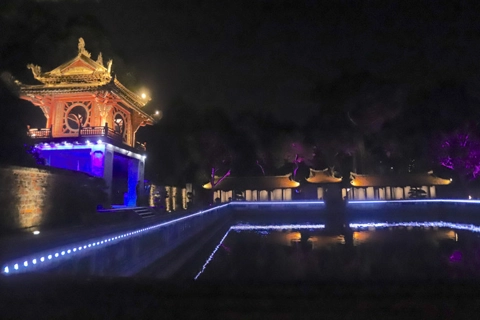
The annual Spring Calligraphy Festival and Hieu hoc (Studiousness) Calligraphy Exhibition opened on February 3 at the Lake of Literature on the premises of the Temple of Literature in Hanoi.
This year's festival attracted 40 calligraphers who are members of calligraphy clubs and were selected through a writing competition to perform at the festival.
The artists, dressed in traditional long robes, sit in bamboo tents, following the traditions of the past.
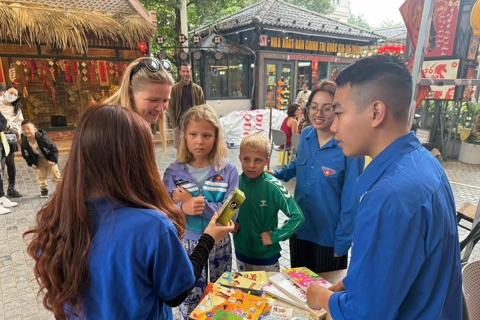
Stalls have also been set up around the lake to cater to visitors who want to ask for calligraphic letters.
| Deputy Director of Hanoi's Department of Culture and Sports Tran Thi Van Anh (second from right) said the festival helps preserve the nation's traditional cultural fine features. Photo: Ngo Minh/The Hanoi Times |
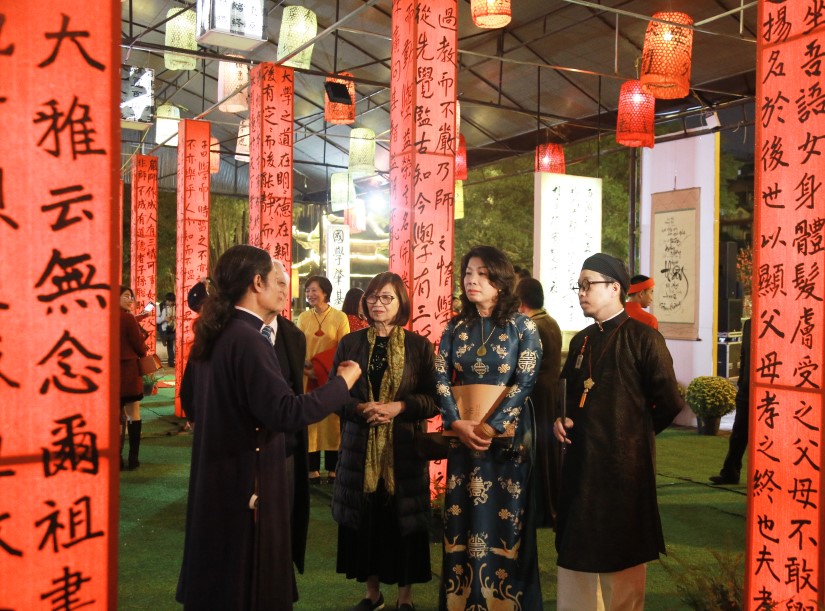
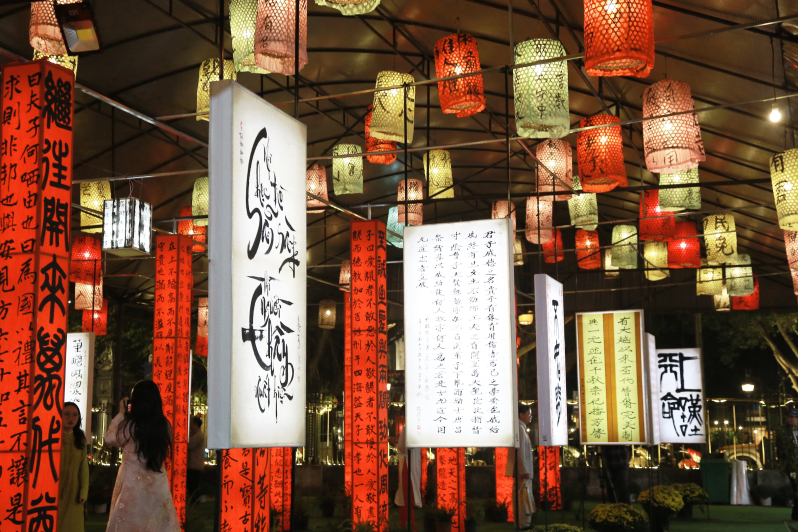
The calligraphy exhibition also featured 50 pieces of calligraphy in the forecourt of the Temple of Literature and another 50 around the Literature Lake. All the works reflect the thousand-year-old spirit and tradition of learning of the Vietnamese people.
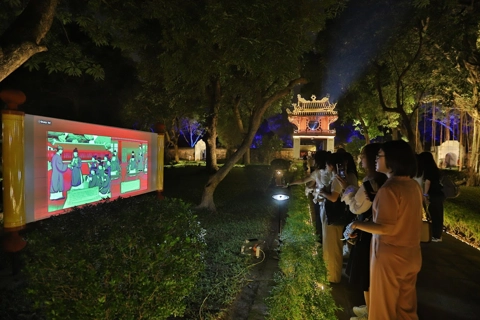
This year's festival will recreate the spaces of traditional education and examinations, the Scholar Village, the Handicraft Village, and the culture of reading, among other activities.
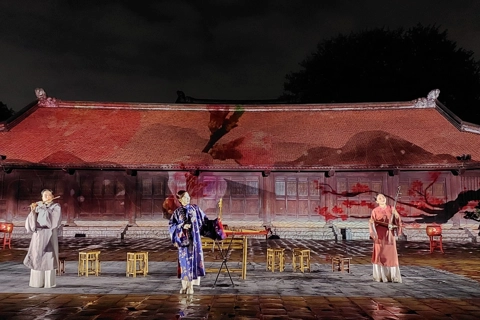
There will be exhibitions of traditional handicrafts, souvenirs, and spring culinary culture. Programs of ethnic folk music and dance performances will also be held, featuring traditional cultural practices such as quan ho (love duet), ca tru (ceremonial singing), cheo (traditional opera), water puppetry, and lion and dragon dance.
It's a tradition for Hanoi people and domestic and international visitors to visit the Temple of Literature, especially during the Spring Calligraphy Festival, to have meaningful words written in calligraphy.
On red or yellow do (poonah) paper, calligraphers write words in Sinographic and Latin scripts meaning happiness, longevity, good health, luck, success, and prosperity, representing people's wishes for the Lunar New Year.
The calligraphic works are then used to decorate people's homes during the Lunar New Year celebrations.
According to Le Xuan Kieu, director of the Van Mieu-Quoc Tu Giam Centre for Cultural and Scientific Activities, the total number of tourists who visited the site last year reached two million, many of them students who came to study and learn about national educational history and tradition.
In addition to the Spring Calligraphy Festival, the Centre also held exhibitions such as "Drawing the Dragon", "Dialogue with Japanese Ukiyo-e Woodblock Prints", and "Initiating the Source of Study" to attract visitors during the Lunar New Year.
The Spring Calligraphy Festival will run until February 19 and opens daily from 8 a.m. to 10 p.m.
Photos at the Spring Calligraphy Festival:
| As many as 50 calligraphic works on display at the Literature Lake. Photo: Ngo Minh/The Hanoi Times |
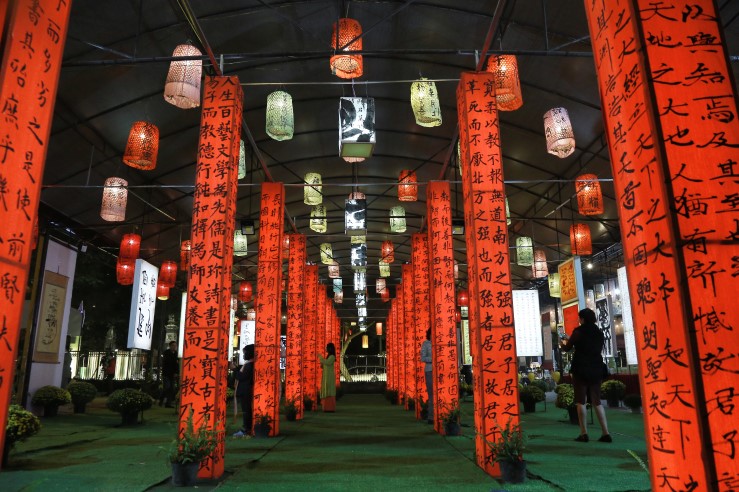
| The exhibition area features calligraphic works that depict famous sayings and poems. Photo: Ngo Minh/The Hanoi Times |

| Calligraphers often use Sinographic and Latin scripts to write words that mean happiness, longevity, and good health. Photo: Ngo Minh/The Hanoi Times |
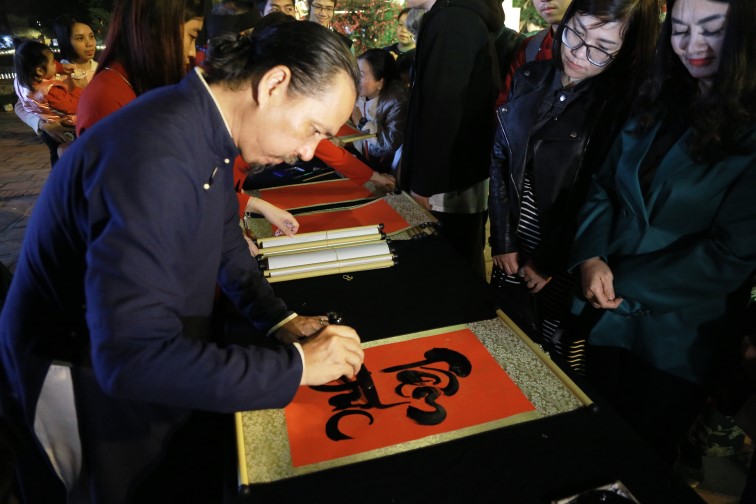
| Calligraphy is a popular decoration for people's homes during the lunar new year. Photo: Ngo Minh/The Hanoi Times |
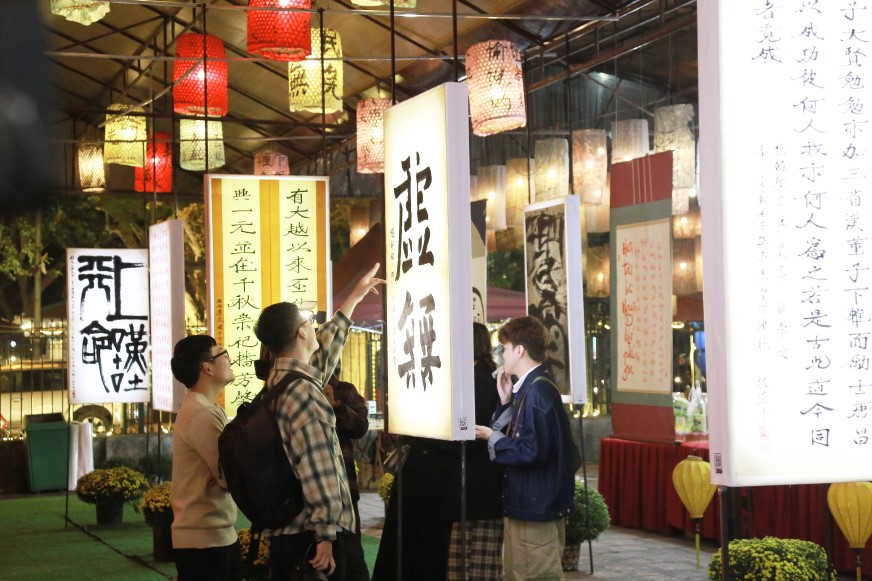
| The word An means peace. Photo: Ngo Minh/The Hanoi Times |
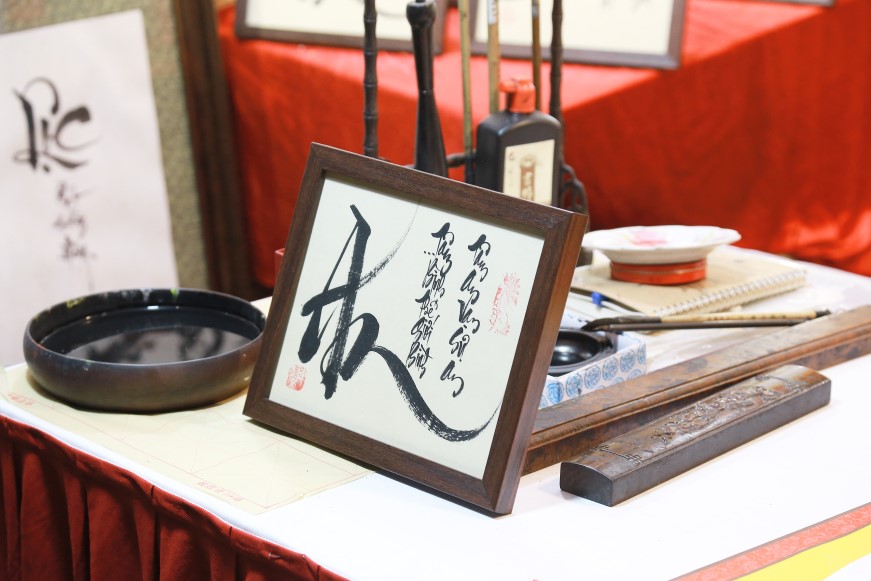
| The exhibition recreates the village of the scholars. Photo: Ngo Minh/The Hanoi Times |
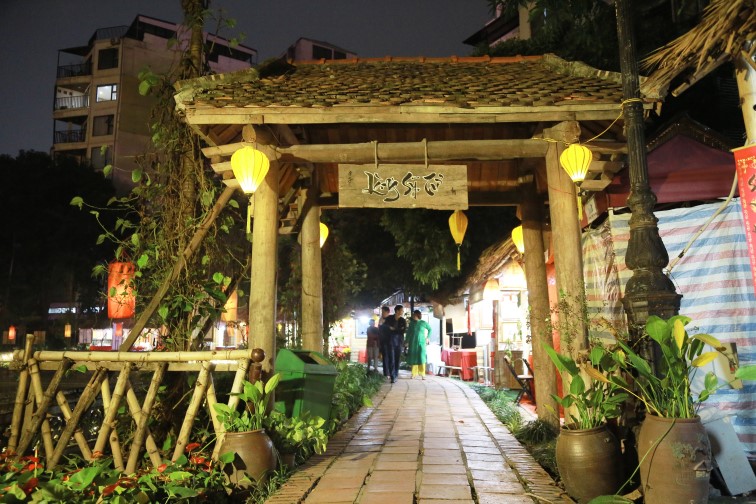
| The Spring Calligraphy Festival attracted a large number of visitors. Photo: Ngo Minh/The Hanoi Times |
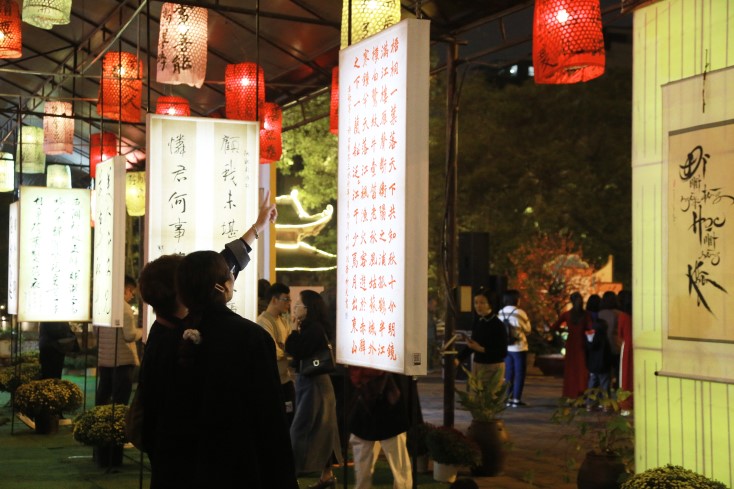
| Calligraphic works are traditionally written in Sinographic script. Photo: Ngo Minh/The Hanoi Times |