Step into Hanoi after dark: a guide to its vibrant walking streets
Every weekend, Hanoi’s walking streets come alive with food, music and community, offering visitors a glimpse of the city after dark.
THE HANOI TIMES — As dusk falls, Hanoi begins to shift. Motorbikes pull away, roads are sealed from traffic, and suddenly the city belongs to footsteps.
Lanterns glow above, drums echo in the distance, and the smell of sizzling skewers drifts across the crowd.
For travelers, joining the flow into Hanoi’s night walking streets is more than a casual stroll. It feels like stepping into the city’s heartbeat after dark.
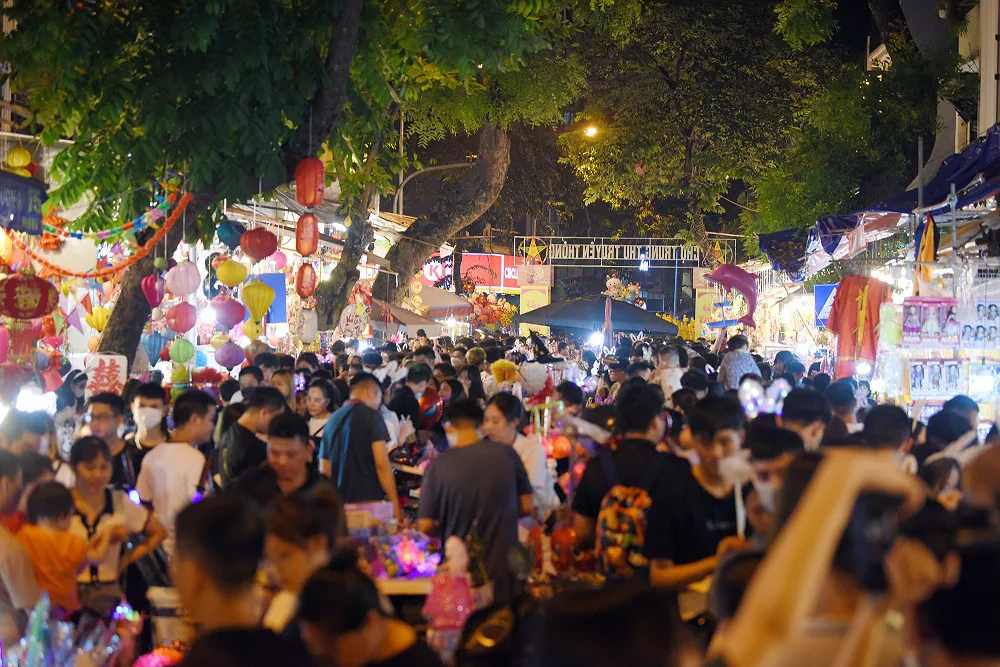
Bustling and vibrant scene at Hanoi Old Quarter night market on weekend evenings. Photos: Vinpearl.com
The Old Quarter around Hoan Kiem Lake is where that heartbeat feels strongest. On Friday evenings, the streets fill quickly with families, students, and visitors from every corner of the world.
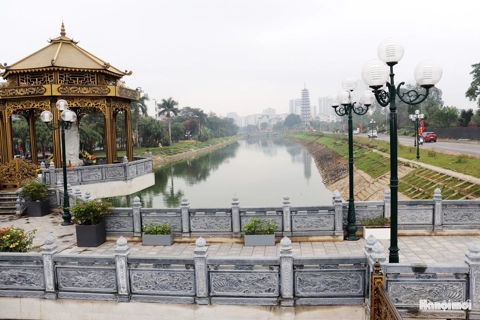
By the time the Turtle Tower lights up on the water and the scarlet The Huc Bridge to Ngoc Son Temple shines against the lake, the whole area has turned into an open-air carnival.
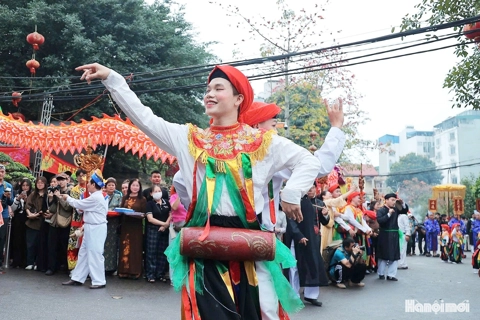
A youth troupe pounds out rhythms on traditional drums, while a circle of children laugh through a tug-of-war game cheered on by their parents.
Food vendors line the pavements with smoky skewers, sweet rice cakes, and steaming bowls of pho (rice noodles with beef or chicken) that fog up the night air.
Anna, a visitor from Germany, admitted she was surprised.
“I’ve been to food festivals before, but this is different. I thought it would be just a night market, yet it feels like a street carnival," she said.
"There is so much energy, and then suddenly you turn toward the lake and it is so peaceful. It’s both at the same time.”
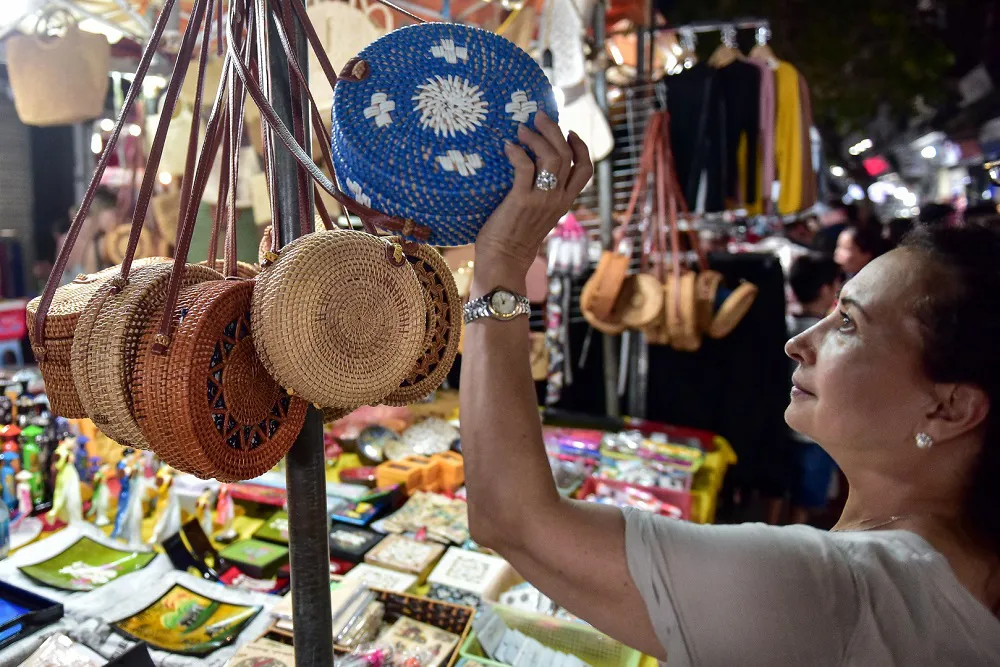
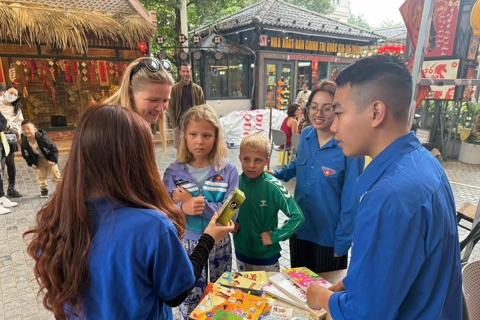
Foreign tourists show strong interest in handicraft products on display at the night market.
The schedule changes slightly with the seasons, later in summer, from 7 p.m. to midnight, earlier in winter starting at 6 p.m.
But no matter the time, the ritual is the same: walking, eating, watching, and joining in small performances that come out unannounced on the sidewalks.
Further north by the West Lake, Trinh Cong Son Street carries a gentler tune.
Named after Vietnam’s most beloved songwriter, it stretches along the water where lotus blossoms perfume the summer air.
On weekends, families stroll between art corners and small outdoor stages. A teenager might be singing a love ballad on guitar while, just steps away, an older couple shares tea in a lakeside café.
It feels like a neighborhood gathering where travelers are welcome guests.
For those who venture beyond the city center, Son Tay Commune, known for its ancient citadel and preservation of antique architecture, offers something rarer still.
Each weekend, the ancient citadel transforms into a pedestrian zone.
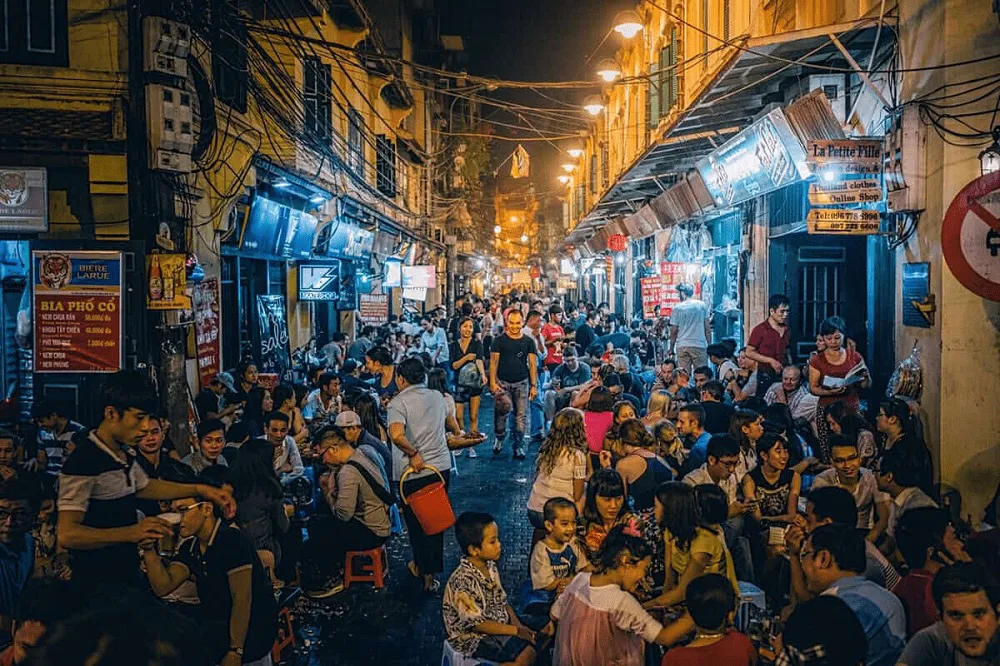
Passing through weathered stone gates, visitors discover folk music, traditional craft stalls, and families spreading blankets under the stars.
Children race across grounds that have stood for centuries while artisans patiently carve wood and weave baskets nearby.
The buzz of a market is there, yet the fortress walls lend the whole scene a timeless calm.
Food lovers, meanwhile, are drawn to the Dao Ngoc - Ngu Xa quarter in Ba Dinh Ward. The specialty here is pho cuon - soft rice rolls wrapped around beef and herbs.
Still, the aroma of grills, noodles, and sweet desserts fills every corner. On weekend evenings, smoke and laughter hang in the air as locals line up at their favorite stalls, bowls and chopsticks in hand.
Said simply, it is a place where food becomes memories, where Hanoi’s flavors tell their own story.
And the map continues to grow. Tran Nhan Tong Street in Hai Ba Trung Ward buzzes with shopping and performances.
Ngoc Khanh Lake in Giang Vo Ward offers a quieter retreat with dining, strolling, and evening reflections on the water.
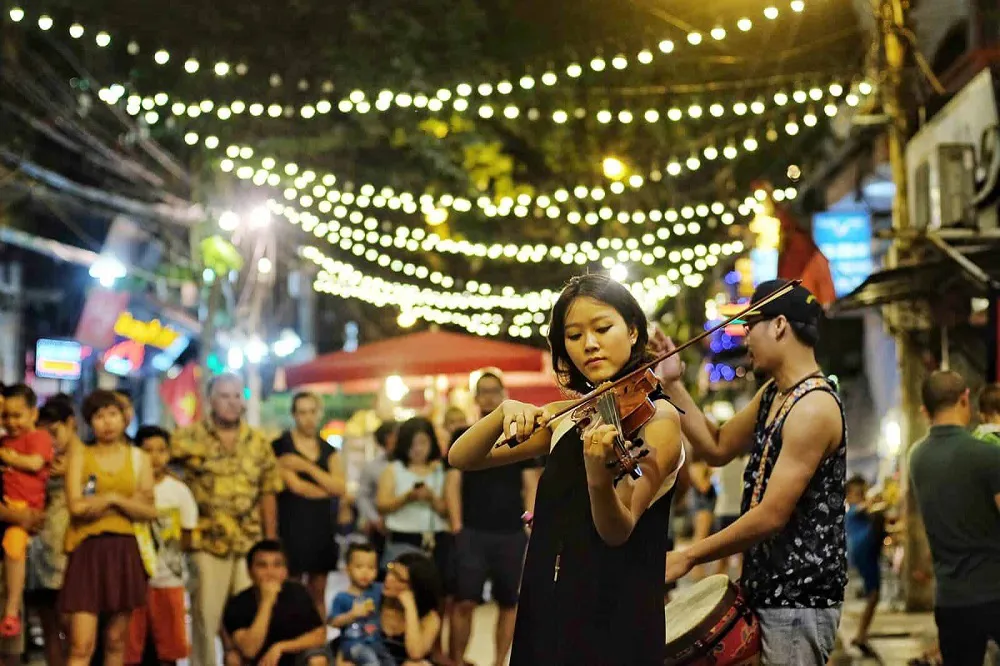
Amateur youth bands captivate visitors with cheerful street performances.
Each street carries a different personality, but all share one purpose: returning the city to the people, even if only for a few hours each week.
David, a traveler from Australia, put it simply: “In museums, you look at history. On these streets, you feel it. The mix of tradition, food, and music makes you part of the story.”
That is the essence of Hanoi’s walking streets. They are not only traffic-free roads, but living cultural spaces where past and present walk side by side.
For first-time visitors, they are the place to taste, hear, and see the capital at its most alive. For locals, they are reminders that community still thrives in the heart of the city.
To leave Hanoi without wandering its walking streets is to miss the city at its most human, a place where food, music, and laughter spill out into the night, and where the capital shows its history and soul.