The battlefield of Ngoc Hoi - Dong Da, a triumph of cunning and courage
Dong Da hillock is an evidence of Vietnam’s fighting spirit against China invaders.
A delegation from the Hanoi Party Committee led by Vuong Dinh Hue, Politburo member, Party Committee Secretary, offered flowers and incense on Dong Da Hill on the morning of February 16, 2021 to celebrate the 232nd anniversary of the victory of Ngoc Hoi - Dong Da (1789-2021) against the Chinese Qing invaders. Amid the complicated evolution of the Covid-19 pandemic in the city, the Hanoi authority decided to cancel the Dong Da festival, which is usually organized on the fifth day of Tet.
The incense offering ceremony was carried out in accordance with the norms of prevention and control of the Covid-19 pandemic.
Immortal battle in the history
Dong Da hillock is a historical relic located on Tay Son street of Quang Trung ward in Dong Da district, northeast Hanoi’s centre.
Over 230 years ago, in 1789, Dong Da hillock and surrounding areas were the scene of a bloody battlefield where Tay Son troops, under the command of the national hero Quang Trung defeated over 200,000 Chinese Qing invaders in the evening of January 4th and the early morning of January 5th (in the lunar calendar) to protect the national sovereignty.
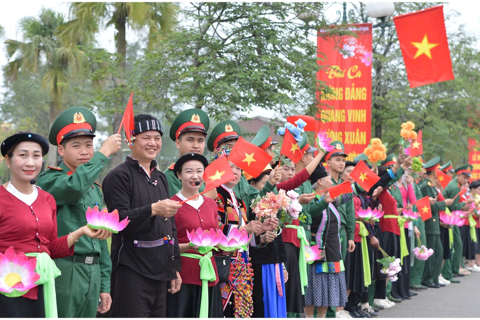
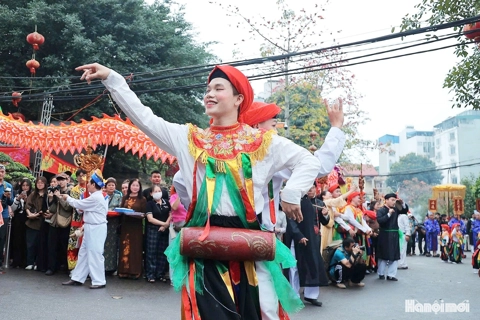
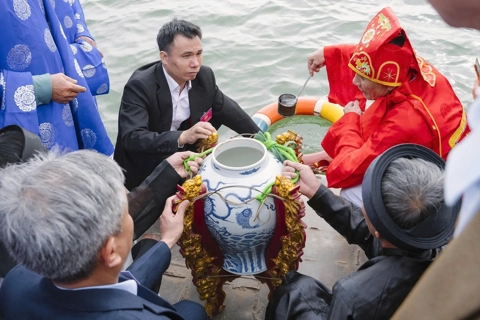
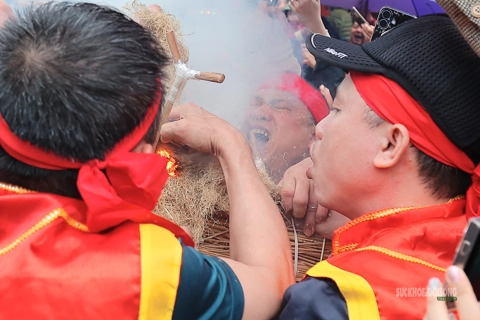
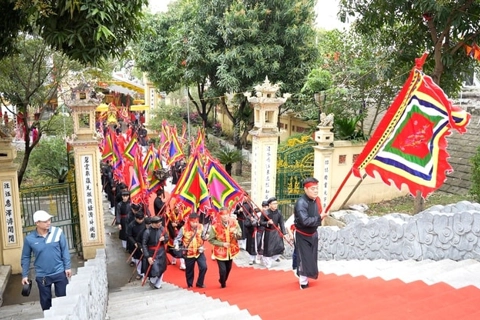
The 2021 Dong Da hillock festival (on February 16) is canceled due to the Covid-19 pandemic. Illustrative photos of the Dong Da festival 2020 taken by Kinh te & Do thi. |
Lightning operation led by King Quang Trung seemed to be the operation with a large number of soldiers in the shortest time, using the rudimentary method (by foot) in the Vietnamese history.
According to historical documents, on October, 1788 the Chinese Qing’s leaders Sun Shiyi, Xu Shiheng and Cen Yidong headed their army to invade Vietnam. Faced with overwhelming force, Ngo Thi Nham, a Tay Son adviser, argued for withdrawing secretly into Thanh Hoa, so it was easy for the Qing army to invade Thang Long Citadel.
Seeing that it was too easy, Cen Yidong became subjective and allowed his soldiers to have the Lunar new year (Tet) holiday inside the ancient citadel or Hanoi today.
When knowing that the Qing invaders had conquered Thang Long, Quang Trung (former name was Nguyen Hue) led 50,000 soldiers from Phu Xuan citadel (Hue) to reach Thang Long on the occasion of the Tet holiday.
To help the soldiers move quickly with more than hundreds of miles each day, King Quang Trung asked the soldiers to use 3,000 stretchers to carry each other in turn. Thanks to this way, the Tay Son army could go day and night continuously.
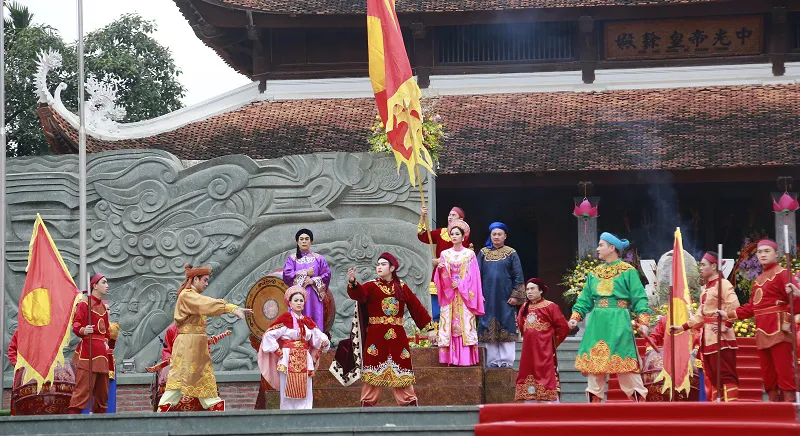
With his masterful combating talent, Quang Trung asked his soldiers to disguise to attack the Qing army. According to Dong Tay nhat bao (1939) (East-West daily newspaper) when reaching Thang Long, the Tay Son army captured many Qing drunken soldiers. Quang Trung ordered his soldiers to put on the Qing soldiers’ battledress and marked a track of lime on their arm to distinguish them from Qing soldiers.
Only when being attacked, could Qing soldiers sober up and resist. However, they couldn’t realize who was the enemy because all wore the same battledress while the Tay Son soldiers could know them, so most of them were killed.
Cen Yidong was so scared, then, hastily jumped on a horse to run away, unluckily, when run though a river, all remaining Qing soldiers were drowned because the bridge was broken.
Since then, Dong Da hillock became a historical relic witnessing the debacle of the Chinese invading forces. Ever since, on the 5th of the first lunar month (February 16 this year), Hanoi people hold a festival to celebrate this historic victory.
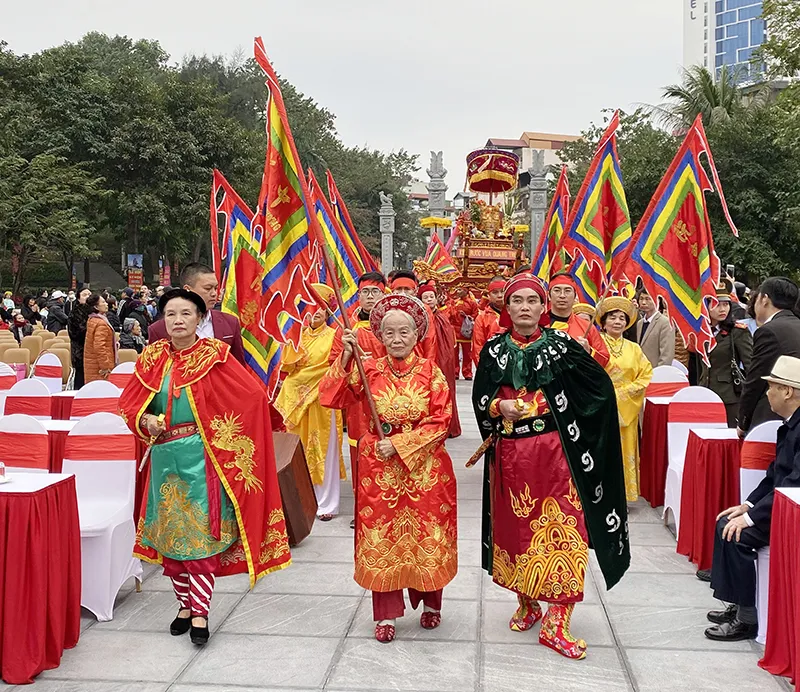
The evidence of the courage and ingenuity
The legend has it that after the fierce battle, enemy's corpses were collected and buried under 12 hillocks called “Kinh nghe quan” or the “Buried mound of evil ocean fish” – a term that refers to the Chinese invaders.
Later on, in 1851 Nguyen Dang Giao - a feudal dignitary under the Nguyen dynasty took a plan of building up residence at the place. Through the examining excavations, a variety of human remains were found. Thus, he decided to collect them and buried under the 13th hillock called Trung Liet or Dong Da hillock nowadays.
In 1890, 12 hillocks were flattened and only Dong Da hillock was the only one that remains till today. On the top of the hillock, there was a temple built in 19th century called Trung Liet. Through many ups and downs of history and time, the temple had significantly damaged that only its brick gate remains.
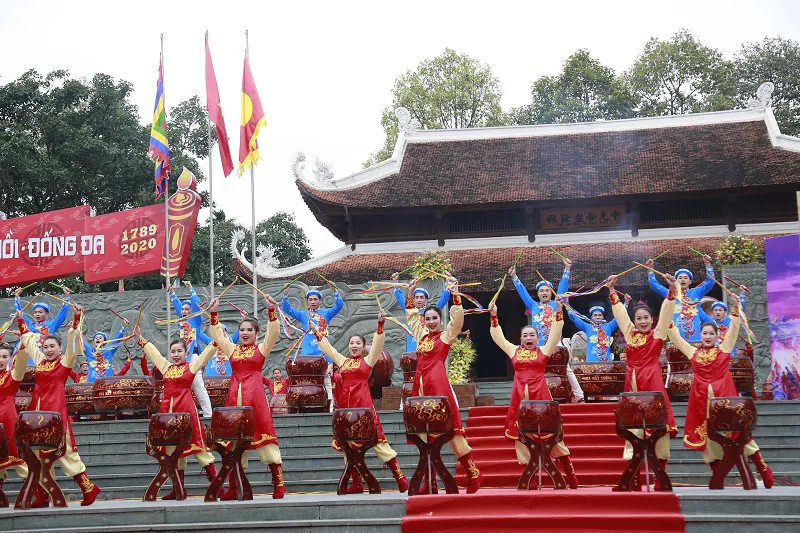
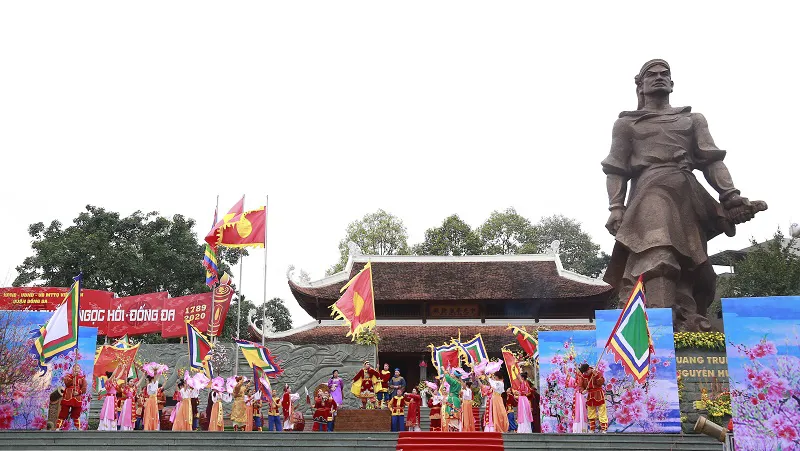
On the occasion of 200th anniversary of the Ngoc Hoi- Dong Da victory, in 1989, Dong Da Cultural Park was built in the area. This is a cultural historical work in order to commemorate the merit of the Quang Trung - Nguyen Hue, a hero of the peasant uprising movement in the 18th century and the architect of the Dong Da victory.
The total area of the 21,745 sqm park is divided into two areas, including a memorial area featuring an exhibition house and the monument of King Quang Trung; and the remaining hillock area is reserved for greenery. Today, Dong Da hillock is a lush green and charming area that draws lots of visitors come to enjoy its all-year-round beautiful scene.
Since the capital was liberated (October 10, 1954), Dong Da hillock festival has been regarded as a traditional one - a national festival. Thus, every year, leaders of Party and State come to attend and preside over all rites of the festival.
| Photo: Kinh te & Do thi. |
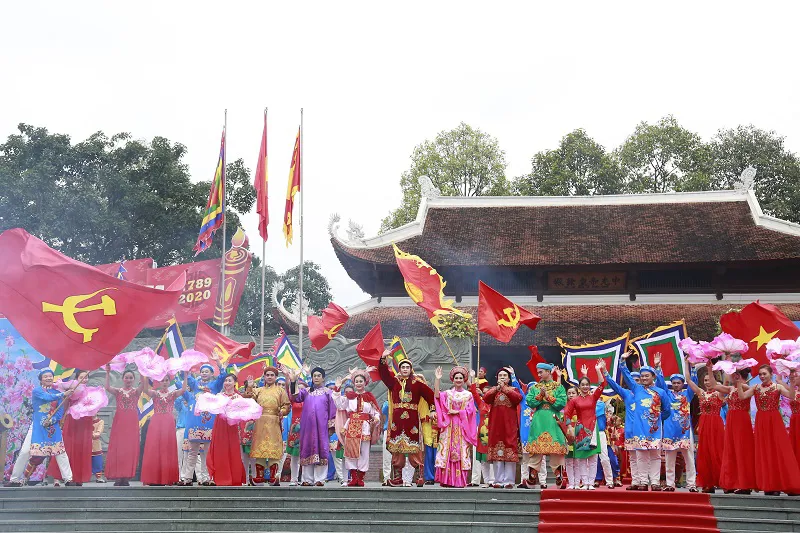
The national flag and flags of the festival fluttered as if greeting pilgrims. The most attractive part of the rite is the procession of Fire Dragon aiming at artistically reenacting the former battle and glorifying the Tay Son fighters. After solemn rites, games and folk-art activities such as unicorn dancing, dragon dancing, wrestling, human chess, and cock fighting are staged.
On December 24, 2018, the Prime Minister issued a decision to classify the historic Dong Da Hillock and its festival as a special national monument of Vietnam.