UNDP, Netherlands boost circular economy capacity building for Vietnam businesses
The program inspires and provides practical instructions and tools for developing business roadmap for circular transition.
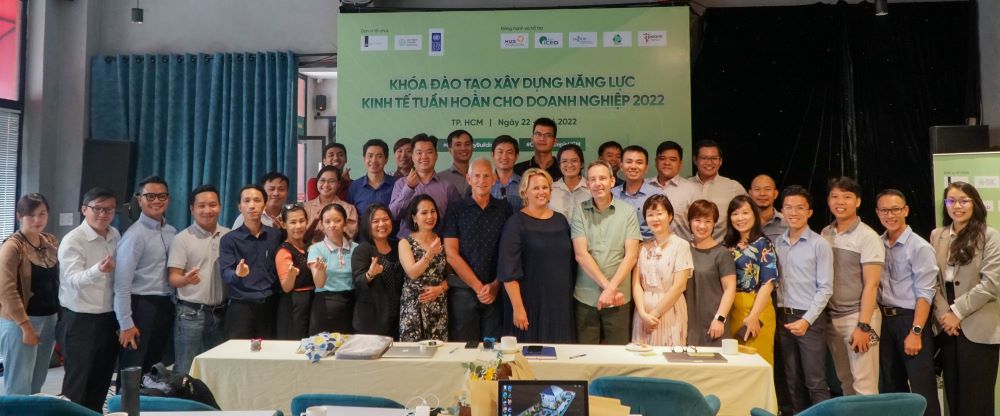
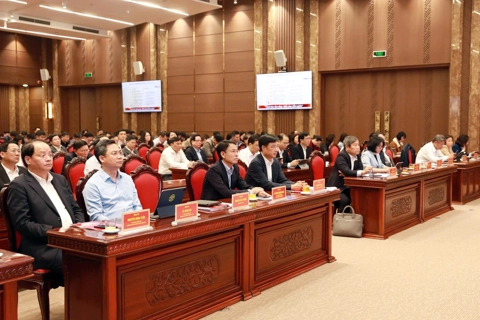
More than 100 businesses from the Northern, Central, and Southern regions of Vietnam have benefited circular economic capacity building program provided by the United Nations Development Programme (UNDP) in Vietnam and the Netherlands Embassy in Hanoi.
| Participants share business capacity building models. Photos: UNDP Vietnam |
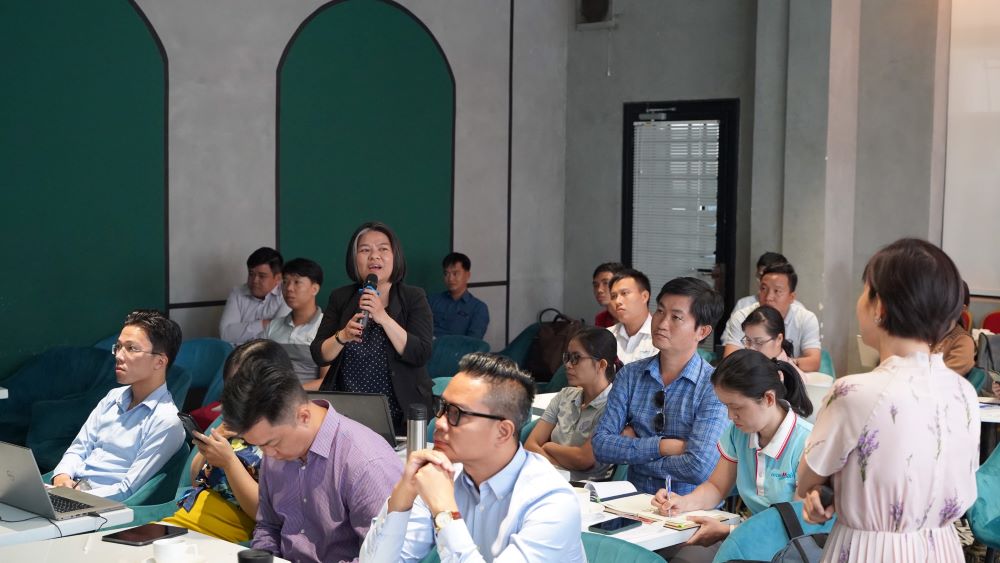
The businesses representing various industries, including agriculture, plastics, environment and waste management, building materials, cuisines, and fashion join the program which is aimed to inspire and provide practical instructions and tools for building, applying the recommended circular business models and developing enterprises’ roadmap for the circular transition.
The “Circular Economy Capacity Building Program for Enterprises in Vietnam” (#CECapacityBuilding) also provides information on circular economy development policies and the sustainable requirements of the EU-Vietnam Free Trade Agreement (EVFTA).
Experts at the event said that for all nations to achieve sustainable development, the shift from a linear economy to a circular one is crucial. In Vietnam, though there are several circular models such as the garden-pond-livestock (Vuon-Ao-Chuong) model, collection of used paper and scrap iron, and cleaner production for small companies, it is crucial that more businesses implement these models to hasten the shift to the circular economy.
“Within this program, for the first time, a practical tool for developing circular business models will be introduced to support enterprises in designing their circular business model and CE work-plan,” said Patrick Haverman, Deputy Resident Representative of UNDP Vietnam.
Moreover, CE technical guidelines and online lectures on topics related to CE and business models will be developed to provide instruments, tools, and knowledge to address challenges during the circular journey of enterprise, he noted.
At the training course, enterprises shared that the critical factors to achieving a circular economy are (i) building a circular economy plan and a long-term strategy, (ii) optimizing the production model, including applying science and new technology, (iii) investing in research & development (R&D), (iv) building capacity for employees, and (v) collaborating and connecting with partners.
Following the training courses, there will be post-training activities, which provide professional and advisory support for the enterprises that are prepared and committed to implementing the circular business model.
The training courses are organized by the Environmental Economic Policy Institute (EEPI), Hue Innovation Hub (HiHub), the Institute for Circular Economy Development (ICED) together with Saxion University of Applied Sciences from the Netherlands and the Institute of Strategy, Institute of Strategy and Policy on Natural Resources and Environment (ISPONRE).
The following training courses will take place in Thua Thien Hue on June 27-29 and Hanoi from June 30 to July 02, 2022.
| Representatives of UNDP Vietnam, the Netherlands Embassy in Hanoi and businesses at the event held in Ho Chi Minh City on June 22. |