UNFPA helps Vietnam secure middle-income status
The five-year program helped Vietnam secure middle-income country status.
Vietnam confirms that the interventions and support from the United Nations Population Fund (UNFPA) through the 9th Country Program in 2017-2021 has substantially contributed to the country’s efforts to fulfill the transformative promise of “Leaving No One behind” while achieving SDGs.
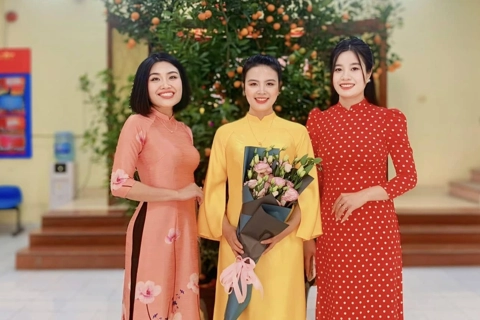
| UNFPA Representative for Vietnam Naomi Kitahara (2nd from left) with brochure of the 10th Country Program. Photo: UNFPA Vietnam |

The support has helped Vietnam secure middle-income status as UNFPA contributed to participatory and evidence-based policy and decision-making for rights-based national laws, policies and programs for women, young people, and the elderly.
Addressing the recent meeting to review achievements of the 9th Country Program, Nguyen Thi Dieu Trinh, Deputy Director General of the Foreign Economic Relations Department under the Ministry of Planning and Investment (MPI), shared that over the past 5 years, UNFPA projects for Vietnam have focused on providing valuable data on youth and gender-based violence, assisting the country in improving its evidence-based policymaking with the engagement of different stakeholders.
Trinh hoped that the participants would agree on UNFPA’s next five-year projects for Vietnam and initiatives to mobilize more resources to gear support to new priorities in the next country program.
UNFPA’s interventions also brought in international best practices and innovation to help Vietnam prevent and respond to gender-based violence and other harmful practices, which was essential to enable the delivery of multisectoral services and coordination.
Under the framework of the 9th Country Program and particularly due to the Covid-19 pandemic situation, UNFPA has driven different ways of reaching out to vulnerable groups. Tele-health in sexual and reproductive health (SRH) services was piloted for the first time in Vietnam, particularly for ethnic minority regions, and the very first mobile app for the elderly care was introduced.
In addition, comprehensive sexuality education for young people was provided for the first time online, and innovative and digital technology was extensively used for the prevention and response to gender-based violence and gender-biased sex selection.
The 2019 Population and Housing Census as well as the 2019 National Study on Violence against Women were exceptionally successful in the application of the newest ICT technology to speed up data collection and analysis process and minimize human errors.
Recognizing the effect of climate change, and particularly in response to the 2020 floods and downpours of rain in the central part of Vietnam, UNFPA supported mobile outreach to protect the lives of pregnant women and couples who are planning for childbearing.
UNFPA made sure that vulnerable population groups were well aware of gender-based violence risks, through digital technologies and the delivery of dignity kits which were done for the very first time in Vietnam.
More support
UNFPA has approved the 10th Country Program for Vietnam costing an amount of US$26.5 million to support the country’s journey to sustainable development goals (SDGs) by 2030.
The program for the 2022-2026 period will focus on those at risk of being left behind, including women and girls, adolescents and youth, older persons, ethnic minorities, migrant workers, people with disabilities, and survivors of gender-based violence.
Building on the successes of the 9th Country Program, UNFPA commits to supporting Vietnam in population dynamics and population issues.
UNFPA Representative for Vietnam Naomi Kitahara said “The 10th Country Program will aim at achieving the transformative results of the UNFPA’s Corporate Strategic Plan, towards Vietnam with Zero preventable maternal death, Zero unmet need for family planning, and Zero gender-based violence and other harmful practices against women and girls.”
The program in the coming five years is in alignment with the United Nations Sustainable Development Cooperation Framework for Vietnam to fulfill the transformative promise of “Leaving no one behind” by directly contributing to two areas: Inclusive Social Development, and Governance and Access to Justice, thus reducing inequalities and vulnerabilities.
While implementing the 10th country program, UNFPA will continue to partner with the Government and other national institutions in accordance with UNFPA’s comparative advantages and technical competencies. It also contributes to joint initiatives with different United Nations agencies.
Supporting Vietnam since 1977, particularly in the past five years, UNFPA has maintained strategic partnerships with both UNFPA traditional donors such as Australia, Norway, Japan, South Korea, and non-traditional partners including private sector entities such as MSD, Bloomberg, and Vital Strategies.
The UNFPA 9th Country Program costing $21 million focused on three areas: (i) Adolescents and youth being the largest number of young people in history; (ii) Gender equality and women’s empowerment essential for the achievement of SDGs; and (iii) Population dynamics directly linked to upstream and policy work for Vietnam’s middle-income status. The UNFPA 10th Country Program, with a cost of $26.5 million, covers the following areas: Adolescents and youth, population ageing and social protection, equitable access to sexual and reproductive health and rights; Policy and program making; Gender-based violence and harmful practices, and multi-sectoral response to such an issue. |