Vietnam aims to be ASEAN's vaccine production hub
Through international experience and collaboration among key stakeholders, Vietnam aims to become a regional leader in vaccine production.
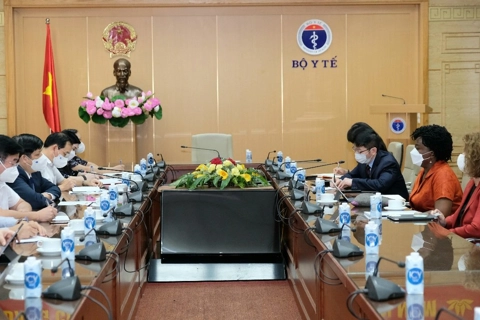
A roadmap to establish Vietnam as a regional vaccine production hub in the Association of Southeast Asian Nations (ASEAN) was highlighted at a workshop organized by the United Nations Development Programme (UNDP) and the Health Strategy and Policy Institute (HSPI) under the Vietnamese Ministry of Health in Hanoi on May 22.
The roadmap outlines the steps and actions needed to strengthen Vietnam's vaccine production capacity and contribute to regional health security.
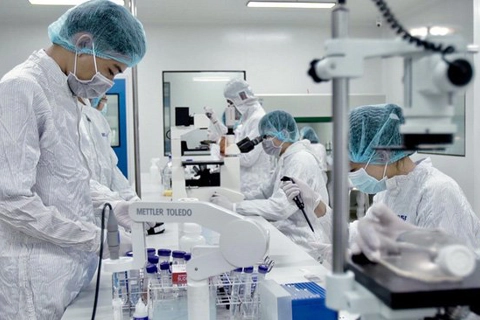
At the workshop, expected to shape future strategies and actions related to vaccine production and access in Vietnam, a report was presented on the introductory package on mRNA Covid-19 vaccine production for laboratory-scale processes, which was introduced at the first R&D training in South Africa. This report provided valuable insights into the technical aspects of mRNA vaccine production and its potential application in Vietnam.
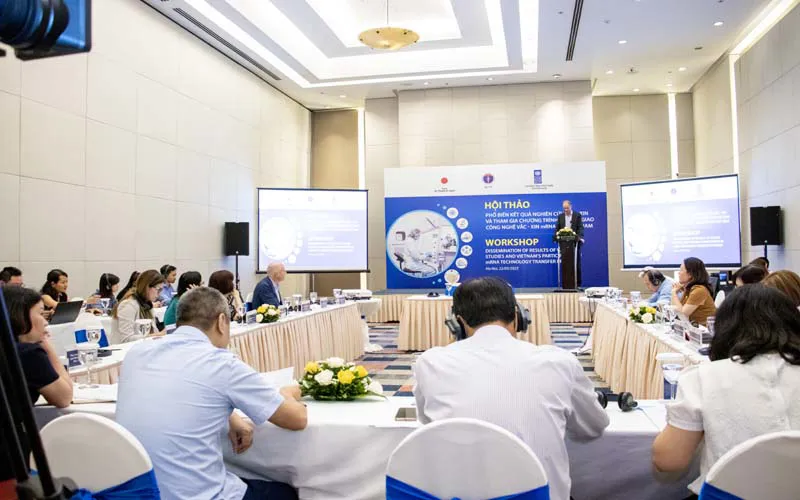
An overview of the workshop. Photo: UNDP |
"This is an important opportunity for Vietnam to access this important new vaccine production technology. But it will require careful consideration of the steps and timelines, the level and sources of funding required, and the development of expertise to ensure this technology transfer's effectiveness and financial sustainability," said Patrick Haverman, UNDP Deputy Resident Representative in Vietnam.
He added that the results of the studies will feed into these considerations. The collaboration among key ministries, institutes, enterprises, senior experts, and partners at the workshop will contribute to developing an effective national strategy to improve access to vaccines in Vietnam and the region in the coming period.
The workshop is a step towards strengthening Vietnam's vaccine access and production capacity. By leveraging international experience and working with key stakeholders, Vietnam aims to become a regional leader in vaccine production and contribute to global efforts to respond to health crises.
It also disseminated the results of three studies on strengthening vaccine production and certification in Vietnam. It provided an update on Vietnam's participation in the World Health Organization's (WHO) mRNA technology transfer program through the project.
The workshop provided a platform to share the main findings of three key studies conducted under the project. These studies focus on sharing international experience in domestic vaccine development and production, mapping Vietnam's current vaccine production capacity, and reviewing international vaccine licensing policies and procedures, including licensing of international Covid-19 vaccines for use in Vietnam. It also provided a valuable opportunity to present these findings and discuss next steps for their application.
During the workshop, Vietnam's participation in the WHO-initiated mRNA technology transfer program was highlighted as an important step in strengthening vaccine access and production capacity in Vietnam.
The Covid-19 pandemic posed significant vaccine access challenges for Vietnam and other countries. By mid-2021, Vietnam had one of Southeast Asia's lowest Covid-19 vaccine coverage rates.
However, through a combination of COVAX supplies, donations facilitated by a dedicated government task force, and procurement from international suppliers, Vietnam rapidly increased its vaccination rates in the second half of 2021. This achievement not only saved lives but also set the stage for reopening and recovering from the economic impact of the pandemic.