Vietnam could afford raising public debt to support post-Covid recovery
By the end of 2019, Vietnam’s public debt had significantly dropped to 55% of GDP from 63.7% in 2016.
Vietnam could afford widening public debt by additional 2 – 3 percentage points of GDP to mitigate negative Covid-19 economic impacts, as the ratio of public debt to GDP in this case would still be lower than the limit 65% set by the National Assembly, according to Vo Huu Hien, deputy director of the Ministry of Finance’s Department of Debt Management and External Finance.
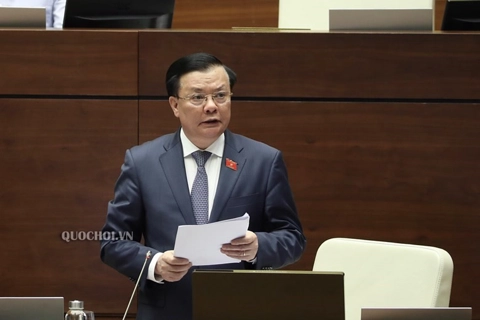
| Deputy director of the Finance Ministry’s Department of Debt Management and External Finance Vu Huu Hien. Photo: MoF. |

Disbursing such an additional amount, equivalent to VND180–240 trillion (US$7.77–10.36 billion), however, would be a major challenge, Mr Hien warned, given the slow disbursement rate to date.
Mr. Hien pointed to the fact that over US$10 billion is funding from official development assistance (ODA) and preferential loans from abroad that has been signed and needs to be disbursed in the coming time under commitments with donors.
By the end of 2019, Vietnam’s public debt had significantly fallen to 55% of GDP from 63.7% in 2016, Mr. Hien informed, adding this has created room for government agencies to maneuver the fiscal policy and helped boost economic resilience against external shocks, including the Covid-19 pandemic, without putting pressures on macro-economy and national financial security.
Mr. Hien said depending on growth scenarios, Vietnam’s public debt could rise to 57 – 58% of GDP at the end of this year.
Nevertheless, Mr. Hien suggested the low public debt has partially reflected the slow disbursement of public investment, including projects financed by ODA and foreign preferential loans.
This not only limits the impacts from loans for economic growth, but also puts pressure on the state budget with higher commitment fees, which are charged by a lender to a borrower for an unused credit line or undisbursed loan.
Mr. Hien said in 2020, the government plans to borrow VND501 trillion (US$21.65 billion), including VND394 trillion (US$17.02 billion) from the domestic sources and VND107 trillion (US$4.62 billion) from foreign ones.
From international experiences, Mr. Hien said widening fiscal deficit and public debt, as well as taking part in debt service suspension initiatives from international organizations would cause negative impacts on a country’s credit rating.
For example, Cameroon, Senegal, Pakistan, among others, have all been downgraded by credit rating firms after having expressed their intentions to join G20’s debt service suspension initiative.
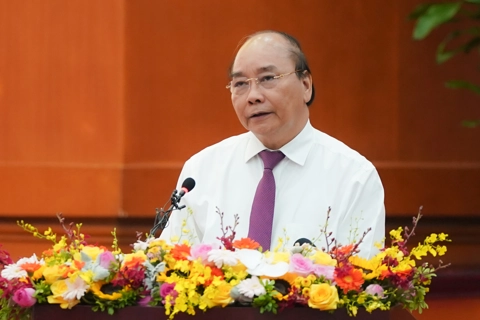
Prime Minister Nguyen Xuan Phuc at a meeting on July 7 said the country could expand fiscal deficit and public debt to provide additional aids for the economy during the Covid-19 crisis.
PM Phuc suggested finance management should not only focus on ensuring the balance of the state budget, but also nurturing sources of revenue and creating driving forces for economic recovery.