Vietnam decides 2% VAT cut on petroleum, coal through 2026
The National Assembly has passed a 2% VAT cuts for fuel, coal, and IT services to stimulate production and business operations.
THE HANOI TIMES — A 2% reduction in the value-added tax (VAT) on fuel, coal, and IT services will be in place until the end of next year, according to a resolution passed by the National Assembly on June 17.
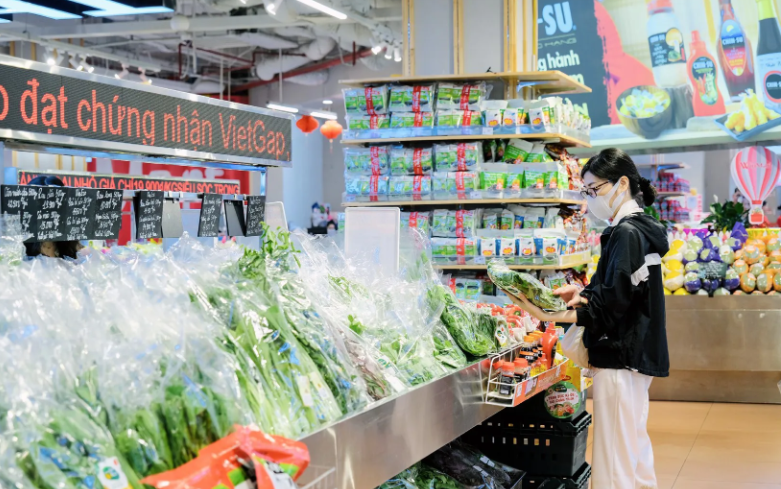
Shoppers browse fresh vegetables at Winmart supermarket. Photo: Hoai Nam/The Hanoi Times
Accordingly, the current 10% VAT rate on goods and services, including imported or wholesale commercial transactions of fuel, IT services, chemicals, prefabricated metal products, coke, and coal, will be reduced to 8%.
However, the VAT reduction does not apply to certain groups, including telecommunications, financial services, banking, securities, insurance, real estate businesses, metal products, and mineral resources (excluding coal). Goods and services subject to special consumption tax are also excluded, except for fuel.
Finance Minister Nguyen Van Thang said that the VAT cut will lead to a decline in state budget revenue of around VND122 trillion (US$4.8 billion) for the second half of 2025 and all of 2026.
The estimated revenue shortfall would rise to approximately VND167 trillion (US$6.6 billion) if the VAT reduction were applied to all items, he added.
In response to concerns that continued tax cuts might lead to decreased public spending, the finance minister said that although VAT cuts reduce tax revenue, they also stimulate production and business activity.
"This generates additional revenue, particularly through other types of taxes, thanks to the broader economic impact of the VAT policy," he said.
To offset the projected revenue decline, the government plans to strengthen tax collection efforts, enhance administrative reform, and accelerate digital transformation in tax management, Thang said.
Key efforts will focus on high-priority sectors such as land transactions, real estate transfers, e-commerce, and digital platform-based business activities, he added.
Thang also stressed that the government will tightly manage public expenditures, promote cost-saving measures, and proactively use reserves, contingency funds, and other lawful resources to respond to natural disasters, disease outbreaks, and other urgent needs to ensure balanced budgets across all levels.
The government aims to increase state budget revenues in 2025 by around 10% on year.