Vietnam determined to put E10 biofuel for sale in 2026
The use of E10 biofuel fits Vietnam's policies on energy transition and environmental protection, driving the country to meet global trends.
THE HANOI TIMES — The Ministry of Industry and Trade (MoIT) has proposed that all gasoline produced and sold for motor vehicles nationwide be E10 biofuel starting in 2026.

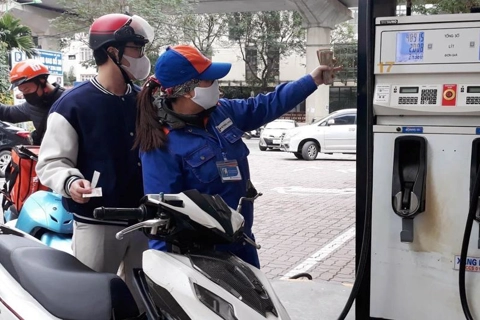
Biofuel gasoline being sold at a retail station in Dong Da Ward, Hanoi. Photo: Pham Hung/The Hanoi Times
Under the ministry's draft circular on biofuel blending roadmap, all conventional gasoline types (RON 92, RON 95, and other grades) would be blended with E100 ethanol to create E10 biofuel.
The mixed product would then be the only gasoline available for motor vehicles across the country.
After 2030, E10 biofuel would be upgraded to E15, with the ethanol proportion reaching 14%–15% of the product, or another biofuel blend ratio determined by the ministry.
According to the MoIT, the use of biofuel brings environmental benefits, fits the government's energy transition scheme, and helps boost biofuel output.
The ministry also views this as a quick and effective measure to increase imports from the US, helping move toward a more balanced trade relationship.
In its proposal, the MoIT said that Vietnam has sufficient production, import, and blending capacity to enforce the nationwide E10 mandate from January 1, 2026.
The country is expected to require about 1.5 million cubic meters of E100 per year for blending, as total gasoline demand was estimated at 15 million cubic meters in 2024.
Vietnam now has six biofuel or ethanol production plants with a total designed capacity of roughly 600,000 cubic meters per year.
If operated at full capacity, these facilities would supply about 40% of the ethanol needed for E10 biofuel.
The remainder could be met through imports from major global producers such as the US and Brazil.
For blending facilities, Vietnam’s major petroleum distributors, including Petrolimex and PetroVietnam Oil, as well as companies such as Binh Son Refining and Petrochemical JSC and Saigon Petro, already have blending facilities in place and are ready to participate.
In 2018, the country phased out conventional RON 92 gasoline and switched to E5 RON 92 for road vehicles.
A year later, the consumption of E5 RON 92 accounted for more than 40% of total gasoline use (E5 RON 92 combined with RON 95).
Since 2020, E5 RON 92 consumption has declined to between 15% and 50% of total gasoline use, depending on the locality. In some areas, retail stations have stopped distributing this biofuel product.
According to the MoIT, the reasons for the decline include storage challenges as biofuel can absorb water and evaporate, and a lack of tax and fee incentives to create price advantages.
In addition, weak public communication efforts failed to ease consumer concerns about biofuel causing engine damage, along with a lack of strict monitoring and enforcement.
To realize the proposal, the ministry will coordinate with other ministries and government agencies to manage pricing and taxation, support raw material zones, blending infrastructure, and communication efforts.
Local ethanol fuel producers must restart plant operations, ensure quality standards, and secure imports from overseas suppliers to guarantee a sufficient supply of E10 biofuel for nationwide use.