Hanoi to pilot E10 biofuel sales next month
According to the government's roadmap, E10 will gradually replace gasoline.
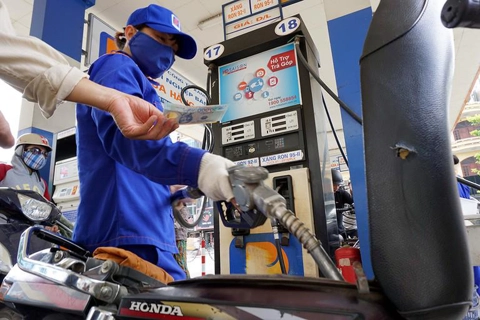
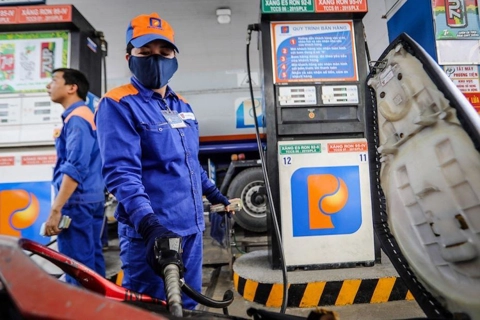
THE HANOI TIMES — Hanoi, along with Ho Chi Minh City and Haiphong, will begin piloting the sale of the E10 biofuel blend starting August 1.
The mix contains 10% ethanol and 90% conventional gasoline.
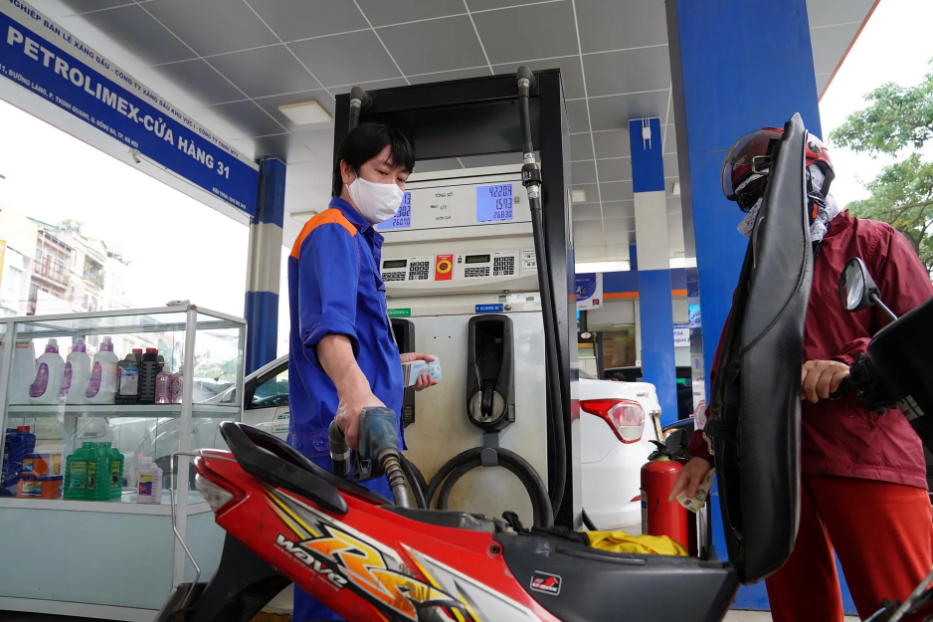
A petrol station in Hanoi. Photo: Le Nam/The Hanoi Times
Considered a key solution for reducing CO₂ emissions, E10 supports the growth of the domestic ethanol industry and enhances energy supply diversity. According to the government's roadmap, E10 will gradually replace gasoline in the market.
Petrolimex and PVOIL, the two largest fuel distributors in Vietnam, are preparing to launch E10 sales in August. Petrolimex plans to start in Ho Chi Minh City. The company has completed preparations related to storage, blending technology, and coordination with refineries to ensure a steady supply during the trial period.
PVOIL intends to roll out E10 in Hanoi and Hai Phong. According to Board Chairman Cao Hoai Duong, the company aims to make consumers familiar with the new fuel. In addition to serving its own network, PVOIL is investing in blending facilities to supply E10 to other distributors and help maintain supply stability.
These steps are intended to prepare for the nationwide rollout of E10 fuel sales, which is set to begin on January 1, 2026.
To support the pilot program and future expansion, the government is reviewing ethanol supply capacity.
According to a report from the Ministry of Industry and Trade, Vietnam currently has six ethanol plants, though only two are operational and produce around 100,000 cubic meters annually. If all six plants resume operations, they could produce 500,000 cubic meters of ethanol per year, which would be enough to meet domestic E10 demand.
In the initial phase, imported ethanol will be considered a backup source. The long-term goal, however, is to secure a domestic supply and build a strong agriculture-to-energy value chain. The ministry stated that crops like cassava and corn, which often face price fluctuations, could benefit from a stable outlet as the biofuel market develops.
Thanks to its ethanol content of around 9% to 10%, E10 also plays a role in reducing greenhouse gas emissions. Its adoption aligns with Vietnam’s commitment to achieving carbon neutrality by 2050. Developing biofuels is also seen as a way to strengthen national energy security.
At a recent meeting on fuel supply for the domestic market, Minister of Industry and Trade Nguyen Hong Dien noted that the mandatory use of E10 biofuel could begin on January 1, 2026.
He stated that the ministry plans to submit a report to the government soon summarizing the implementation of Prime Minister Decision No. 53, which provides a roadmap for blending biofuels with conventional fuels.
"This report will lay the groundwork for proposing an updated plan that aims to strengthen public awareness and support for the transition," Dien said.
The minister also noted that the second half of the year may present challenges to the fuel supply, particularly in light of developments in the Middle East and rising tensions along the Thailand-Cambodia border.
With domestic demand and foreign direct investment expected to rise, energy consumption is likely to grow.
Dien stressed the need for proactive measures to ensure a reliable fuel supply under all circumstances. "It is important to maintain price stability in line with global market trends, ensure system reliability, and balance the interests of all stakeholders," he added.
Several countries, including the United States, Brazil, and Thailand, have used biofuels for years. Thailand, for example, has set a goal of fully replacing RON91 gasoline with E10 and E20, which lays the groundwork for a robust and stable biofuel market.