Vietnam develops talent pipeline for high-speed rail projects
According to the Vietnam Railway Authority, the railway sector will require about 338,000 workers between 2025 and 2030, including nearly 9,200 project managers and almost 13,000 consultants.
THE HANOI TIMES — Anticipating the need for skilled human resources in upcoming large-scale railway projects, several Vietnamese private enterprises have developed training roadmaps.hh
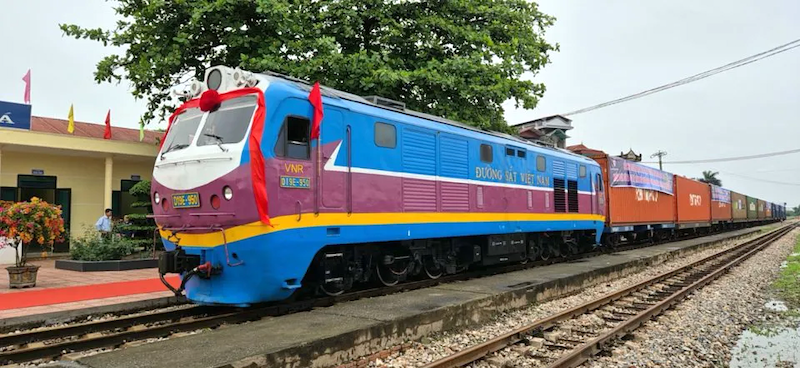
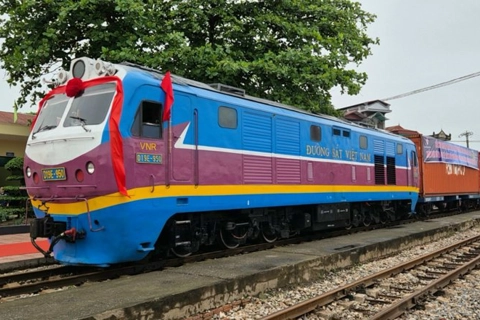
Railway freight transport in Vietnam. Photo: Vinh Quan/The Hanoi Times
By July 2025, nearly 30 Deo Ca Group engineers and technicians will have completed advanced tunnel boring machine (TBM) technology training at China State Construction Engineering Corporation’s Bureau 2. This program combines theoretical lessons with hands-on experience at major railway projects, such as the Guangzhou-Dongguan-Shenzhen line in China.
The group's CEO Nguyen Quang Huy said mastering the TBM, the most advanced tunneling technology, is essential for upcoming projects, such as the North-South high-speed rail line and the urban metro lines in Hanoi and Ho Chi Minh City.
“Our goal is to build a Vietnamese team capable of delivering complex underground works to international standards,” he said.
In August, another 40 of the company's engineers will graduate from a customized railway training program at Ho Chi Minh City University of Transport. The program covers rail design, bridges, tunnels, and stations. The company plans to continue sending staff for training to become Vietnam’s top railway construction contractor with the largest pool of specialized talent.
According to the Vietnam Railway Authority, the railway sector will require about 338,000 workers between 2025 and 2030, including nearly 9,200 project managers and almost 13,000 consultants.
Major projects, such as the North-South high-speed railway and the Hanoi-Lao Cai-Haiphong railway, are expected to demand 70,000–80,000 workers during the construction phase alone.
Given these figures, the Ministry of Construction submitted a railway human resources plan through 2030 with a vision to 2045, allocating VND40.5 trillion (US$1.55 billion) for workforce training and upskilling.
The plan allows Vietnamese private enterprises to participate in consultancy, construction, manufacturing, and technology under a special government mechanism. Consequently, these companies must prepare a capable workforce in all critical positions to effectively absorb technology transfers and master advanced railway systems.
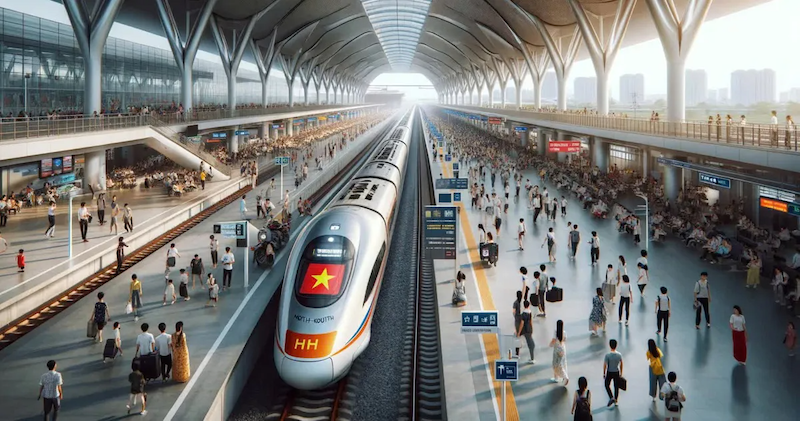
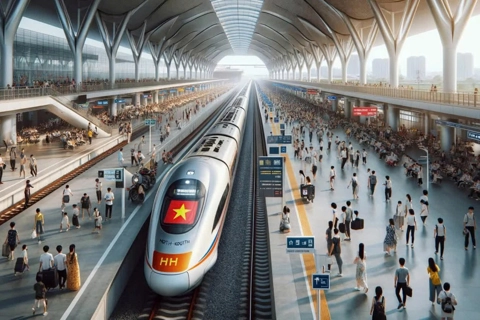
AI illustration of the North-South high-speed railway project created by VGP.
Deo Ca Group is one of the few private enterprises investing in training the high-speed railway workforce. Meanwhile, Phuong Thanh Transport Construction and Investment JSC has selected top-performing employees to receive training in advanced railway countries, such as European nations and Japan.
The company’s Chairman Pham Van Khoi saw upcoming railway developments as a major opportunity for Vietnamese businesses. “We are preparing a technically skilled and high-quality workforce, along with operational strategies to meet the requirements of these projects,” he said.
As a state-owned company, Vietnam Railways Corporation (VNR) has also drawn up a training plan dedicated to the new railway projects. This plan includes upskilling current employees and training new recruits in advanced technologies.
VNR has signed a training cooperation agreement with Liuzhou Railway Vocational Technical College in China and is pursuing similar collaborations with institutions in Japan, South Korea, and leading domestic universities.
VNR's Vietnam Railway College has recently launched its first high-speed rail training program for around 200 VNR employees who work in railway bridge, road maintenance, and signaling companies.
According to Le Thang, Director of Project Management Unit (PMU) No. 2 under the Ministry of Transport, Vietnam is preparing for a wave of major rail investments, including the North-South high-speed railway, the Hanoi-Haiphong-Lao Cai line, and multiple urban railway projects in Hanoi and Ho Chi Minh City.
PMU No. 2 has selected its staff for training courses to ensure they are ready for the upcoming large-scale railway projects across the country.