Lao Cai-Hanoi-Haiphong railways unleash new growth
The project will serve as a gateway for international trade via major seaports in Haiphong and establish a transcontinental railway link connecting East Asia, Central Asia, and Europe.
THE HANOI TIMES — Experts agreed that timely investment in the Lao Cai-Hanoi-Haiphong railway will unleash new growth, lower transportation costs, optimize logistics, reduce pollution, and enhance national competitiveness for sustainable development.
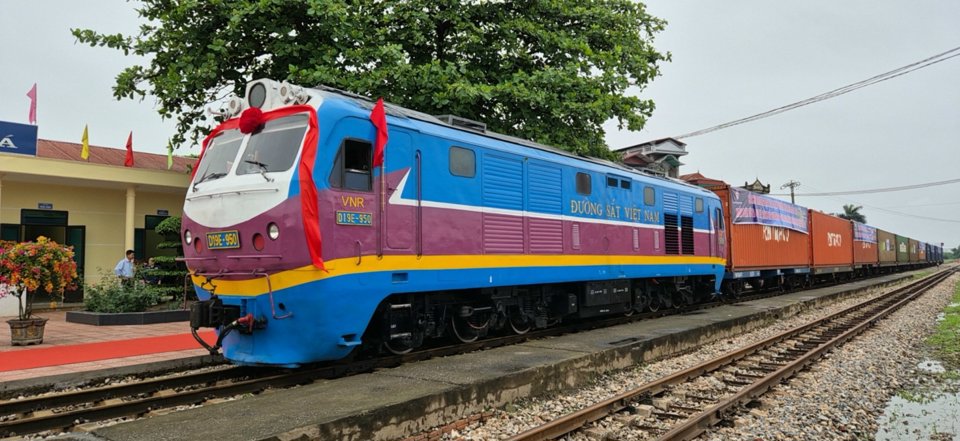
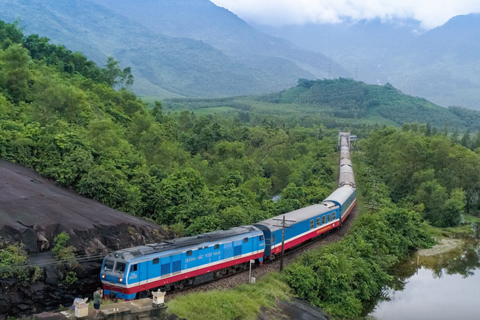
A railway in Vietnam. Photo: Vinh Quan/The Hanoi Times
Bolster international connectivity
Vietnam’s National Assembly has approved the investment policy for the Lao Cai–Hanoi–Haiphong railway project under Resolution No. 187/2025/QH15. The new railway will begin at the border railway junction in Lao Cai and terminate at Lach Huyen station in the central coast city of Haiphong.
The main line will span approximately 390.9 km, with an additional 27.9 km of branch lines. It will pass through nine provinces and cities: Lao Cai, Yen Bai, Phu Tho, Vinh Phuc, Hanoi, Bac Ninh, Hung Yen, Hai Duong, and Haiphong.
The project involves the construction of a single-track, 1,435 mm gauge railway designed for both passenger and freight transport. The planned operating speed is 160km/h on the main line from the new Lao Cai station to Nam Haiphong station, 120km/h through Hanoi's urban rail hub, and 80km/h on other sections. The estimated total investment is VND203.231 trillion (US$8.37 billion), with a deadline for completion set for 2030.
Local authorities have expressed strong support for the rapid delivery of the project. A representative from Lao Cai's Department of Construction emphasized that the existing railway, which is more than a century old, suffers from outdated infrastructure and poor service quality, and is unable to meet the demands of transportation and economic growth.
Haiphong city officials emphasized the railway's critical role in passenger and freight transportation along the East-West economic corridor. This will stimulate urban development along the route and enhance Vietnam's economic competitiveness.
In their feedback on the pre-feasibility study, Hanoi authorities reiterated their support for the project and the proposed route through the capital. Deputy Chairman of the Hanoi People's Committee Nguyen Trong Dong called for technical adjustments to minimize land acquisition and suggested investments in access roads, underpasses, and other infrastructure to ensure connectivity and traffic safety along the rail corridor.
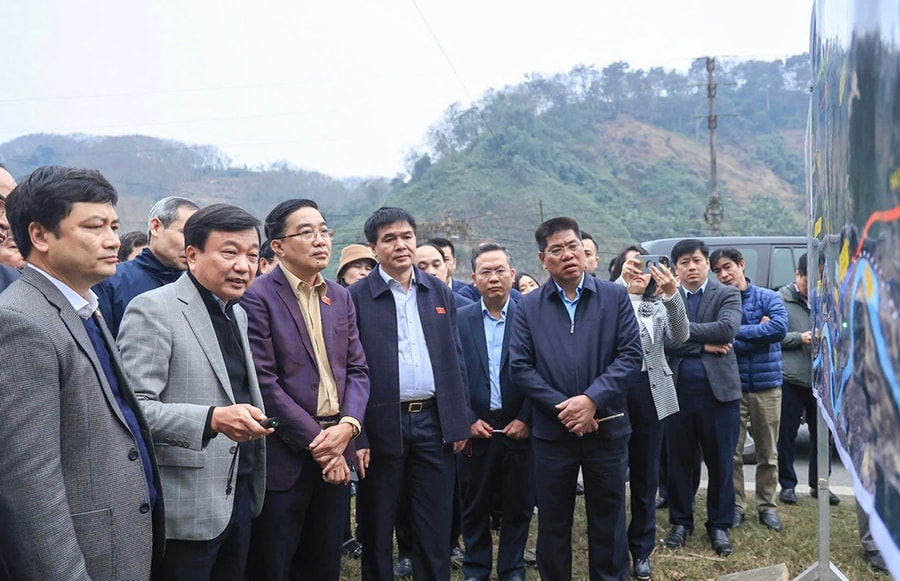
A National Assembly delegation conducts a survey at the Lao Cai railway junction as part of the Lao Cai-Hanoi-Haiphong railway project. Photo: Ta Hai/Hanoimoi
Construction set for late 2025
The Railway Project Management Board under the Ministry of Construction is speeding up the preparation of the feasibility study, aiming to break ground on the Lao Cai-Hanoi-Haiphong railway project by the end of 2025.
Efforts include strengthening the project management team, implementing special policies approved by the National Assembly to fast-track contractor selection, and finalizing design assessments to facilitate approvals. The board is also coordinating with local authorities to hand over land clearance documents and pre-feasibility reports to enable the development of resettlement areas and the implementation of compensation and resettlement plans.
Nguyen Khanh Tung, Deputy Director of the Railway Project Management Board, acknowledged the project’s scale and technical complexity, noting that it introduces new technology to Vietnam.
“While domestic contractors can handle infrastructure construction, they lack experience in signalling systems, locomotives, and rail production,” said Tung. To address this, the board is exploring collaboration models that would allow local firms to partner with international contractors, acquire technology, and invest in production lines for key components and equipment, he continued.
The Ministry of Construction sees the project as a significant challenge, as similar international projects typically require 36 to 42 months of preparation before construction can begin.
To meet the 2025 groundbreaking deadline, the board plans to hire international consultants to prepare bids and legal experts to negotiate contracts.
Resolution No. 187/2025/QH15 outlines 18 special mechanisms to ensure funding, access to land, and supply of materials, while also defining the authority of local governments. The success of the project will depend on a coordinated effort between central and local authorities, the project management board, contractors and consultants.
With a mandate to complete the railway by 2030, all stakeholders must maximize their efforts to meet the government's timeline, Tung emphasized.