Vietnam eliminates 330,000 temporary and dilapidated homes in landmark national campaign
Prime Minister Pham Minh Chinh hailed the unprecedented campaign as a “special national project of the Party’s will and the people’s heart,” highlighting its role in poverty reduction, social equity and national solidarity.
THE HANOI TIMES — Vietnam has achieved a milestone in poverty reduction and social welfare by eliminating 334,234 dilapidated and temporary homes across the country.
The campaign, completed in just 16 months, beat its 2030 deadline by more than five years, thanks to the combined efforts of government agencies, local authorities, businesses and millions of citizens.
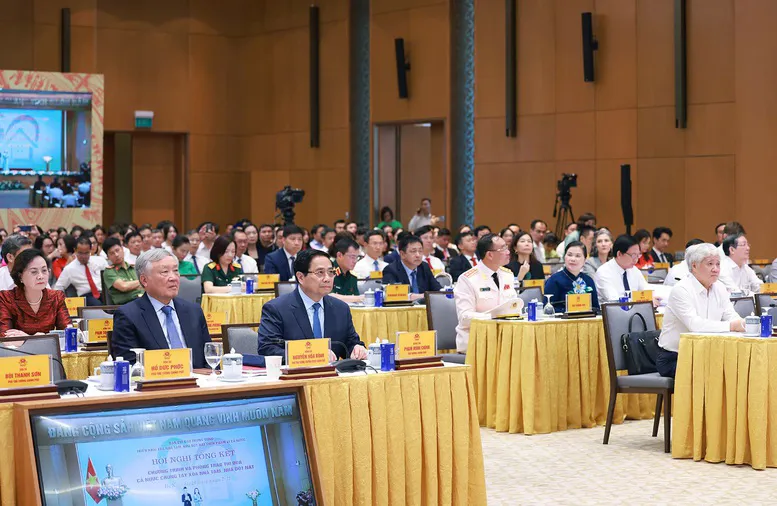
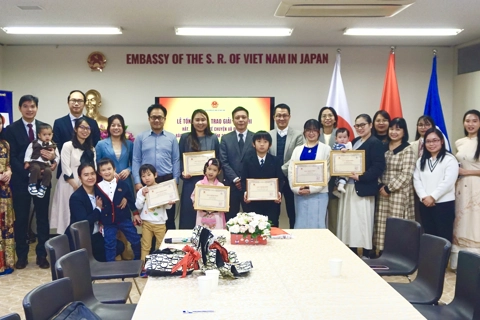
Prime Minister Pham Minh Chinh and delegates attending the conference. Photos: VGP/Nhat Bac
Speaking at a national review conference in Hanoi on August 26, Prime Minister Pham Minh Chinh described the program as “a historic project born of the Party’s will and the people’s heart.”
He said the accomplishment was both a practical gift to the nation on the 80th anniversary of National Day and a testament to the strength of Vietnam’s tradition of solidarity.
Mobilizing massive resources
The campaign mobilized more than VND24.7 trillion (US$ 938 million), including nearly VND12.3 trillion in community contributions and private donations. More than 2.7 million workdays were volunteered by citizens, youth organizations and the armed forces.
The Ministry of National Defense contributed almost VND1 trillion ($38 million) and over 414,000 workdays, while the Ministry of Public Security provided VND790 billion ($30 million) and 534,000 workdays. The Ho Chi Minh Communist Youth Union contributed more than 485,000 workdays, often in remote and mountainous areas.
The banking sector donated more than VND1.8 trillion ($68.3 million), with Asia Commercial Bank (ACB) alone contributing VND80 billion. Other enterprises and philanthropists nationwide added financial and material support, ensuring that each house was built to safe and durable standards.
Alongside funding, local communities introduced creative initiatives. Lam Dong launched “One hand for one home,” rallying neighbors to contribute labor. Tuyen Quang promoted “land is gold, but solidarity is priceless,” encouraging land donations for housing. In Quang Tri, the “three solid elements” model emphasized strong roofs, walls and floors, while Lao Cai organized “exchange-of-labor teams” to build homes together.
These grassroots efforts embodied the spirit of “leaves protect the torn leaves”, a long-standing cultural value in Vietnam.
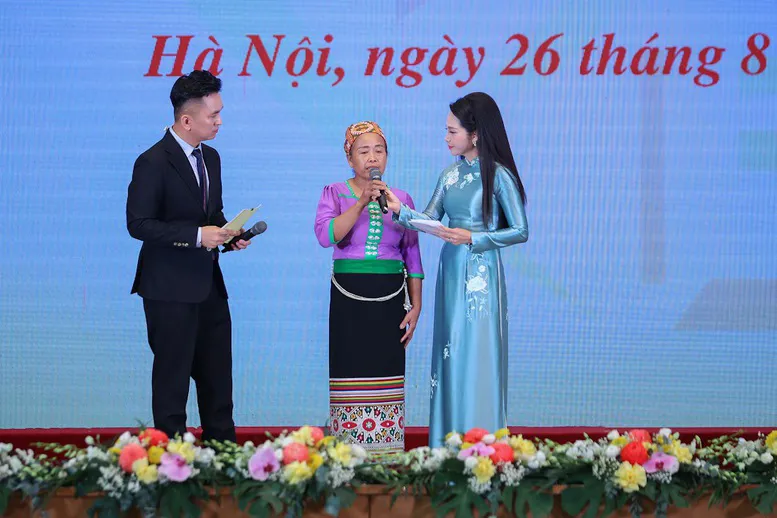
For beneficiaries, the program has been life-changing. Ngan Thi Ha, a Thai ethnic minority woman from the central province of Nghe An, expressed gratitude on behalf of thousands of families.
“Since the government helped build this house, my grandchildren and I finally have a new home. We are very grateful to all the authorities who supported us. Having this house makes us very happy and excited," said Ha.
Nguyen Xuan Truong, Secretary of the Lao Cai Provincial Party Committee, said implementing the program faced many challenges, requiring practical research and the issuance of a policy framework suited to local conditions.
"We have adopted policies to provide financial support, conduct cadastral mapping for each household and issue land use rights certificates. The goal is to ensure that as houses are built, land certificates are issued to the corresponding households," said Truong.
Sharing their experience, Ho Quoc Dung, Secretary of the Gia Lai Provincial Party Committee, said the province introduced a VND 40 million credit package per household through the policy bank to provide leverage and co-financing support for disadvantaged families.
"With flexible, clear and timely assistance, households are provided with the resources to build or renovate homes to meet standards as regulated. The program is implemented at the household level, with provincial steering committees, led directly by the Party Secretary, overseeing every step of the process," said Dung.
Twelve design models were introduced, tailored to local conditions. Although state funding provided VND60 million per house, many homes were ultimately worth VND200 million–VND300 million thanks to community and enterprise contributions.
The program was initially set to finish in 2030 under the Communist Party’s Resolution 42 on social policy. However, in April 2024 the government and the Vietnam Fatherland Front launched a national emulation campaign to accelerate the process.
A subsequent 450-day competition was launched in October 2024, aiming to complete homes for families of war heroes by July 27, 2025 and to eliminate all dilapidated housing by August 31, 2025.
Both goals were reached on time, marking a rare example of a nationwide social program completed ahead of schedule.
Beyond housing: a call for livelihoods
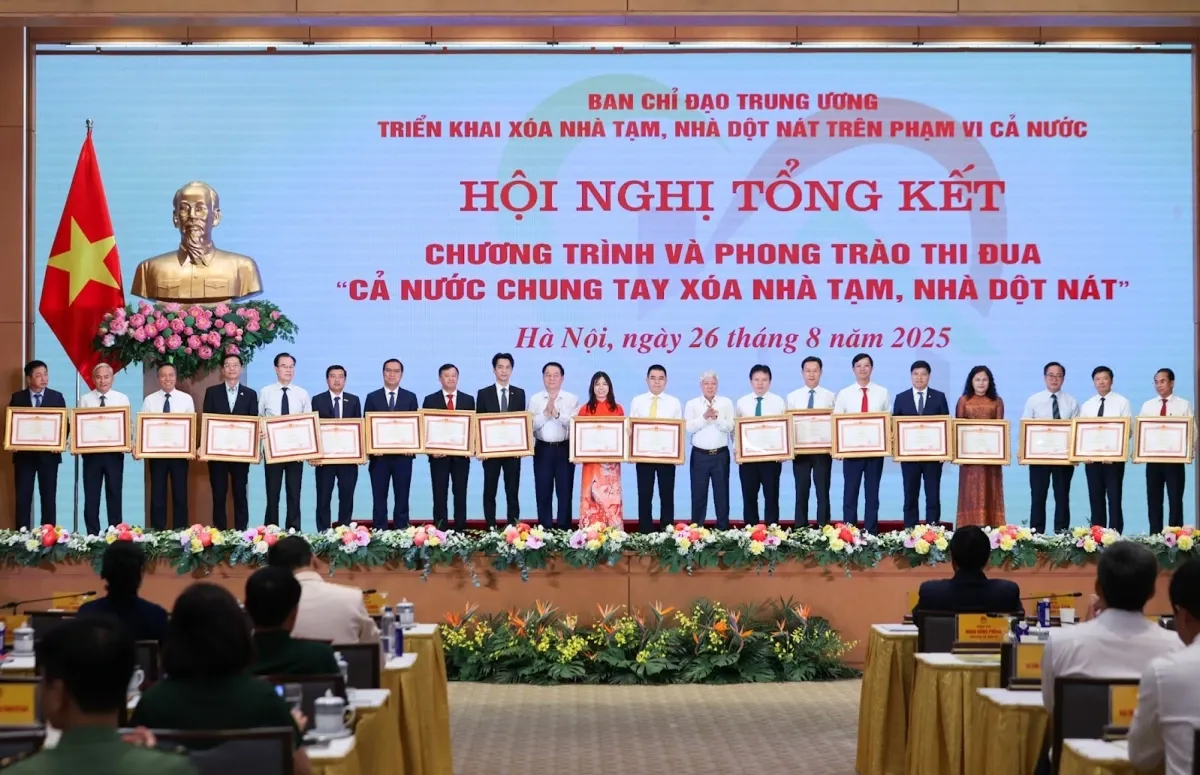
While celebrating the achievement, Prime Minister Chinh said that the next step is to help families “settle down and thrive.”
He stressed the importance of job creation, vocational training and sustainable livelihoods. “A safe home is the foundation, but real progress requires income, opportunities and self-reliance,” he said.
He urged ministries, localities and organizations to continue implementing poverty reduction policies, expand vocational programs and integrate housing support with socio-economic development strategies.
The Prime Minister likened the campaign to a “special national project” that not only improved housing conditions but also reinforced faith in the Party’s leadership, strengthened national unity, and highlighted the humanitarian values of Vietnamese society.
“This is a vivid symbol of our people’s compassion and resilience,” he said.
It honors our tradition of gratitude, strengthens social trust, and builds a stronger foundation for sustainable development.”
As Vietnam marks 80 years of independence and prepares for the 14th National Party Congress, the housing campaign stands as one of the country’s most significant social policy achievements in recent decades.