14TH NATIONAL CONGRESS OF THE COMMUNIST PARTY OF VIETNAM
Log in
Social Affairs

Vietnam enhances prevention and fight against biodiversity crimes

With its sights set on 2050, Vietnam has set itself the goal of effectively restoring and preserving major natural ecosystems, threatened species, and precious and rare genetic resources.

Prime Minister Pham Minh Chinh signed a decision dated December 27, 2022, approving a project to boost prevention and fight against biodiversity crimes by 2030, with a vision towards 2050.

The project's objective is the successful application of the National Biodiversity Strategy for 2030, increasing awareness and responsibilities of public bodies, organizations, and legal persons regarding biodiversity and contributing to the conservation of ecosystems, fauna, flora, and genetic resources.

The competent authorities will deal with biodiversity-related crimes in line with international agreements and conventions to which Vietnam is a signatory.

The country is among the signatories to the Convention on Biological Diversity, the Convention on International Trade in Endangered Species of Wild Fauna and Flora, the 1989 Convention on Wetlands of International Importance, and the UN Convention on Combat Desertification.

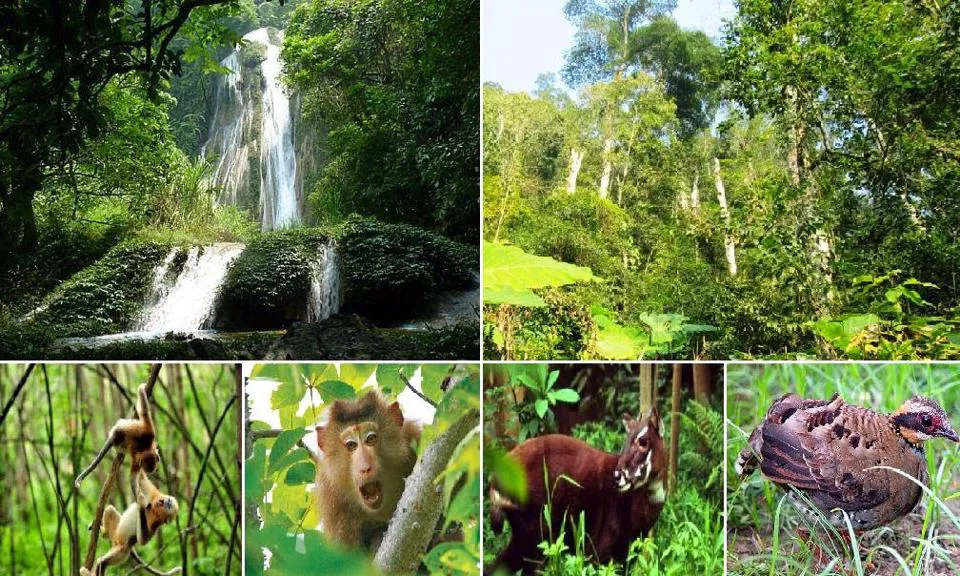
 Vietnam has set the target that major natural ecosystems, endangered species, and precious and rare genetic resources will be restored. Photo: baotainguyenmoitruong.vn

Looking ahead to 2050, Vietnam aims to effectively restore and preserve key natural ecosystems, endangered species, and precious and rare genetic resources.

Earlier, the Vietnamese Government promulgated the National Biodiversity Strategy on February 8, which aims to increase the coverage of protected ecosystems to 9% of the country's land area and marine and coastal protected coverage to 3-5% of the total marine area. In addition, it is expected to maintain forest cover at 42-43% and restore at least 20% of the area of degraded ecosystems.

The country has also strengthened bilateral and multilateral cooperation on wildlife conservation, such as signing an agreement with South Africa in 2012 to end the illegal rhino horn trade.

Vietnam is home to 173 wildlife conservation zones, including 33 national parks, 66 nature reserves, and 18 species and habitat reserves. These zones cover more than 2.5 million hectares, which is expected to increase to over 3 million by 2030.

Five main groups of tasks and solutions

To achieve the set goals, Prime Minister Pham Minh Chinh’s decision outlined five key groups of tasks and solutions, including:

- Raising awareness and responsibility of agencies, organizations, and individuals in obeying the law on biodiversity.

- Refining, before the fourth quarter of 2023, the law on preventing crimes and offenses related to biodiversity protection.  

- Strengthening the prevention of crime and offenses in biodiversity protection by 2030.

- Investing in facilities, equipment, and techniques for preventing crimes and infractions related to biodiversity protection.

- Expanding international cooperation in preventing crimes and offenses related to biodiversity protection, especially with countries that share borders with Vietnam.


Reactions:
Share:
Trending
Most Viewed
Related news
First-ever Biodiversity Law to include pro-poor conservation strategies

First-ever Biodiversity Law to include pro-poor conservation strategies

19 Sep, 06:59

Hanoi Times - The latest draft of Vietnam’s first-ever Biodiversity Law was shared o­n Tuesday at a meeting jointly organised by the National Assembly’s Committee of Science, Technology and Environment and the UNDP. The revised draft law integrates pro-poor principles, recognizing that biodiversity conservation and development cannot be successful without participation of local communities. “Biodiversity and natural resources have been critically important for the majority of the Vietnamese population as they provide basic needs and livelihoods for people, particularly, the rural poor” said Christophe Bahuet, UNDP Deputy Country Director in Vietnam. “But if the current trend of biodiversity loss continues, Vietnam will face difficulties in ensuring sustainable agriculture and fisheries, and challenges in achieving the MDGs and Vietnam’s development targets” he added. In response, the revised draft Law takes into account protective measures needed to support the livelihoods of people who depend o­n access to natural resources and biodiversity. It also proposes benefits for those who posses traditional knowledge of biodiversity, thus encouraging them to participate in biodiversity conservation and rehabilitation. Vietnam is among the most biodiverse countries in the world, but is at risk. The 2008 version of the Vietnam Red Book shows that the number of endangered species of fauna and flora has increased to 880 species in 2008 from 700 species in 2000. Key causes include overexploitation of forests, shifting agricultural cultivation, loss of arable land, water pollution, and degradation of coastal areas. Rapid population growth and intense agricultural development are also putting biodiversity under pressure. “The Biodiversity Law is an effective legal instrument to prevent biodiversity declination, to conserve precious plants and animals, and to serve the sustainable social and economic development of the country” said Dang Vu Minh, Chairman of the National Assembly’s Committee o­n Science, Technology and Environment. The formulation of the Biodiversity Law is a major component of the UNDP/MONRE Poverty and Environment Project which seeks to harmonize poverty reduction and environmental goals in policy and planning. The project’s efforts are particularly focused o­n ensuring that the links between biodiversity conservation and poverty are fully addressed in the new law. Biodiversity is a complex issue and is closely linked to the sustainable use of natural resources, so the Biodiversity Law is expected to complement related laws, including the Law o­n Environmental Protection; Fisheries Law; Law o­n Land; Law o­n Forest Protection and Development. Final comments o­n the draft law are being requested before submission to the National Assembly for approval in November 2008.

Hanoi joins UNESCO’s global learning cities network

Hanoi joins UNESCO’s global learning cities network

The Vietnamese capital joins UNESCO’s Global Learning Cities Network, leveraging its deep cultural heritage and growing digital ambitions to position itself as a regional hub for lifelong learning, innovation, and sustainable development.

Spring flower markets to bloom across Hanoi ahead of Tet 2026

Spring flower markets to bloom across Hanoi ahead of Tet 2026

The capital city will host a wide range of flower markets for 16 days from January 31 to February 15, or from the 13th to 28th day of the 12th lunar month.

Vietnam reports no Nipah cases, intensifies virus prevention at border gates

Vietnam reports no Nipah cases, intensifies virus prevention at border gates

Response plans at points of entry, training for healthcare staff and public communications are enhanced in Vietnam to step up surveillance after a Nipah virus cluster was reported in India.

Hanoi tops first and second prizes in National Excellent Student Contest

Hanoi tops first and second prizes in National Excellent Student Contest

The competition was conducted with the utmost rigor, especially in grading, with two separate rounds to ensure accuracy and objectivity.

Hanoi tightens controls to curb smuggling and counterfeiting

Hanoi tightens controls to curb smuggling and counterfeiting

Hanoi is determined to resolutely prevent, combat, contain and gradually eliminate smuggling, trade fraud, counterfeit goods and intellectual property infringements.

Hanoi suspends in-person classes for younger students as cold wave tightens grip

Hanoi suspends in-person classes for younger students as cold wave tightens grip

As winter cold intensifies across northern Vietnam, Hanoi has rolled out flexible school attendance measures aimed at safeguarding students.

Hanoi steps up food safety inspections for Tet 2026

Hanoi steps up food safety inspections for Tet 2026

To better protect consumers’ health, Hanoi authorities have taken measures to tighten control over food safety and hygiene to prevent food poisoning before, during and after Tet holiday 2026.

Hanoi's second metro to apply new ticket system next month

Hanoi's second metro to apply new ticket system next month

This new system aims to bring passengers a safe, convenient and environmentally friendly experience by using biometric and digital verification on Hanoi’s second metro lines, ensuring faster and safer access.