Vietnam eyes incentives to attract scientific talent
Vietnam aims to build a world-class scientific and technological workforce to power its future digital economy.
THE HANOI TIMES — The Ministry of Science and Technology (MoST) is formulating a comprehensive mechanism to attract high-caliber talent in science, technology, innovation, and digital transformation.
The proposed policies include incentives such as government-provided housing and higher salary packages.

Mai Anh Hong, Deputy Director of the MoST's Department of Organization and Personnel, speaks at the press conference on August 5. Photo: MoST
At a press conference on August 5, Mai Anh Hong, Deputy Director of the ministry’s Department of Organization and Personnel, said that these incentives should not be seen as privileges, but rather essential conditions to ensure that scientific talent feels secure and motivated to contribute to national development.
“High-quality human resources are the determining factor in advancing science, technology, innovation, and digital transformation,” he said.
Hong noted that Vietnam's limited financial incentives, along with gaps in research infrastructure and professional growth opportunities, make it difficult to retain scientific talent, particularly those returning from abroad.
In response to these challenges, the approval of the Law on Science, Technology, and Innovation by the National Assembly in 2025 offered a strong legal foundation to introduce flexible and competitive incentive mechanisms.
The new mandate and digital technology law authorize the ministry to create pay incentives beyond standard levels to attract top Vietnamese talent and support strategic sectors like semiconductors, AI, and digital assets.
Bridging the gap in financial incentives
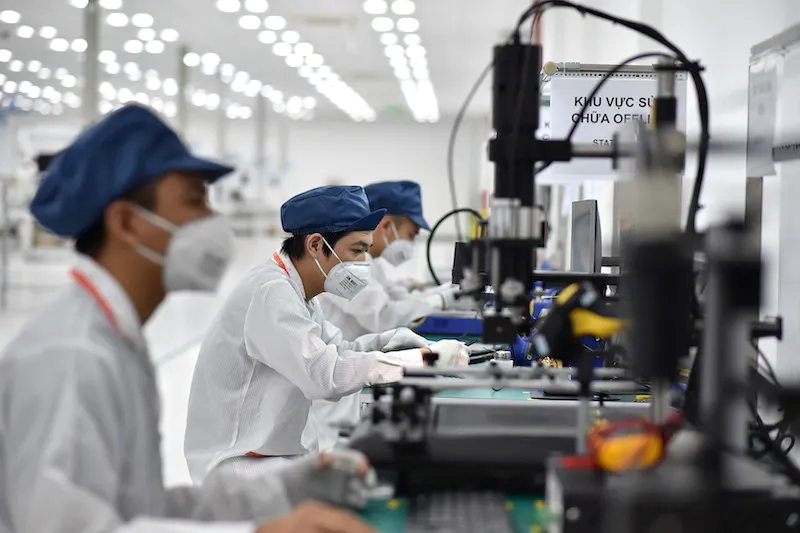
VinSmart factory in Hanoi's Hoa Lac Hi-tech Park. Photo: Vingroup
To realize the goals set out in Resolution 57-NQ/TW on advancing science, technology, innovation, and digital transformation, along with recently approved laws, the ministry is developing targeted policies to support research and innovation. These include risk-tolerant mechanisms and greater institutional autonomy for semiconductor development and talent recognition, alongside efforts to attract leading experts from both Vietnam and abroad.
“These programs will provide special financial support, excellent research environments, and clear advancement opportunities,” Hong said.
Meanwhile, Vietnamese scientists will receive support to participate in international research projects and networks. The ministry is also working to attract multinational technology companies to set up R&D centers in Vietnam.
In parallel, efforts are underway to eliminate administrative obstacles, making it easier for scientists to access funding, equipment, and data. Evaluations will prioritize measurable outcomes such as publications, patents, and commercialized products.
At the meeting, Hoang Anh Tu, Deputy Director of the ministry’s Department of Science and Technology for Technical Branches, said that the ministry conducted surveys and worked with businesses and research institutions to identify priority products, investment scale, and participation capacity in this field.
In August, the ministry will propose three strategic tech products and a national roadmap through 2030, while advancing plans for a public-private network of national research centers and key laboratories.