Vietnam fast-tracks smart city policy with new draft decree
Smart cities are poised to become a cornerstone for advancing Vietnam’s digital and urban economies.
THE HANOI TIMES — Deputy Prime Minister Nguyen Chi Dung has tasked the Ministry of Construction with drafting a decree on smart city development, to be submitted to the government by August 15.
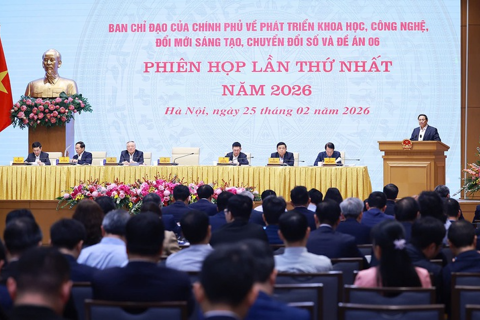
The directive was issued at the first meeting of the inter-agency task force on smart urban development, chaired by Dung on July 16 in Hanoi.

Deputy Prime Minister Nguyen Chi Dung chairs the the first meeting of the inter-agency task force on smart urban development. Photo: VGP
Dung said that developing smart cities is no longer optional, but rather an essential path to enhancing sustainable growth, improving urban governance, elevating citizens’ quality of life, and advancing the digital and urban economies.
Several localities in Vietnam have launched their smart city pilot programs, often focusing on specific sectors before expanding to the entire city. However, implementation has been fragmented due to deficiencies in legal frameworks, data systems, and resource coordination.
"This reality demands joint efforts at all levels, from central ministries to local authorities, to improve coordination, address obstacles, and build a consistent legal framework that supports effective, synchronized action," he stated.
The deputy prime minister urged localities to update their smart city plans according to the new guidance and submit their action plans by July 25.
Ministries and sectors are also expected to provide feedback on the draft decree by July 20 so the task force can finalize it in the third and fourth quarters.
Dung called on centrally governed cities to assess their digital transformation efforts and ensure that smart urban plans in progress align with new national priorities.
He also requested a review of Decision No. 950 by the end of the month. This decision approved the scheme for developing smart, sustainable cities from 2018 to 2025, with a vision for 2030. The review must highlight the results, challenges, and proposed actions.
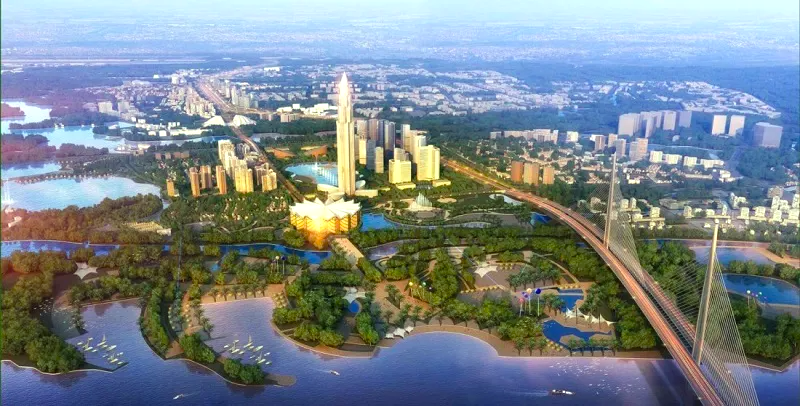
The rendered graphics of the smart city in Hanoi's Dong Anh District. Photo courtesy of BRG Group
At the meeting, local leaders expressed strong backing for national guidance to speed up smart city development.
Hanoi officials proposed the creation of standardized indicators and metrics to help local governments track progress. The capital reaffirmed its goal of becoming a national leader in smart urban development.
Ho Chi Minh City Vice Chairwoman Tran Thi Dieu Thuy underscored the importance of synchronizing digital transformation and smart city planning.
"Both agendas aim to improve state governance, enhance quality of life, and drive digital economic and social development," she said. Thuy called for national and provincial digital strategies to explicitly integrate smart city development.
The Minister of Science and Technology, Nguyen Manh Hung, who is also the task force’s Deputy Head, said: “Smart city development is, in fact, the digital transformation of urban areas. Transportation, healthcare, education, and administrative systems must be digitized, integrated, and optimized to better provide for citizens and ensure sustainable growth.”
Tran Quoc Thai, Director General of the Urban Development Agency under the Ministry of Construction, said that 37 cities and provinces have approved smart city plans.
Eighteen of them, including Hanoi, Hue, Haiphong, and Binh Duong, have begun developing data systems based on geographic information systems (GIS). Ministries have also issued various technical standards and guidelines to support the rollout.
|
The draft decree on smart city development will focus on five key policy areas. The first set of policies sets out general provisions, including unified definitions, essential requirements, resources, and priority incentives for sectors such as science, high technology, and information technology. The second set describes the process for developing proposals and action plans, including implementation, evaluation, recognition of maturity levels, and monitoring mechanisms. The third set governs the development of databases, platforms, and smart urban operation centers aligned with innovation and digital transformation efforts. The fourth set of guidelines focuses on urban planning, infrastructure, and the provision of smart public utilities and services. The fifth set defines the roles and responsibilities of state agencies, businesses, and communities in driving smart city development. |