Vietnam pledges net zero emissions by 2050 at COP26
Vietnam focuses on mitigation and adaptation in implementing the Paris Agreement through bilateral and multilateral cooperation and new mechanisms.
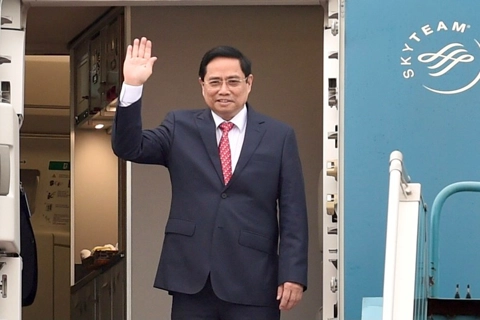
Vietnam targets 2050 for net-zero emissions as Prime Minister Pham Minh Chinh delivered a speech at the 2021 United Nations Climate Change Conference (COP26) held in Glasgow, the UK on Oct 1.
| Vietnam's Prime Minister Pham Minh Chinh at COP26. Photo: VNA |
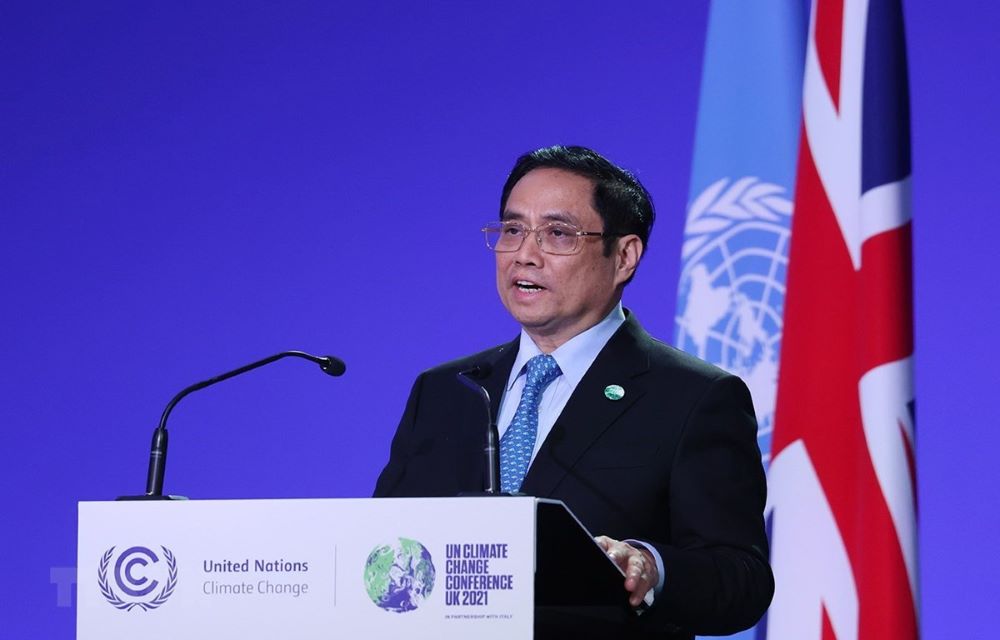
Speaking at the conference that gathered some 120 countries leaders, Chinh said although Vietnam is a developing country that has begun to industrialize over the past three decades, it will conduct stronger measures to reduce greenhouse gas emissions with its own resources and international support both in terms of finance and technology transfer.
The country will continue implementing mechanisms stipulated in the Paris Agreement.
Highlighting climate change challenges facing human beings, Chinh said extreme weather events and sea-level rise are seriously affecting food security, water security, sustainable development, and even threatening the survival of many countries and populations.
"Nature’s warning forces us to act responsibly without delay," Chinh said.
"This is a global issue so it requires a global approach and as it affects everyone, there must be a people-based approach," he noted.
For that reason, he said climate response must be the first and foremost in development strategies and code of conduct for agencies, businesses, and people.
It requires science-based motivation for a circular, inclusive, and sustainable economy towards people-centered development to ensure no one is left behind.
To make the goals possible, climate finance, tech transfer, and capacity improvement become crucial for the successful implementation of the Paris Agreement. Accordingly, developed countries that had high emissions need to fulfill their financial commitments and set more ambitious financial targets after 2025.
Vietnam, being one of the hardest-hit countries by climate change, is striving to build its climate resilience planning and economic development to ensure its higher living standards and contributions to the international community.
In the Nationally Determined Contribution (NDC) updated in September 2020, Vietnam targets by 2030 to reduce greenhouse gas (GHG) emissions by 9% with domestic resources and by 27% with international support.
Under the Paris Agreement, Vietnam’s Intended Nationally Determined Contribution (INDC) comprises two components, namely mitigation and adaptation.
The mitigation component identifies the roadmap for GHG reduction in the period 2021-2030 for the following sectors: energy, agriculture, land use, land-use change, and forestry (LULUCF); and waste.
The adaptation component identifies the efforts that have been implemented; the institutional, policy, financial, human resource, and technology gaps; and the prioritized adaptation actions for the period 2021-2030.