Social Affairs
Vietnam posts high gender parity scores
Women in New Zealand, Australia, the Philippines, Singapore, and Vietnam continue to outshine their regional peers, according to MasterCard`s latest Index of Women`s Advancement (H2 2014).
Across the region, New Zealand has the highest overall score of 77, followed by Australia (76), the Philippines (72.6), Singapore (70.5), and Vietnam (66.0)
India (44.2), Bangladesh (44.6), Sri Lanka (46.2), and Bangladesh have scores below 50, indicating that much more needs to be done to achieve gender parity.
Thailand recorded the largest decline overall (59.4, down 7.2 index points from H1 2014), while Singapore had the biggest improvement (70.5, up 0.4 index points from H1 2014).
The index, measuring the socio-economic standing of women across the Asia Pacific, has three main indicators derived from additional sub-indicators: Employment (Workforce Participation, Regular Employment), Capability (Secondary Education, Tertiary Education) and Leadership (Business Owners, Business Leaders, Political leaders).
Though women in the Asia Pacific are increasingly more educated than their male counterparts, progress towards gender parity is still sluggish – especially in the areas of business leadership, business ownership and political participation.
Out of the 16 markets surveyed, women in 10 markets outnumber men in tertiary education enrolment rate. While there is a strong correlation between tertiary education and business leadership in markets such as the Philippines (130.8 for tertiary education; 92.5 for business leaders) and New Zealand (146.3; 70.2), women in the majority of markets across Asia Pacific are lagging behind in business leadership despite their educational qualifications.
Of the three components, Capability remains the strongest indicator of Asia Pacific women's progress towards gender parity for the ninth consecutive year.
To measure Capability, the scores are indexed to 100 males to indicate how close or how far women in each of the 16 Asia Pacific markets covered by the research are to achieving socio-economic parity with men.
A score of under 100 indicates gender inequality in favor of males and a score of 100 indicates equality between the sexes.
Vietnam is one of only a few nations to achieve 100.
With the exception of the Republic of Korea (85.9), the scores for all markets in the region are above 90.
The results show that Employment remains the second strongest component over the nine-year period from 2007 to 2015.
With the exception of Indonesia (78.4) and Malaysia (75.9), women across the majority of markets in the Asia Pacific are making progress towards becoming as economically active as their male counterparts, scoring above the 80-point mark for Employment.
Vietnam scores 81.8 for Employment, compared to 81.6 in 2014.
Four markets score higher than 90 index points for Employment: New Zealand (91.3), China (91.2), Australia (90.8), and Taiwan (90.2).
Leadership remains the weakest component from the previous year (and also over the nine-year period).
New Zealand (50.6) and the Philippines (50.1) are the only two markets with more than 50 women business owners/ business leaders/ government leaders for every 100 men.
Australia ranks third (49.7), followed by Singapore (41.5), and Vietnam (35.2).
The Philippines, Singapore, and Indonesia show the most marked advancement in women's leadership since 2007, respectively gaining 12.2, 8.7 and 7.5 index points.
Thai women have made the most significant progress in business leadership since nine years ago, jumping 20.4 index points to 62.7.
"In fact, companies with more women in leadership outperform those who do not, so the male dominance of leadership roles should be concerning," GeorgetteTan, group head, communications, Asia Pacific, MasterCard, said.
"In a highly competitive global market, companies are beginning to understand why integrating talented women into leadership structures is imperative for sustainable economic growth and innovation in both developed and developing markets."
India (44.2), Bangladesh (44.6), Sri Lanka (46.2), and Bangladesh have scores below 50, indicating that much more needs to be done to achieve gender parity.
Thailand recorded the largest decline overall (59.4, down 7.2 index points from H1 2014), while Singapore had the biggest improvement (70.5, up 0.4 index points from H1 2014).
The index, measuring the socio-economic standing of women across the Asia Pacific, has three main indicators derived from additional sub-indicators: Employment (Workforce Participation, Regular Employment), Capability (Secondary Education, Tertiary Education) and Leadership (Business Owners, Business Leaders, Political leaders).

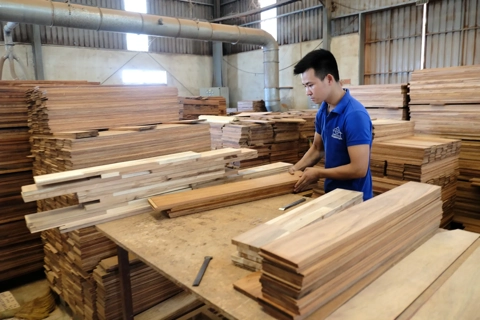
Photo for illustration
|
Out of the 16 markets surveyed, women in 10 markets outnumber men in tertiary education enrolment rate. While there is a strong correlation between tertiary education and business leadership in markets such as the Philippines (130.8 for tertiary education; 92.5 for business leaders) and New Zealand (146.3; 70.2), women in the majority of markets across Asia Pacific are lagging behind in business leadership despite their educational qualifications.
Of the three components, Capability remains the strongest indicator of Asia Pacific women's progress towards gender parity for the ninth consecutive year.
To measure Capability, the scores are indexed to 100 males to indicate how close or how far women in each of the 16 Asia Pacific markets covered by the research are to achieving socio-economic parity with men.
A score of under 100 indicates gender inequality in favor of males and a score of 100 indicates equality between the sexes.
Vietnam is one of only a few nations to achieve 100.
With the exception of the Republic of Korea (85.9), the scores for all markets in the region are above 90.
The results show that Employment remains the second strongest component over the nine-year period from 2007 to 2015.
With the exception of Indonesia (78.4) and Malaysia (75.9), women across the majority of markets in the Asia Pacific are making progress towards becoming as economically active as their male counterparts, scoring above the 80-point mark for Employment.
Vietnam scores 81.8 for Employment, compared to 81.6 in 2014.
Four markets score higher than 90 index points for Employment: New Zealand (91.3), China (91.2), Australia (90.8), and Taiwan (90.2).
Leadership remains the weakest component from the previous year (and also over the nine-year period).
New Zealand (50.6) and the Philippines (50.1) are the only two markets with more than 50 women business owners/ business leaders/ government leaders for every 100 men.
Australia ranks third (49.7), followed by Singapore (41.5), and Vietnam (35.2).
The Philippines, Singapore, and Indonesia show the most marked advancement in women's leadership since 2007, respectively gaining 12.2, 8.7 and 7.5 index points.
Thai women have made the most significant progress in business leadership since nine years ago, jumping 20.4 index points to 62.7.
"In fact, companies with more women in leadership outperform those who do not, so the male dominance of leadership roles should be concerning," GeorgetteTan, group head, communications, Asia Pacific, MasterCard, said.
"In a highly competitive global market, companies are beginning to understand why integrating talented women into leadership structures is imperative for sustainable economic growth and innovation in both developed and developing markets."