Vietnam’s logistics sector accelerates green transition to boost sustainable competitiveness
Vietnam’s logistics industry is entering a decisive stage of green transformation as businesses and policymakers work together to reduce emissions, cut costs and build sustainable supply chains. The shift is becoming vital for competitiveness amid global requirements on carbon reduction and environmental, social and governance (ESG) standards.
THE HANOI TIMES — Vietnam’s logistics sector is entering a decisive green transition, as the government and businesses push to cut emissions, meet global sustainability standards and boost competitiveness.
Greening operations and supply chains has become vital for the industry to align with international carbon and ESG requirements, said Dao Trong Khoa, Chairman of the Vietnam Logistics Business Association (VLA), adding that the shift marks a “historic turning point” backed by new legal frameworks.
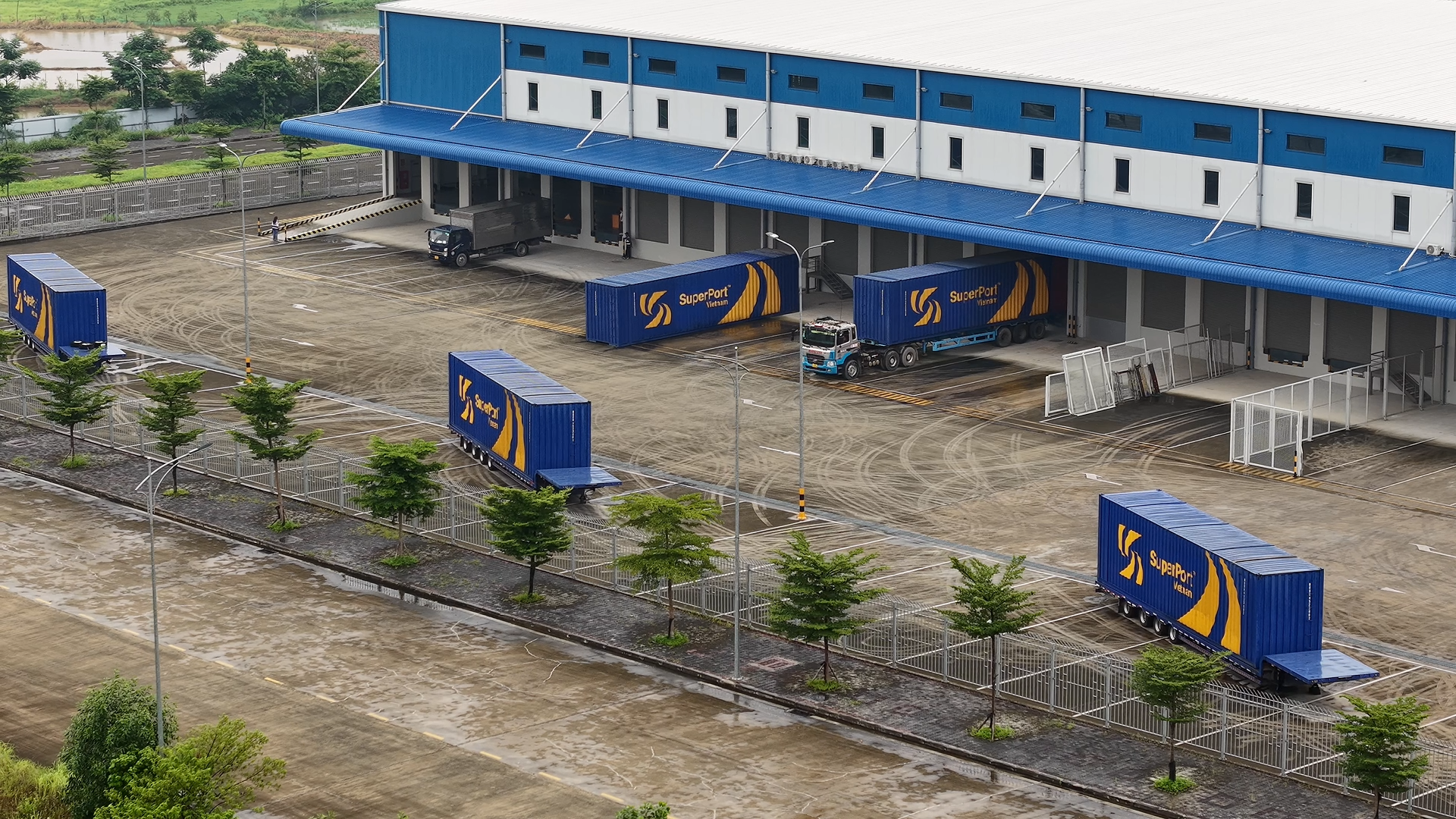
T&T Group's in-land port located in Phu Tho Province's Binh Nguyen Commune. Photo: Kinh te & Do thi Newspaper
Vietnam’s logistics firms face rising pressure as global supply chains are reshaped by geopolitical tensions, exchange rate fluctuations and new changes such as carbon taxes and ESG standards from key markets like the EU and US. Yet, the green transition and digital innovation are also creating new opportunities.
Vietnam’s logistics costs currently account for 16%–18% of GDP, higher than the global average of 10%–12%, while the sector contributes roughly 8%–10% of national CO₂ emissions.
“The industry needs a green, resilient ecosystem to stay competitive,” said Khoa. “Cutting costs while greening operations is now essential.”
Do Ha Nam, Chairman of Intimex Group, said foreign partners increasingly demand transparent emissions reports, low-carbon transport options and eficient delivery routes. "Since Intimex still outsources logistics, its emission control remains limited, but it now evaluates partners by environmental standards."
Nguyen Van Thu, Chairman of GC Food, an aloe vera exporter to Japan and South Korea, stressed that green transition is not a solo journey, pointing out that Vietnam’s logistics system still relies mainly on road transport, which has high emissions. In contrast, greener modes like rail and inland waterways remain underdeveloped due to limited infrastructure and weak connectivity.
"Green logistics remains costly, with few ESG-compliant providers outside major cities, limiting access for small exporters," said Thu.
Practical solutions
According to Chairman of Intimex Group Do Nam, Intimex has been co-investing with several major logistics partners that apply sustainable standards, while GC Food built a processing plant near its aloe farms to cut transport emissions.
Nguyen Huy Hoang, Head of Strategy and Policy at the Academy for Cadre Training under the Ministry of Construction, said that road transport dominates Vietnam’s logistics market, far exceeding rail and waterway transport.
He called for a major restructuring of transport modes to reduce road dependency, develop green infrastructure and combine it with smart transportation and digital transformation.
Tran Tien Dung from the Vietnam Logistics Business Association said green logistics is a global trend that strengthens competitiveness and supports the national emission reduction target. “The government should offer incentives such as lower fees, interest rate cuts and extended loan terms to help firms go green,” he said.
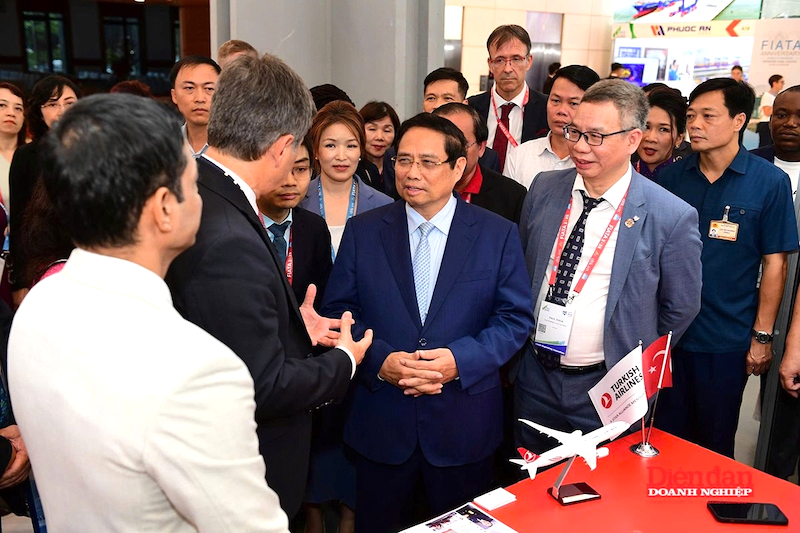
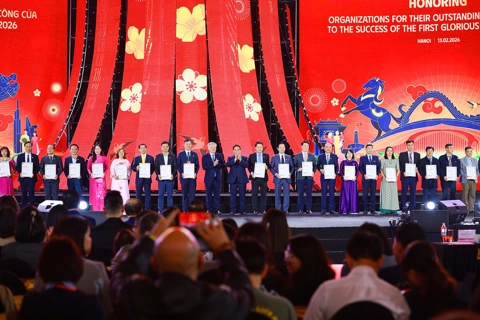
Prime Minister Pham Minh Chinh attends the opening ceremony of the 2025 FIATA World Congress in Hanoi in September. Photo: diendandoanhnghiep.vn
“If a firm sells two old container trucks, it earns about VND1 billion (US$38,000), but a new electric or clean-energy truck costs VND4–5 billion ($152,000-190,000). This is a major challenge for small firms, so financial support is crucial,” Dung explained.
He added that Vietnam has 3,260 km of coastline and over 41,900 km of rivers, creating strong potential for waterway and coastal transport, which can reduce CO₂ emissions by over 70% compared with road transport. Some pioneers have already cut emissions by 75% and lowered logistics costs by 10%–15%.
Le Kim Cuong, Deputy Director of the Logistics Service Center at Saigon Newport Corporation, said that the company focuses on shifting from road to waterway transport. However, slow port infrastructure development remains the main bottleneck.
“Many port and inland waterway projects are already planned, but implementation lags behind. We need tax and fee incentives to encourage businesses to use water transport,” he said.
On financing, VLA Vice Chairman Dang Vu Thanh said that green credit, tax incentives and technology innovation funds could accelerate the adoption of eco-friendly logistics models.
He called for a comprehensive financial framework that combines investment incentives, loan guarantees and coordinated policies among ministries and localities.
“When customs, banks and local governments align their digital systems, it will create an ecosystem that supports businesses in going green,” he said.
Customs digitalization is also helping reduce logistics costs. Dao Duy Tam, Head of the Customs Supervision and Management Department, said electronic customs procedures introduced since 2020 have shortened clearance time for businesses.
Customs offices are now testing digital technologies such as AI, IoT, blockchain, cameras, sensors and big data to share information among stakeholders, optimize cargo handling and reduce transport distances and fuel use, he said.
“These efforts help logistics firms save time and costs while promoting a greener supply chain,” Tam added.
|
Vietnam calls for international cooperation to make logistics sector "green" At the 2025 FIATA World Congress, themed “Green and Resilient Logistics” took place in September, Prime Minister Pham Minh Chinh called on international logistics communities and businesses to enhance cooperation through five key initiatives. The five initiatives relate to developing science, technology and digital innovation; promoting fast, green and sustainable logistics; supporting human resource training and smart logistics centers; connecting national and regional logistics hubs; and linking multimodal transport networks by road, rail, air, sea and river. The Prime Minister pledged to guarantee the most favorable conditions for domestic and foreign investors in logistics, protection of legitimate interests for all businesses and political stability, safety and social order to ensure investor confidence. |