Vietnam SMEs granted three-year income tax exemption
The private sector is expected to grow by an average of 10% - 12% a year, faster than GDP growth.
THE HANOI TIMES — Small and medium-sized enterprises (SMEs) will be exempt from corporate income tax for three years from the date of establishment under a new government decree.

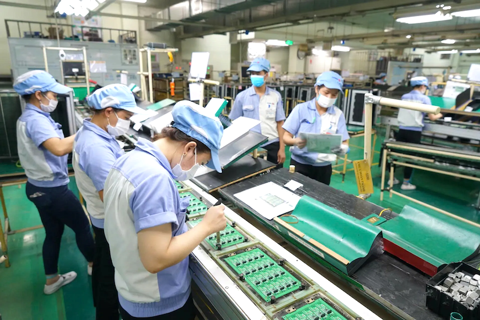
Production activity at a construction materials company in Hanoi. Photo: Tran Dung/The Hanoi Times
The policy is set out in Decree 20, which guides the implementation of National Assembly Resolution 198 on private sector development.
Taking effect on January 15, the decree details tax exemption and reduction policies for corporate income tax and personal income tax.
Under the decree, newly registered SMEs will receive a three-year corporate income tax exemption from the date they are first granted a business registration certificate. The policy does not apply to enterprises established through division, separation, merger, consolidation, change of ownership or change of business form.
Innovative startups and startup support organizations will be exempt from corporate income tax for the first two years, followed by a 50% reduction for the next four years, provided eligible income is separately accounted for or allocated proportionally by revenue and expenses.
Enterprises are also exempt from tax on income from transfers of shares, capital contributions and contribution rights in innovative startups.
The incentives exclude transfers involving public or listed companies, while capital transfers linked to real estate remain subject to existing real estate tax regulations.
For personal income tax, the decree provides tax exemptions for individuals earning income from the transfer of shares, capital contributions, capital contribution rights and share purchases in innovative startups.
Experts and scientists working at research and development centers, startups and intermediary organizations supporting innovative startups will be exempt from personal income tax for the first two years and receive a 50% reduction for the following four years on income from salaries and wages.
On support for research and technology development, the decree allows enterprises to set aside up to 20% of taxable income to establish a science, technology, innovation and digital transformation development fund. Enterprises may use this fund to directly implement or commission research and development activities.
The state will provide free digital platforms and shared accounting software for small and micro enterprises, household businesses and individual business operators.
By the end of 2025, Vietnam had nearly 1.1 million active enterprises. Under Resolution 68 on the development of the private sector, the country aims to have two million active enterprises by 2030. The private sector is expected to grow by an average of 10% - 12% a year, faster than GDP growth. By 2030, Vietnam targets at least 20 large enterprises participating in global value chains.