Vietnam steps up vigilance against deadly Marburg
There is currently no vaccine or specific treatment for Marburg virus disease.
Vietnam's Ministry of Health (MoH) has urged all localities nationwide to strengthen supervision and step up preventive measures to control the possible spread of the deadly Marburg virus disease.
Marburg virus disease is rare but severe hemorrhagic fever which affects both people and non-human primates with a fatality rate of up to 88%, the ministry said in a dispatch to localities across the country, adding that it belongs to the same family as the virus that causes Ebola.
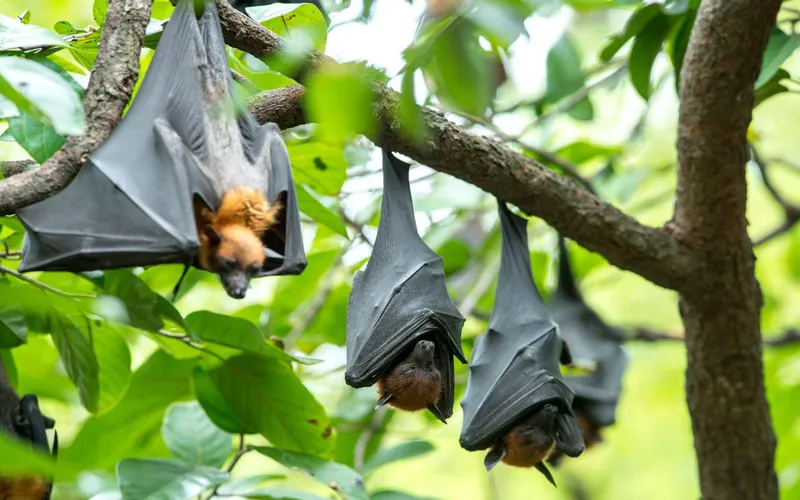
Human infection with Marburg virus disease initially results from prolonged exposure to mines or caves inhabited by Rousettus aegyptiacus bat colonies, the MoH said.
The host of the Marburg virus is the African fruit bat, Rousettus aegyptiacus. Photo: Canva |
Once a person is infected with the virus, Marburg can spread from person to person through direct contact (through hurt skin or mucous membranes) with the blood, secretions, organs, or other body fluids of infected persons and with surfaces and materials (e.g., bedding, clothing) contaminated with these fluids.
The incubation period of the disease is two to 21 days. Patients often suffer from symptoms such as high fever, headache, or malaise, and then may experience diarrhea, abdominal pain, cramps, nausea, vomiting, or bleeding.
Therefore, all cities and provinces in Vietnam are asked to intensify surveillance of travelers from other countries, especially African countries with Marburg virus disease outbreaks, for 21 days to quickly detect suspected cases for epidemiologic investigation.
Samples must be collected for diagnostic testing. If there are infected cases, health workers must work closely together to prevent the disease from spreading to the community.
The request came as the highly contagious and deadly disease has killed nine people in Equatorial Guinea and could spread to other regions of Africa. The ministry also asked for samples to be taken from suspected cases.
In addition, they must proactively develop scenarios to respond to any local outbreaks and prepare sufficient medical equipment and human resources to effectively manage a potential epidemic.
In addition, the National Institute of Hygiene and Epidemiology and the Pasteur Institute have been asked to provide training and assistance to localities to improve their capacity to test and diagnose the disease.
Localities should have plans in place to respond to an outbreak and be prepared with medicines, equipment, manpower and financial resources to receive and treat patients.
The ministry urged medical staff at all levels to be trained in prevention and control measures, as well as care and treatment.
Marburg virus disease has not been reported in Vietnam. However, there is currently no vaccine or specific treatment for Marburg virus disease, so people need to keep an eye on it and update health sector recommendations to actively prevent this disease.
According to the World Health Organization (WHO), Equatorial Guinea, a country on the west coast of Central Africa, confirmed its first outbreak of Marburg virus disease, formerly known as Marburg hemorrhagic fever, which is a severe, often fatal disease in humans, on February 13.
Earlier, on February 7, local health authorities in Equatorial Guinea warned of unidentified cases of fever and hemorrhagic symptoms.