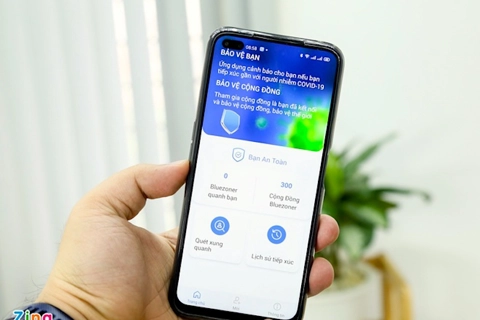
Vietnam to adopt greater integration of technology in healthcare
In light of the current challenges faced by public hospitals in Vietnam and the Covid-19 pandemic, the digital healthcare sector holds promise, stated Fitch Solutions.
Vietnam's medical system will see greater integration of technology as a means to address shortcomings in healthcare access and enhance sector efficiency, according to Fitch Solutions, a subsidiary of Fitch Group.
| Center for TeleHealth at Hanoi Medical University Hospital. |
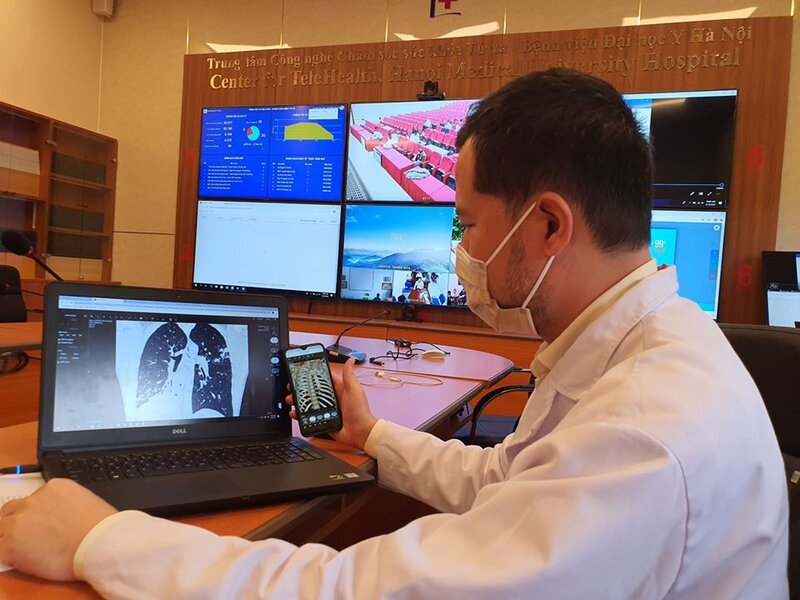
Government support for the use of telecare will be strong, stated Fitch Solutions. Integral to this emphasis on telecare by state officials is the potential for it to help address the uneven geographic distribution of medical professionals in the country.
As with other emerging markets such as China, Vietnamese doctors continue to be concentrated in major urban hospitals in Hanoi and Ho Chi Minh City as compared to local level community healthcare centers - limiting healthcare access in the rural regions.
Furthermore, technology will allow hospitals to enhance the delivery of healthcare and advance their efficiency. This push for efficiency has gained in importance as healthcare providers in Vietnam struggle to meet the demand for medical services, with local news sources reporting widespread overcrowding in hospitals. While the government has tried to alleviate this burden, improvements have been limited.
In light of the current challenges faced by public hospitals in Vietnam and the Covid-19 pandemic, the digital healthcare sector holds promise. Internet access is widespread and the country has seen rapid development in 4G and 5G mobile communication technologies.
Building on these foundations, the government of Vietnam is driving a digitalization agenda in hospitals and clinics across the country. Smart solutions are being strongly encouraged that utilize big data, artificial intelligence (AI), cloud computing and mobile technology to help alleviate Vietnam’s overcrowded public hospitals and increase the quality of care.
Moreover, on April 18, 2020, the Ministry of Health in coordination with the Ministry of Information and Communications (MIC) launched a telemedicine program. Developed by Viettel Group, the country’s largest telecommunications service company, the program provides remote healthcare services by connecting patients and doctors through a virtual platform.
With 70% of the Vietnamese population living in a rural or remote area, telehealth will help improve access to quality healthcare while reducing its costs. The private sector was quick to take advantage of the shift towards technology-enabled healthcare services. Many start-ups already present in Vietnam before the Covid-19 outbreak have expanded and optimized their operations. Similarly, significant opportunities exist for digital health companies to contribute to higher quality and more cost-effective healthcare in Vietnam.
Challenges, however, remain. The health tech sector is still in its infancy, attracting significantly less investment than other related sectors. There remain some challenges to digital health solution adoption in Vietnam, including the cost and complexity of implementation of certain systems electronic medical record, and the existing habits of doctors and healthcare professionals in using paper documentation.
Additionally, as with any market, the digitalization of data and services also gives rise to issues of privacy and customer trust.