Vietnam wants maximum 70% of industrial wastes recycled by 2030
Vietnam has set an ambitious goal to recycle up to 70% of industrial waste by 2030, positioning environmental industry development as a key driver of sustainability.
THE HANOI TIMES — Vietnam aims to have 60%-70% of its industrial waste sorted and recycled by 2030, marking a bold step in the country's environmental industry development.
The target is part of the Vietnam Environmental Industry Development Program 2025-2030, signed on September 4 by Deputy Prime Minister Tran Hong Ha.
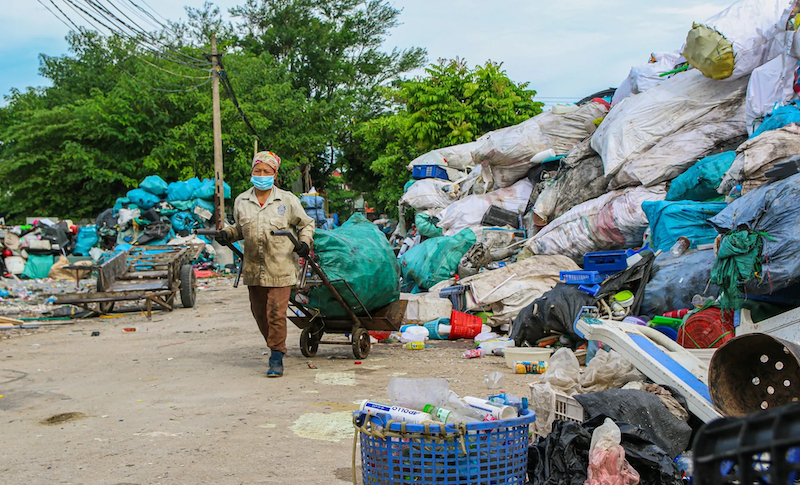
Plastic wastes collected and gathered for recycling at Hanoi's Quang Phu Cau craft village. Photo: Thuy Ha/The Hanoi Times
The plan also calls for domestic technology to meet 60%-70% of demand for air treatment, 50%-60% for solid and hazardous waste treatment and at least 20% for environmental monitoring equipment.
Vietnam aims to establish dedicated recycling industrial parks, backed by a stronger legal framework and preferential policies to attract investment.
Businesses involved in technology transfer, patent licensing and software solutions will also enjoy incentives.
Foreign investment is encouraged, with the long-term goal of exporting waste-to-energy technologies, equipment and green products where Vietnam has an advantage.
To build this sector, the government will use state procurement and contracting to stimulate demand for environmental technologies and encourage public-private partnerships.
Large state-owned corporations such as the Vietnam National Industry - Energy Group (PVN), the Vietnam National Chemical Group (Vinachem) and the Vietnam National Coal Corporation (Vinacomin) are expected to take flagship roles in developing environmental technologies.
The deputy prime minister also directed ministries to explore national environmental industry centers, boosting production, innovation and technology transfer.
These centers will focus on the fields of waste-to-energy, wastewater treatment, recycling, bioplastics and green materials.
The approval of this program comes as Vietnam deepens its global integration, where meeting higher environmental standards has become inevitable.
Stronger regulations are also a prerequisite for Vietnamese goods to become more globally competitive, access demanding markets and align socio-economic growth with environmental protection.
In today’s context of rising environmental requirements, building a clear and practical system of standards and benchmarks presents an opportunity.
A well-designed framework will help businesses cut compliance costs, boost market confidence and move toward sustainable development.
At a meeting in July, Deputy Prime Minister Tran Hong Ha said that private businesses are key to developing Vietnam’s environmental industry.
The public sector is expected to take the lead in complex fields, including hazardous waste treatment, eco-friendly materials, large-scale environmental monitoring and recycling technologies for wind and solar power.