Vietnam weighs carbon tax on fossil fuels
The move helps Vietnam save 8% - 10% of its total energy consumption and reduce greenhouse gas emissions by 15% - 35%.
THE HANOI TIMES — The government has directed ministries and agencies to study the application of a carbon tax on fossil fuel use to help cut greenhouse gas emissions from the energy sector by 15% - 35% by 2030.
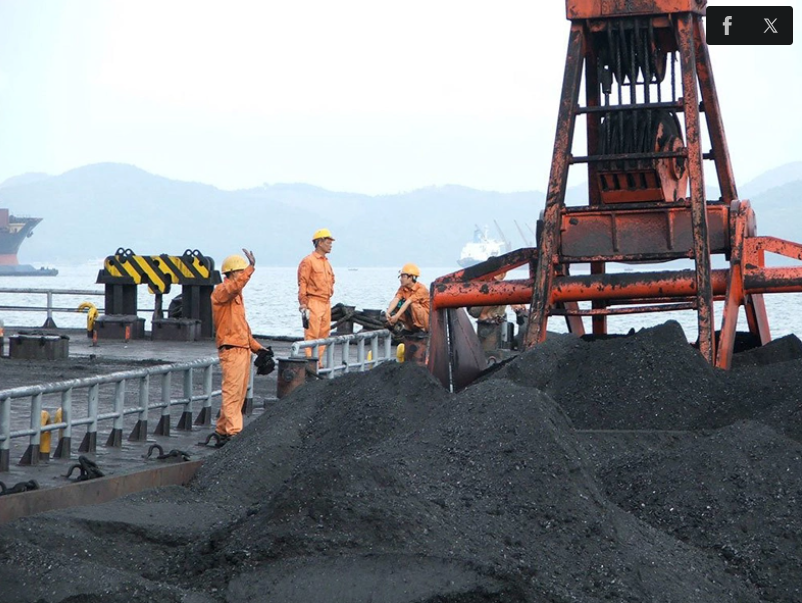
Coal mining in Vietnam. Photo: Vinacomin
This policy is outlined in Resolution No. 328, which details the action plan to implement Resolution No. 70 of the Politburo on ensuring national energy security by 2030 with a vision to 2045.
Vietnam aims to save 8% - 10% of its total energy consumption and reduce greenhouse gas emissions by 15% - 35%.
To achieve this, the government has requested a study on a carbon tax for fossil fuel use and the establishment of carbon emission standards and limits. Relevant agencies are also tasked with developing transition plans for coal-fired power plants to switch to cleaner alternatives such as natural gas, biomass, hydrogen, and ammonia.
Ministries, sectors, and localities are required to implement measures to reduce emissions in line with national development conditions.
A carbon tax is one of the most widely used carbon pricing tools, operating on the “polluter pays” principle, alongside carbon trading markets.
According to the World Bank, around 43 countries and territories have adopted this tool, with European nations taking the lead since the 1990s.
Two months earlier, the Politburo’s Resolution No. 70 emphasized the need to establish a system for measuring, reporting, and verifying (MRV) greenhouse gas emissions in line with international standards and to accelerate the development of both domestic and international carbon markets.
Each country has different rules on which products are subject to the carbon tax and how the revenue is used.
For example, Sweden imposes a carbon tax of 1,478 krona (US$134) per ton on fuels that are 100% fossil-based, such as natural gas and coal, without specifying how the tax proceeds must be allocated. Canada has increased its carbon tax to US$65 per ton of CO2e emissions from gasoline, oil, and combustible waste.
Most of the tax revenue is refunded to individuals and households to offset higher living costs, while the rest is shared with local budgets, farmers, and small and medium enterprises.
Resolution No. 328 also calls for mandatory energy-saving targets across industries, sectors, and localities to gradually phase out low-efficiency, high-emission equipment and vehicles. These measures aim to combat climate change and fulfill Vietnam’s international emission reduction commitments.
By 2030, the country’s total primary energy supply is projected to reach 150 to 170 million tons of oil equivalent, with final energy consumption between 120 and 130 million tons.
To ensure energy security, authorities are required to diversify supply sources, prioritize domestic energy development, and reduce dependence on imports.
The government has also ordered the establishment of a national energy industry center integrating gas, liquefied natural gas (LNG), electricity, petrochemical and renewable energy facilities in strategically advantaged localities.
Additionally, ministries, sectors and local governments are directed to allocate at least 2% of the energy sector’s GDP to research and development.
The government will create strong and autonomous mechanisms to encourage private enterprises to increase investment in R&D.
Innovation centers will be given incentives to attract private capital for investment and support businesses and projects in the clean and renewable energy sectors.